
A clogged sewer line isn't like a slow sink drain. It’s a complete and total blockage of the main pipe carrying all of your home’s wastewater out to the street. When this line gets obstructed, every drop of water from your toilets, showers, and sinks has nowhere to go. The only path left is back up into your house.
This isn’t just an inconvenience; it’s a critical failure that can quickly turn your Los Angeles property into a hazardous environment. A clogged sewer line transforms your plumbing from a system of convenience into a direct pipeline for biohazards. The moment sewage enters your living space, it becomes an emergency that threatens both your property's structure and your family's health.
For immediate help with a sewage backup in Los Angeles, don't wait. Call our 24/7 emergency team now.
Schedule a Free Assessment or Call (818) 336-1800 for 24/7 Emergency Service
The Hidden Dangers of a Clogged Sewer Line
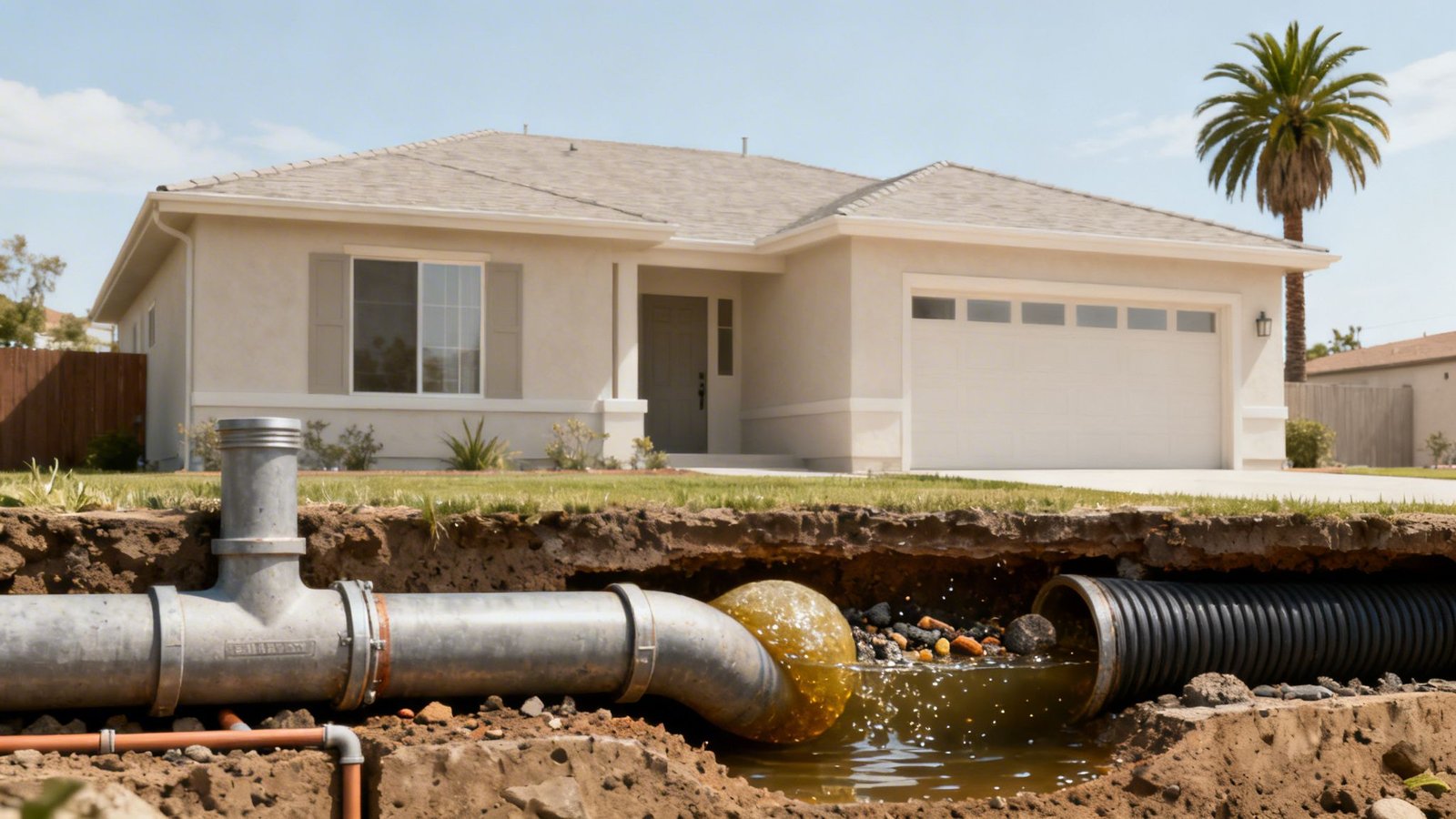
Think of your home’s plumbing as a network of roads. The drains from your sinks and tubs are the small residential streets. They all merge onto one main highway that leads out of town—that’s your main sewer line. A clogged sewer line is a catastrophic pile-up shutting down that entire highway. All the traffic (wastewater) grinds to a halt and has no choice but to reverse course. Suddenly, raw sewage is backing up into your showers, spilling from the base of your toilets, and bubbling up in your floor drains.
For Los Angeles homeowners, the situation is even more precarious. The region’s aging infrastructure, combined with seismic activity and expansive clay soils in areas like the San Fernando Valley, puts incredible stress on underground pipes. What starts as a minor drainage issue can rapidly become a full-blown sewage flood.
What Causes a Main Sewer Line Clog?
A single fixture clog—like hair in a shower drain—is a minor issue. A main line clog, on the other hand, paralyzes your entire system. These blockages are serious obstructions that often build up over months or years. We see the same culprits time and again in Los Angeles homes.
| Common Cause | What Happens in Your Pipes | Potential Risk to Your Home |
|---|---|---|
| Grease, Oil & Fats | These liquids solidify inside pipes, creating a sticky, thick sludge that grabs and holds onto other debris, narrowing the line over time. | Slow drains that eventually lead to a complete, foul-smelling backup. Very difficult to clear without professional equipment. |
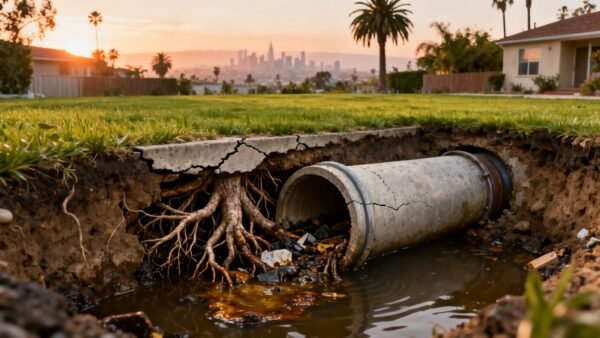
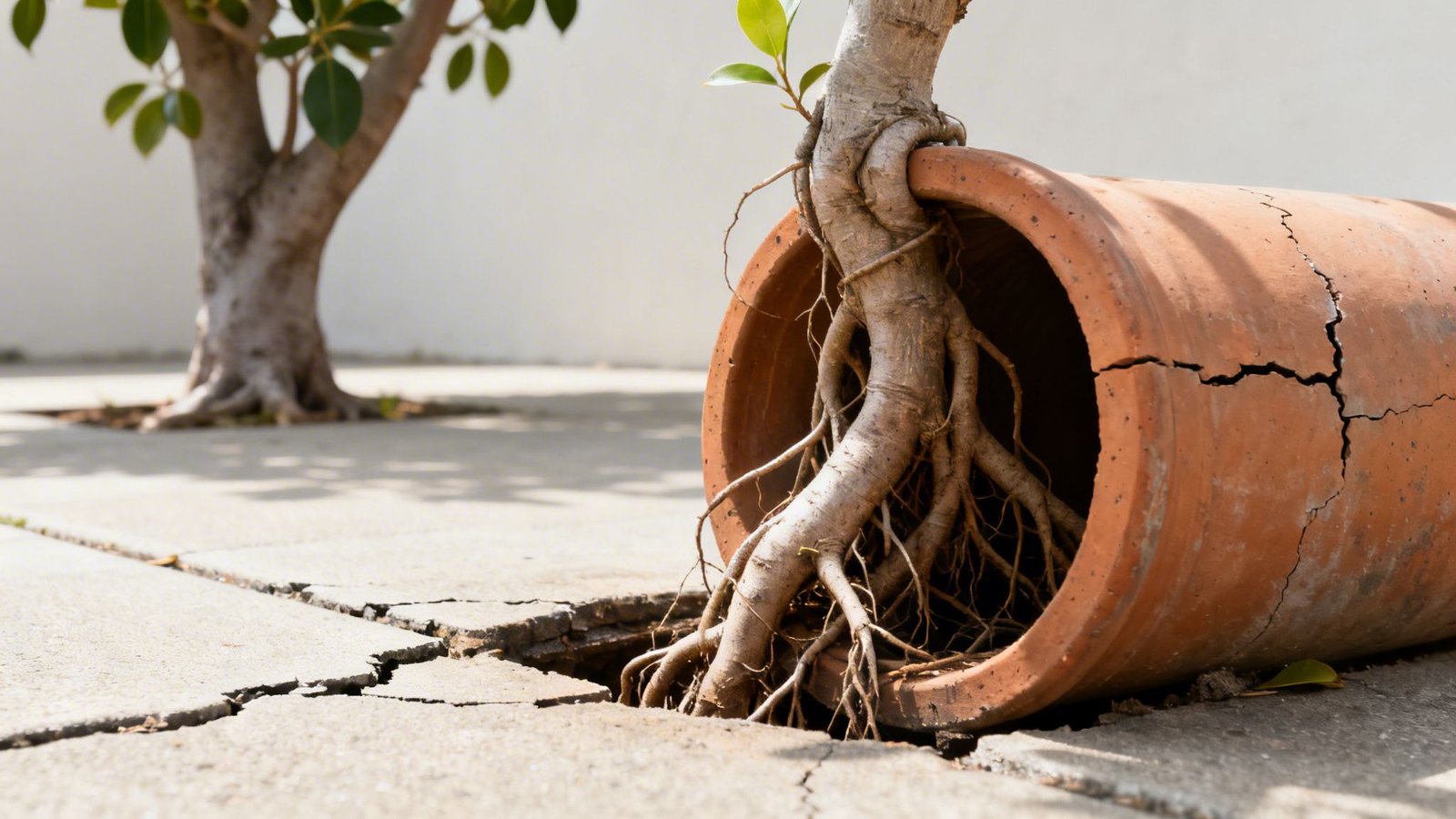
| Invading Tree Roots | Roots from ficus and jacaranda trees are drawn to moisture. They infiltrate tiny cracks, grow into dense root balls, and can crush the pipe. | A total blockage that can also cause the pipe to crack or collapse, leading to far more expensive excavation and replacement. |
| "Flushable" Wipes & Debris | So-called "flushable" wipes, paper towels, and hygiene products don't break down like toilet paper. They snag and accumulate, forming a solid dam. | An abrupt and severe backup that often happens without warning. Can cause widespread contamination quickly. |
| Damaged or Old Pipes | In older Los Angeles homes, aging cast iron or clay pipes can sag ("belly"), crack, or collapse from soil shifts or simple decay. | The pipe itself fails, creating a permanent obstruction that hydro-jetting can't fix. Requires pipe lining or replacement. |
This isn’t a small-scale problem. The American Society of Civil Engineers gave America's wastewater infrastructure a dismal D+ grade, largely due to decades of underinvestment. In major cities, blockages from grease, roots, and debris are responsible for a huge percentage of sewer backups, creating billions in property damage and health hazards. You can discover more about municipal sewer system challenges and their impacts in reports from city agencies.
Health Risks Linked to Sewer Backups
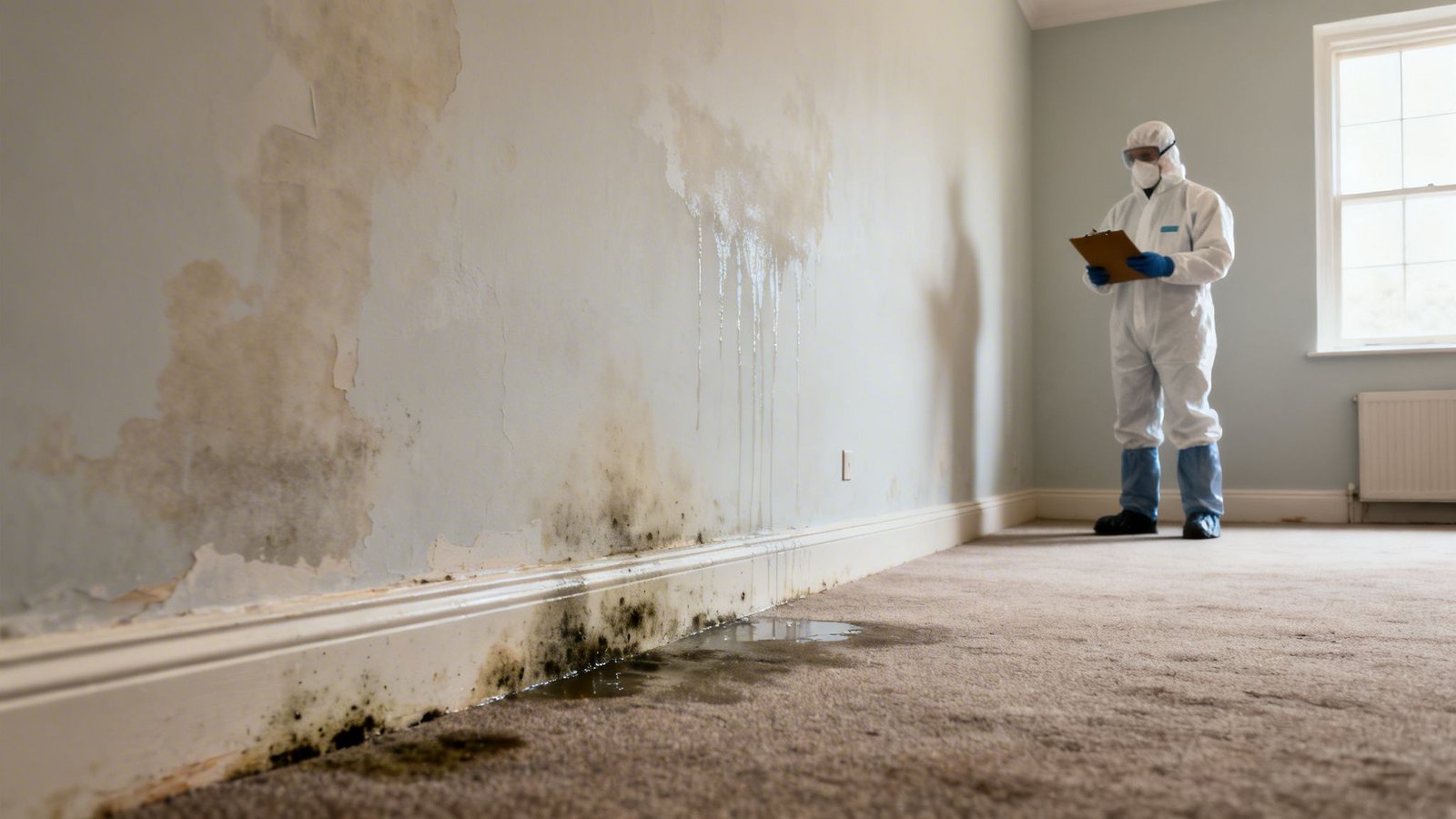
When a clogged sewer line sends wastewater spewing back into your home, the situation instantly shifts from a messy plumbing problem to a serious biohazard emergency. The water flooding your basement or bathroom isn't just dirty—it's a toxic soup that poses immediate risks to your family’s health and your home's structural integrity.
The Immediate Danger of Black Water
In the restoration industry, we call water from a sewer backup Category 3 water, or "black water." It's grossly contaminated, carrying a dangerous cocktail of pathogens and harmful agents.
This black water is a breeding ground for:
- Bacteria: Including E. coli, Salmonella, and Shigella, which cause severe gastrointestinal illnesses.
- Viruses: Such as Hepatitis A and Rotavirus, which are easily transmitted through contact.
- Parasites: Like Giardia and Cryptosporidium, leading to serious intestinal infections.
- Fungi and Mold Spores: Which quickly become airborne and can trigger respiratory problems.
Even without direct contact, the danger is real. As the raw sewage sits, these dangerous microbes aerosolize, contaminating the air you breathe. This poses a significant risk for respiratory issues, especially for children, the elderly, and anyone with a compromised immune system.
How Sewage Destroys Your Property
Beyond the health risks, the corrosive nature of black water inflicts rapid and devastating damage to your home. Unlike a clean water leak, sewage contaminates everything it touches on a microbial level, making many materials impossible to salvage.
The destruction happens fast:
- Saturation of Porous Materials: Drywall acts like a sponge, wicking sewage deep into wall cavities. Insulation becomes a saturated, bacteria-filled mess that can never be safely cleaned or dried.
- Structural Wood Damage: Hardwood floors, subflooring, and structural beams soak up contaminated water, causing them to warp, swell, and rot from the inside out.
- Electrical Hazards: If sewage reaches electrical outlets, appliances, or wiring, it creates an immediate and life-threatening risk of electrocution and fire.
The Secondary Threat of Toxic Mold
Perhaps the most insidious threat that follows a sewage backup is the rapid explosion of toxic mold. The combination of moisture, organic waste from sewage, and common building materials like wood and drywall creates a perfect storm for mold to thrive.
Toxic mold can begin to grow within just 24 to 48 hours of a sewage backup. Once established, it releases mycotoxins into the air, creating a long-term health hazard that can persist long after the water is gone.
This isn't just a bit of surface mildew. A sewage backup can quickly lead to serious issues like colonies of black mold on hardwood floors and spreading behind walls. Trying to clean this yourself without proper containment and personal protective equipment can spread toxic spores throughout your entire home, turning a localized problem into a whole-house contamination.
How to Tell If You Need Professional Remediation
A clogged sewer line doesn't usually announce itself with a sudden, catastrophic flood. Instead, it sends out a series of subtle, escalating warnings that your home’s entire plumbing system is under serious stress. Learning to spot these early clues is the single best way to prevent a small problem from turning into a destructive and expensive sewage backup.
Too many Los Angeles homeowners write these signs off as isolated quirks, but they are almost always connected symptoms of a single, growing blockage in your main line.
Multiple Slow Drains
One of the first and most reliable signs of a main line clog is when several drains in your house slow down at the same time. You might notice the kitchen sink, a bathroom shower, and a toilet all start draining sluggishly. This is a huge signal that the problem isn't in one fixture but much further down the line.
Gurgling Sounds from Drains and Toilets
Do you hear strange bubbling or gurgling noises coming from your toilet when the shower is running? These odd sounds are a classic symptom of a clogged sewer line. That gurgling is the sound of trapped air fighting to escape as wastewater tries to force its way around the obstruction.
Water Backing Up in Unusual Places
This is when things get more alarming. You run the washing machine, and suddenly soapy water starts backing up into the shower or tub on the ground floor. It happens because the wastewater has nowhere to go. It takes the path of least resistance—up through the lowest-lying drain in your home. This can also cause hidden moisture issues, so it helps to be familiar with the common signs of water damage in walls to spot related problems.
Persistent Sewage Smell
The most unmistakable warning sign is the foul odor of raw sewage. If you can smell sewer gas inside or outside your home, it means the blockage is severe. Here in Los Angeles, older homes in areas like Sherman Oaks are surrounded by beautiful but invasive ficus trees, whose roots are notorious for seeking out and crushing old sewer pipes. When you combine that with shifting soil in the Valley, you have a perfect recipe for a severe blockage and dangerous sewer gas leaks. Do not ignore this warning.
Your Emergency Action Plan for a Sewer Backup
When you hear that dreaded gurgle or see dark, foul-smelling water creeping up from a floor drain, what you do in the next few minutes is critical. Panic is your enemy. A clear, immediate action plan will protect your family's health and save your home from far more extensive damage.
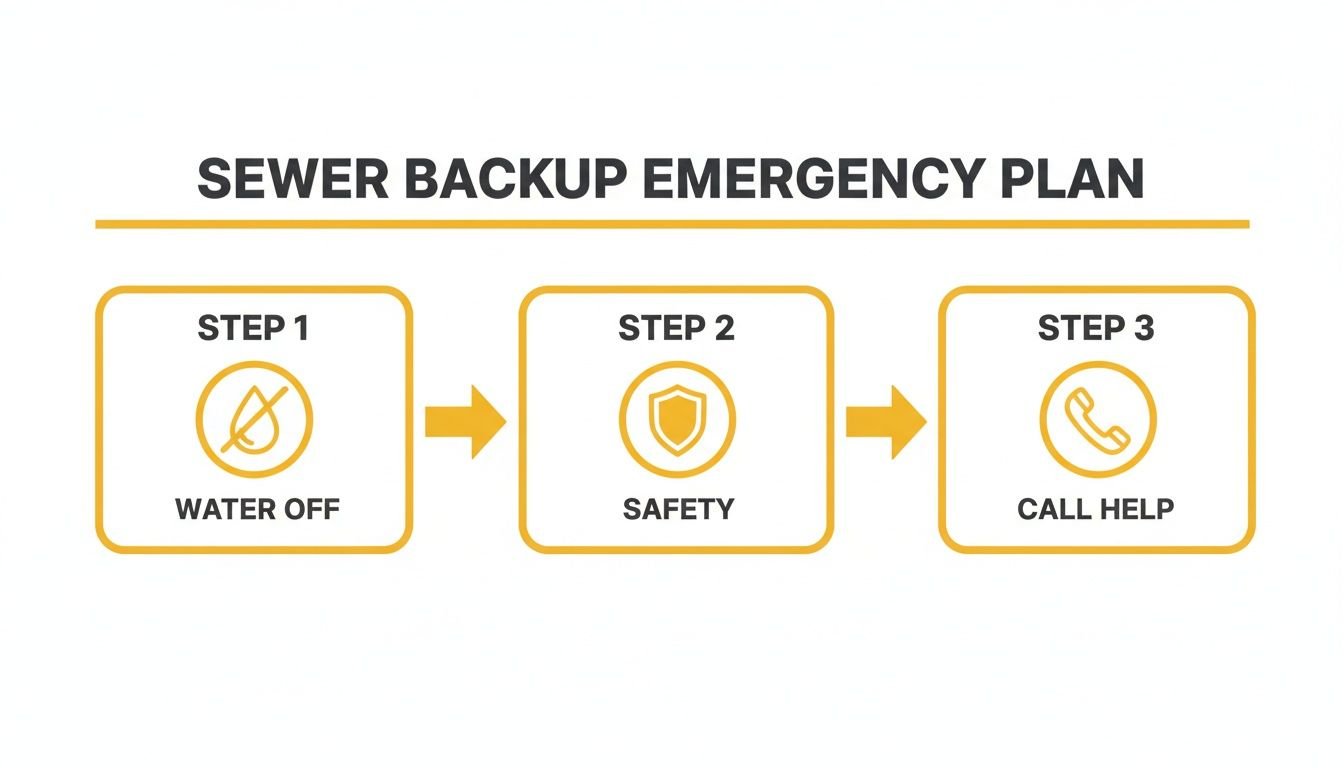
Step 1: Immediately Stop All Water Use
This is the single most important thing you can do. Every flush, faucet turned on, or load of laundry adds more contaminated water to the flood. Put your home's entire plumbing system on lockdown.
- Do not flush any toilets or run any faucets.
- Do not use the shower, tub, dishwasher, or washing machine.
For severe backups, shut off the main water supply to the entire house. Our guide can show you where to find the main water shut-off valve to stop the flow completely.
Step 2: Prioritize Safety and Clear the Area
Raw sewage is toxic. Your next move is to make the contaminated area a strict no-go zone.
- Turn Off the Power: If water is pooling near electrical outlets, you have a major shock hazard. If you can get to your circuit breaker box without walking through water, shut off the power to the affected rooms.
- Evacuate Everyone: Get children, pets, and anyone with health vulnerabilities out of the area immediately.
- Avoid All Contact: Don't touch the water or anything it has touched with your bare hands. It's what the industry calls Category 3 water, or "black water."
Step 3: Call for Emergency Help
A sewer backup is not a standard plumbing call or a DIY project. It’s a biohazard emergency that requires a certified restoration company. Your first and only call should be to a 24/7 emergency restoration service like Onsite Pro. We handle the sewage damage cleanup, disinfection, and drying. We arrive with the heavy-duty equipment—industrial extractors, air scrubbers, and antimicrobial agents—to safely manage the contamination.
Choosing the Right Sewage Cleanup Company
When certified restoration technicians show up, they follow a strict, science-based playbook to make your home safe again. Knowing the steps we take can bring calm to a chaotic situation.
Initial Safety Assessment and Containment
The first job is safety. The team lead performs a rapid assessment, looking for urgent hazards like electrical risks. Then, they establish a containment zone using heavy-duty plastic sheeting and a negative air pressure system to trap airborne pathogens.
Water and Sewage Extraction
Next, the heavy lifting begins. Our technicians use industrial-grade, truck-mounted extraction units to remove the bulk of the black water and raw sewage. These powerful machines pull out hundreds of gallons of contaminated liquid quickly to minimize structural damage.
Removal of Contaminated Materials
This is often surprising for homeowners. Porous materials that have absorbed raw sewage simply cannot be saved.
Professional Standard: Any porous or semi-porous material touched by sewage must be removed and properly disposed of as biohazardous waste.
This almost always includes:
- Drywall and insulation
- Carpet and padding
- Upholstered furniture
- Particleboard cabinets and subflooring
Cleaning, Disinfection, and Sanitization
After all contaminated materials are gone, the crew begins a multi-step cleaning process on the remaining non-porous surfaces like wood studs and concrete floors.
- Initial Cleaning: Surfaces are scrubbed to get rid of any remaining grime.
- Disinfection: An EPA-registered, hospital-grade disinfectant is applied to kill viruses and bacteria.
- Sanitization: A final antimicrobial agent is often applied to prevent future microbial growth.
Structural Drying and Dehumidification
The final, critical stage is drying. High-power air movers and large-scale dehumidifiers pull every last drop of moisture from the building's structure to stop mold, which can start growing in as little as 24-48 hours. When a sewer line is severely blocked, professional help like specialized sewer line drain cleaning services is a must.
Navigating Costs and Preventing Future Disasters
After a sewage backup, your focus will snap to two things: the bill, and how to stop this from ever happening again. Understanding what drives the cost, how your insurance works, and what proactive steps to take is key.
Breaking Down the Costs of a Clogged Sewer Line
The final invoice depends on several factors:
- How far the contamination spread: More affected square footage means a bigger bill.
- What materials got hit: It’s cheaper to replace contaminated carpet than to save soaked hardwood floors.
- How long the sewage sat: Time is your enemy. The longer sewage dwells, the more demolition is required.
- If mold has started growing: If mold sets in, you're now paying for both a biohazard cleanup and a mold remediation project.
Navigating Homeowners Insurance for Sewer Backups
A standard homeowners policy almost always excludes damage from sewer backups. If you don't have a specific add-on, you are on the hook for the entire cost.
To protect your finances, you must have a specific rider called "Water Backup and Sump Pump Overflow Coverage." This add-on is often inexpensive but provides a critical safety net.
Review your policy now. If you lack this specific coverage, call your agent today. Our complete guide explains how homeowners insurance covers sewer backups and what you need to be protected.
Proactive Prevention: Your Best Defense
Proactive maintenance is your most powerful tool. Industry data suggests that routine inspections and good habits can prevent up to 80% of major backups.
- Schedule Regular Camera Inspections: This is non-negotiable for older Los Angeles homes or properties with large trees. A professional sewer camera inspection every 1-2 years lets a plumber spot tree root intrusion, cracks, or sags in the line before they cause a failure.
- Mind What You Flush: Your toilet is not a trash can. The only things that should ever be flushed are human waste and toilet paper. "Flushable" wipes are a leading cause of clogs.
- Get Serious About Grease: Never pour cooking grease, oil, or fats down any drain. Pour it into a disposable container, let it harden, and throw it in the garbage.
- Manage Your Landscaping: Be mindful when planting new trees near your sewer line. If you have large trees, have the line cleared of roots periodically or install a root barrier.
Schedule a Free Inspection or Book Service
When you’re dealing with a potential sewer line clog, a flood of questions usually follows. We get calls from worried Los Angeles homeowners every day, so we’ve put together some straight answers to the most common concerns.
Q: Can I Use Chemical Drain Cleaners for a Main Sewer Line Clog?
A: Absolutely not. Chemical drain cleaners are not effective against serious blockages like tree roots or collapsed pipes. Worse, their corrosive acids can damage older pipes and create a severe chemical burn hazard for plumbers who arrive to clear the line mechanically. They are the wrong tool for a main line problem.
Q: How Can I Tell if the Clog Is My Responsibility or the City’s?
A: The homeowner is responsible for the "sewer lateral"—the pipe running from the house to the city's main connection under the street. If only your home has backups, the clog is likely in your lateral. If your immediate neighbors are also having problems, the issue is probably in the city's main sewer line. A professional camera inspection can pinpoint the exact location.
Q: How Often Should I Have My Sewer Line Inspected in Los Angeles?
A: For Los Angeles homes built before the 1980s or properties with large, mature trees, we recommend a professional sewer camera inspection every 1 to 2 years. This allows a technician to spot minor root intrusion, grease buildup, or pipe sagging before they cause a catastrophic backup. It's a small investment to avoid a huge disaster.
Q: Is it safe to stay in my house during a sewage backup?
A: No, it is not safe. The affected area contains "black water," which is highly contaminated with bacteria, viruses, and parasites. You should evacuate children, pets, and anyone with health vulnerabilities from the area immediately and avoid all contact with the water and contaminated items until professionals have sanitized the space.
Q: What is the difference between sewage cleanup and water damage restoration?
A: Standard water damage restoration deals with clean (Category 1) or gray (Category 2) water. Sewage cleanup is a biohazard remediation process that handles grossly contaminated black water (Category 3). It requires specialized PPE, containment protocols, and EPA-registered disinfectants to eliminate dangerous pathogens and make the area safe again.
Don't wait for a plumbing headache to turn into a biohazard emergency. If you suspect a clogged sewer line, call the certified professionals at Onsite Pro Restoration for an immediate, expert assessment.
Schedule a Free Assessment or Call (818) 336-1800 for 24/7 Emergency Service