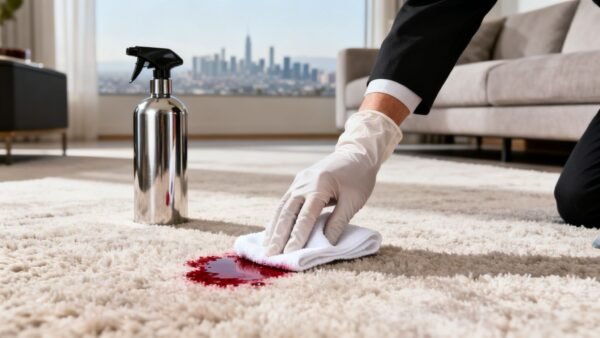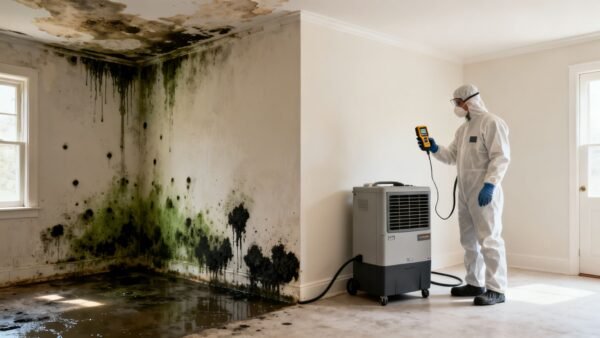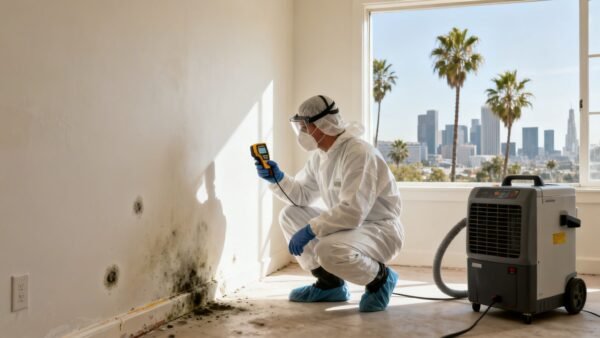

A drink spills. A child tracks in something sticky. A pet has an accident while you are out. In Los Angeles homes, carpet stain removal often starts with a few seconds of panic and a fast grab for the nearest towel.
The problem is not just the stain itself. The first thing you do can either keep it near the surface or push it deeper into the carpet and pad. That is where many homeowners lose the battle before they realize it.
Most fresh spills are manageable if you respond correctly and keep the chemistry simple. But some stains are not just stains. They are signs of water intrusion, odor contamination, air movement issues, or hidden moisture below the carpet. Knowing that line matters if you want to protect the carpet, the subfloor, and the value of the home.
If the stain followed a leak, overflow, or recurring wet spot, get help early. In restoration work, delay is what turns a spot-cleaning problem into a structural drying problem.
That Heart-Sinking Moment A Carpet Stain Appears
A glass of red wine tips over during dinner. It hits a light carpet in the living room. Everyone freezes for a second, then someone reaches for napkins and starts scrubbing.
That last part is where things usually go wrong.
Good carpet stain removal starts with control, not force. A fresh spill looks dramatic, but a homeowner who acts quickly and uses the right method often has a good chance of improving the result. A homeowner who rubs hard, pours random chemicals on the spot, or over-wets the area can create a bigger problem than the original spill.
In Los Angeles, I also want homeowners to think beyond the visible mark. A stain in a bedroom corner after a rainy week is different from a dropped drink. A dark line along the baseboard is different from coffee. A recurring brown spot after cleaning often points below the carpet face yarn, not at it.
Three early questions help sort out the situation:
- What caused it: Food and drink stains behave differently than stains tied to leaks, pet contamination, or unknown moisture.
- How long has it been there: Fresh spots are simpler. Set-in spots often need repeated treatment or extraction.
- Is the carpet only stained, or also wet: Damp carpet changes the response completely because drying becomes part of the job.
Practical rule: Treat fresh spills fast, but stop DIY work if the carpet is wet for an unknown reason, smells musty, or the stain returns after drying.
Emergency First Actions The First Five Minutes
The first five minutes matter more than the next fifty. The goal is simple. Remove as much material as possible without damaging the fiber or driving contamination downward.
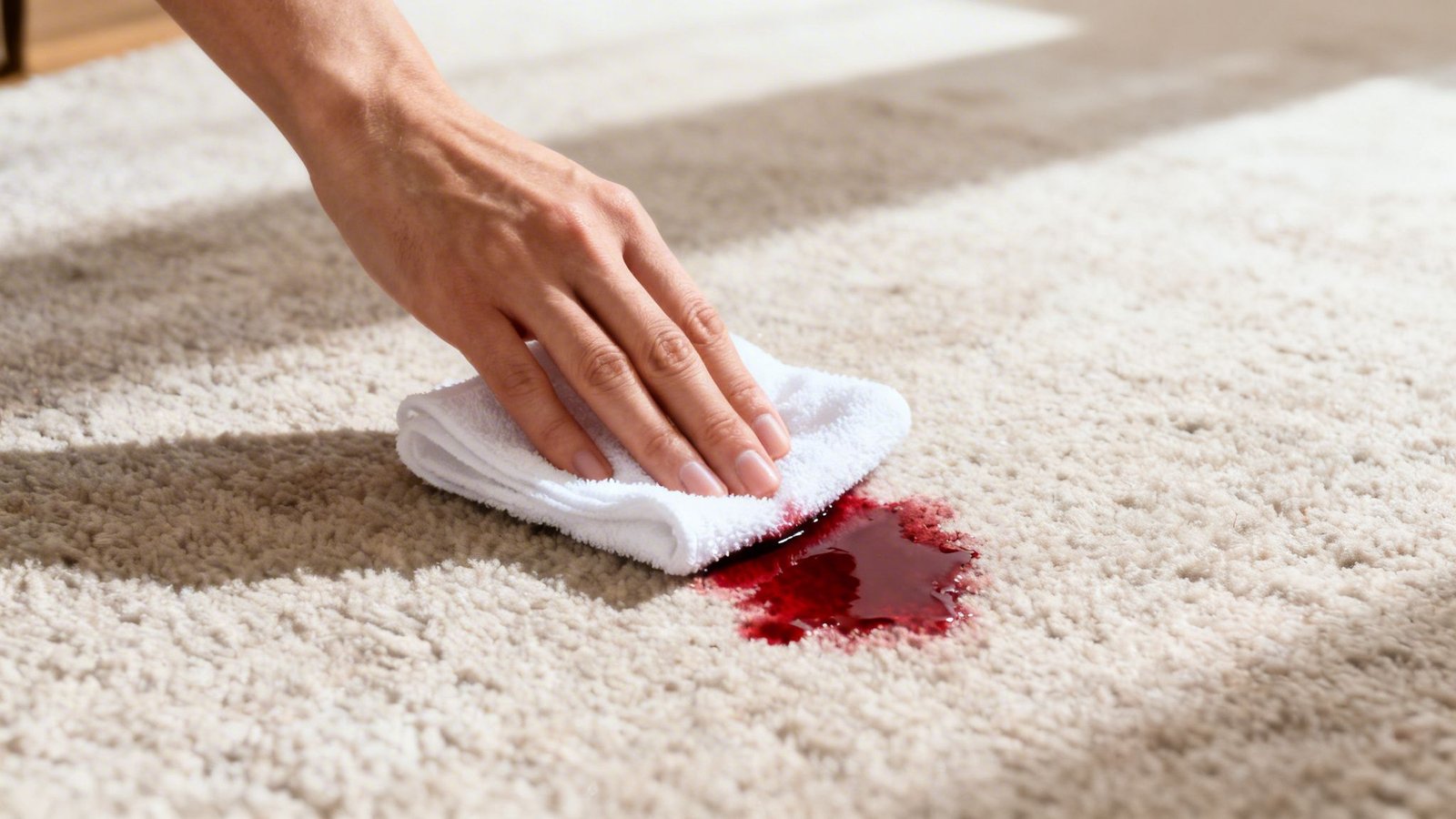
What to do immediately
- Stop the source: Set the cup, plate, or container upright. If a pet accident is still active, move the pet first.
- Blot with a white absorbent cloth: Press down. Lift. Rotate to a clean section. Repeat.
- Work from the outside toward the center: That keeps the stain from spreading wider.
- Use plain water sparingly if needed: Lightly dampen the cloth or lightly rinse the area. Do not soak it.
- Keep weight off the area: Foot traffic grinds residue into the pile.
The biggest mistake is rubbing. According to the Carpet and Rug Institute’s stain guidance, when carpet fibers are subjected to rubbing or vigorous scrubbing, the physical structure of the carpet is permanently altered; the roughed-up fibers will never return to normal form. Rubbing also embeds stains deeper into carpet fibers and the carpet pad, creating “wicking,” where contaminants migrate downward and cause recurring spots. The correct methodology requires blotting with absorbent cloths from the outside edges toward the center (carpet stain best practices from the Carpet and Rug Institute).
What not to do
Some actions feel helpful in the moment but create harder restoration work later.
- Do not scrub with a brush: You can fuzz or distort the carpet face.
- Do not pour large amounts of cleaner into the spot: Excess liquid moves contamination into the backing and pad.
- Do not use colored towels: Dyes can transfer.
- Do not mix random products: Residue interactions can complicate later treatment.
- Do not chase the stain with heat: Heat can make some stains more stubborn.
If the carpet is wet, not just stained
A spill is one thing. A leak, overflow, or soaked carpet is another. If the carpet feels broadly damp underfoot, if the pad is likely wet, or if water came from a supply line or intrusion, drying has to happen along with stain treatment. Homeowners dealing with that situation should review this guide on how to dry wet carpet fast before deciding whether surface cleaning is enough.
A quick visual can help reinforce the right movement.
Why blotting works better
Blotting lifts. Rubbing grinds.
That distinction matters because many stains are partly liquid and partly particulate. If you press and absorb, you remove material from the carpet. If you scrub side to side, you spread the stain across more fibers and can force it down into the backing.
Expert tip: If your cloth stops picking up material after several passes, stop escalating pressure. Change tactics rather than pushing harder.
A Tactical Guide to Specific Carpet Stains
Different stains fail for different reasons. Some are dye-based. Some are oily. Some carry odor. Some look gone until they wick back from below. The right response depends on what hit the carpet.
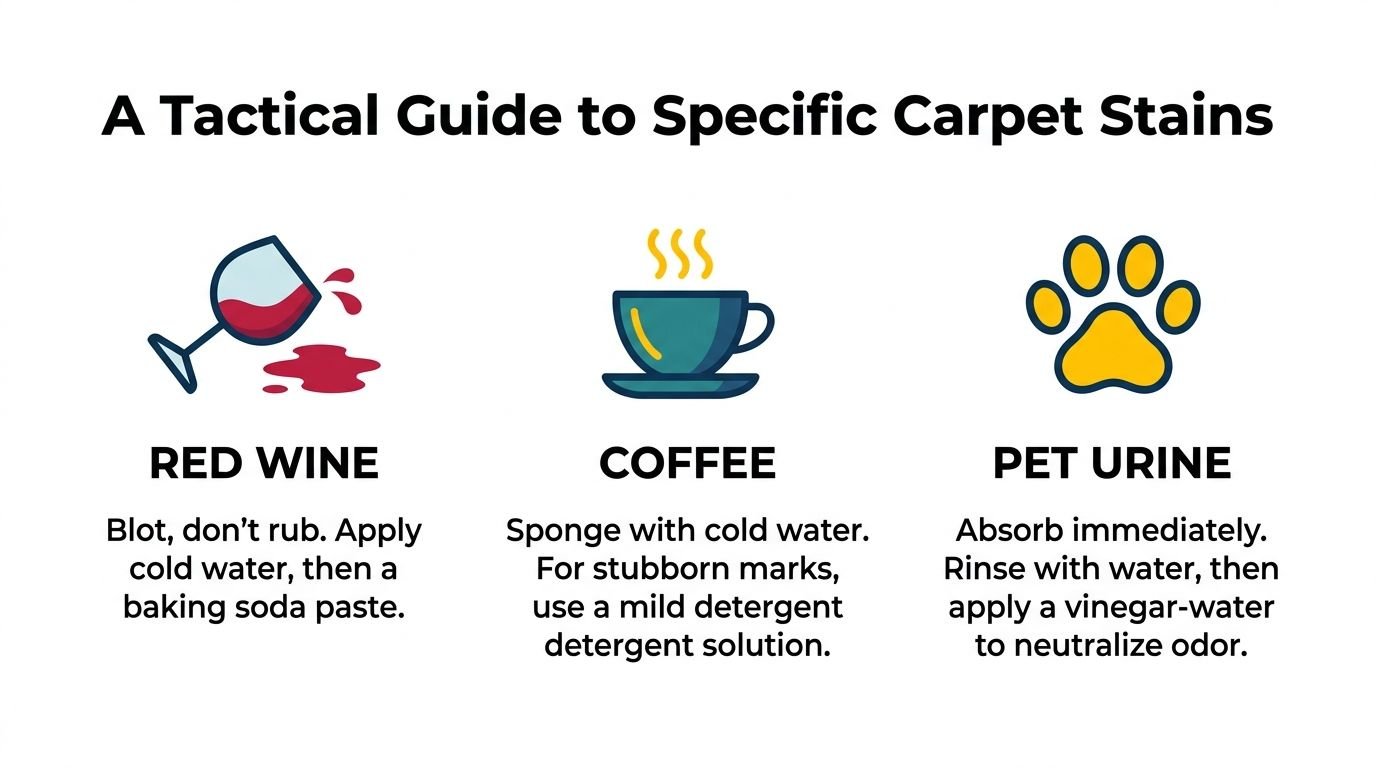
Before using any spotter, test it in an inconspicuous area. That matters even more with wool, patterned carpet, or older installations. If you have wool or wool-blend floor coverings, this guide on how to care for wool rugs is worth reviewing because wool reacts differently than many synthetic fibers.
According to IICRC-based guidance, substances like wine, coffee, and turmeric contain tannins and dyes that can chemically bond with carpet fibers, permanently altering the color. Improper use of harsh chemicals like bleach or ammonia can also set stains or strip color (IICRC-based stain damage guidance).
Red wine
Red wine is a classic panic stain because it is highly visible and can move fast through light-colored carpet.
Start by blotting until transfer slows. Then apply a small amount of plain water and blot again. The goal is dilution without flooding. If color remains, use a mild carpet-safe spotting solution and continue blotting from the perimeter inward.
A few cautions matter here:
- Avoid aggressive scrubbing: Red wine spreads easily.
- Avoid bleach or ammonia: Harsh chemistry can damage dye sites and worsen the appearance.
- Do not over-wet: Once wine reaches the pad, callback staining becomes more likely.
If the carpet is off-white and the spill sat for hours, full correction may require professional spotting and extraction rather than more home remedies.
Coffee
Coffee usually leaves two problems. It can leave color, and it can leave sticky residue if cream or sugar was involved.
Blot first. Then lightly rinse with water and blot again. If the mark remains, use a small amount of mild detergent solution designed for carpet-safe spot treatment. Follow that with a light water rinse and more blotting so the detergent does not stay behind in the fiber.
Coffee cleanup often fails when people stop at “it looks better.” The visible stain fades, but residue remains. That residue attracts soil and creates a dingy shadow in the traffic lane.
A better sequence is:
- Absorb the spill
- Dilute lightly
- Treat the remaining residue
- Rinse out the cleaning agent
- Blot dry thoroughly
Pet urine
Pet urine is not just a spot issue. It is a contamination and odor issue. If it reaches the pad, simple surface cleaning rarely solves the smell.
For a fresh accident, absorb as much as possible right away. Use plain water sparingly to rinse the area, then absorb again. After that, apply an odor treatment designed for urine contamination. For many homeowners, an enzyme-based product is the logical tool because it targets organic residue rather than just masking odor.
If the smell keeps coming back, the contamination likely extends deeper. In those cases, this page on how to eliminate urine odor helps explain why repeated surface treatment often fails.
Signs the problem is below the surface include:
- Odor strongest during humid weather
- A spot that reappears after cleaning
- Pets repeatedly returning to the same area
- Yellowing or darkening that spreads beyond the visible center
Grease and oil
Kitchen oils, lotion, makeup, and food grease behave differently from water-based spills. Water alone does very little because the stain is hydrophobic.
Blot first to remove excess material. Then use a carpet-safe solvent-based spotter or a product specifically labeled for grease or oil transfer. Apply it to a cloth rather than dumping it onto the carpet. Work with light pressure, then blot repeatedly to lift loosened residue. Many homeowners make the stain bigger by saturating the area at this point. Small applications are safer and easier to control.
A quick comparison helps:
| Stain type | Main problem | Useful approach |
|---|---|---|
| Water-based drink | Dye and liquid transfer | Blot, dilute lightly, rinse |
| Coffee with additives | Dye plus sticky residue | Blot, mild detergent, rinse |
| Grease or oil | Oily film binds to fiber | Solvent-type spotter, controlled blotting |
| Pet urine | Organic contamination and odor | Absorb, rinse lightly, odor-specific treatment |
Blood
Blood needs a gentle approach. Start with cold water, not hot. Blot carefully and repeat. If residue remains, use a carpet-safe treatment intended for protein-based stains.
The most important mistake to avoid is heat. Hot water can make protein residues harder to remove. Strong brushing is also risky because it roughens the pile while smearing the stain outward.
If blood came from an injury event with larger contamination, stop treating it like ordinary carpet stain removal. Bio-related cleanup may require a professional response rather than home spot cleaning.
Ink
Ink can go from a dot to a smear in seconds. The rule here is restraint.
Blot with a dry white cloth first. Then use a carpet-safe product specifically intended for ink or dye transfer, applying it in a small amount to the cloth or according to label instructions. Work slowly and check transfer frequently. If the cloth is picking up ink, keep using clean sections so you do not redeposit it.
Ink is one of the stains where “trying everything” usually causes the most damage. If the carpet is light, patterned, or valuable, a controlled professional spotting process is safer than escalating through household chemicals.
Key takeaway: Match the chemistry to the stain. Water-based spills, oily residues, and organic contamination do not respond the same way, and treating them as if they do often locks in the problem.
The Homeowner's Toolkit DIY Solutions and Commercial Cleaners
A good spot-cleaning kit buys time and limits damage. It does not solve every carpet problem.
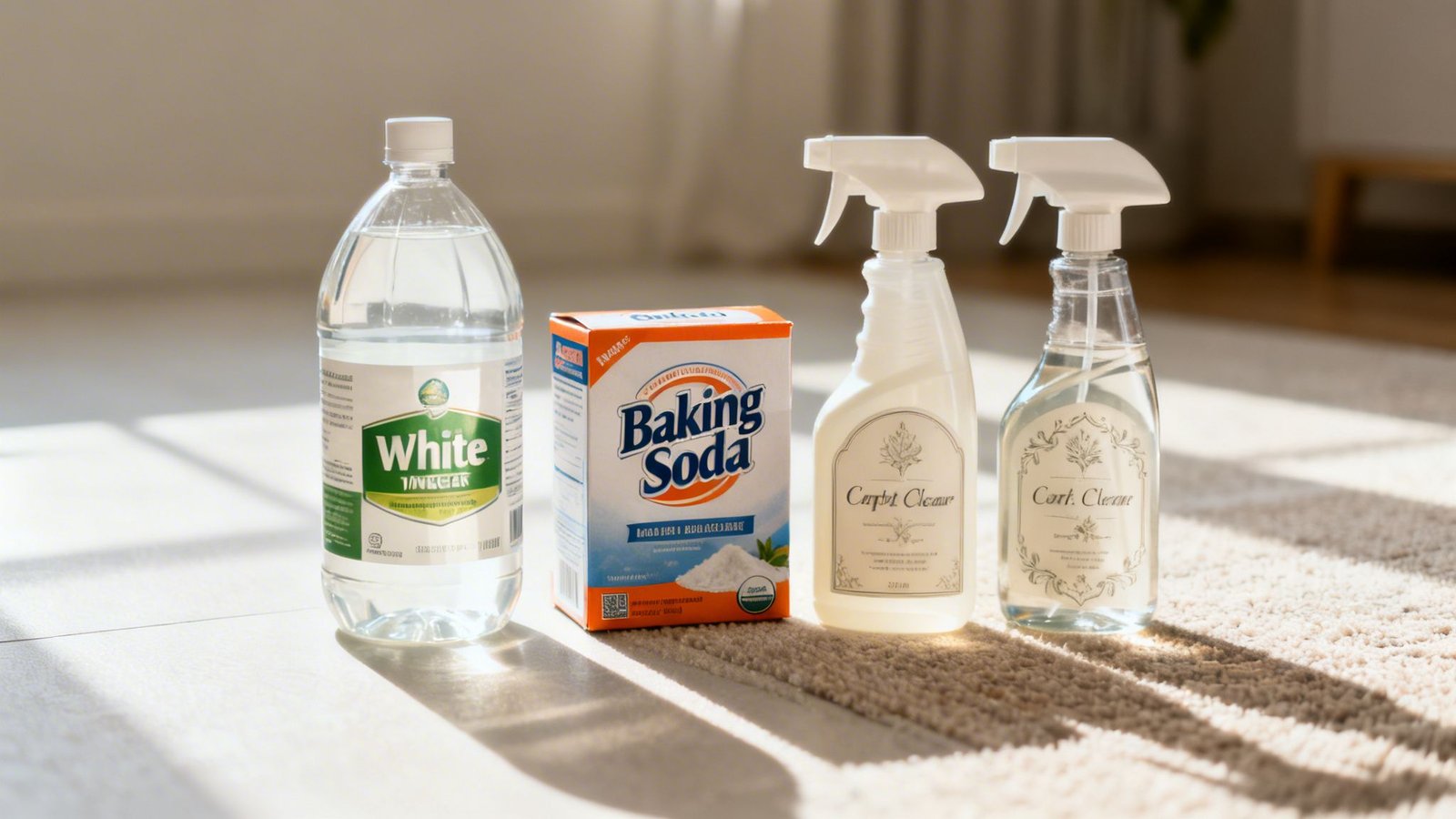
For a Los Angeles homeowner, the goal is simple. Remove as much of the stain as possible without spreading it, setting it, or pushing moisture into the pad. The wrong product often creates the second problem I see in the field: sticky residue, fiber damage, or damp backing that later turns into odor, browning, or repeat spotting.
Keep a small kit on hand:
- White cotton towels or plain white microfiber cloths: They let you see transfer and avoid dye bleed from colored rags.
- A spray bottle with plain water: Best for controlled rinsing, not soaking.
- A mild clear dish soap or carpet-safe detergent: Useful in very small amounts for many fresh food and drink spills.
- Baking soda: Best reserved for limited odor absorption, then vacuumed thoroughly.
- A neutral, carpet-safe spot remover: Better than reaching for random household chemicals.
- Gloves and a flashlight: Simple tools, but they help you inspect edges, backing dampness, and spread.
DIY treatment makes sense when the spill is fresh, limited to one area, and clearly from a non-hazardous source. Plain water is often the safest first step. A light detergent solution can help with common beverage or food residue. Vinegar gets recommended often, but I would use it cautiously and only in limited situations. On some carpets, repeated home mixtures leave residue or interact poorly with prior cleaning products.
Commercial spotters earn their place when the stain needs targeted chemistry. Grease, pet accidents, dye transfer, and odor problems usually respond better to products made for those categories. The trade-off is that stronger chemistry raises the risk of color loss, texture distortion, and residue if the product is overapplied or not rinsed out properly.
Application matters as much as the product. Spray the cloth when possible, not the entire carpet. Work from the outside of the spot toward the center. Blot, check transfer, and repeat. If the area starts staying damp, stop adding liquid.
That last point matters more than many homeowners realize. Some “stains” are really moisture events showing up at the surface. If the carpet feels cool, the spot keeps returning, or the discoloration spreads without a new spill, check for retained moisture. A guide to how to read moisture meter readings can help you tell the difference between a simple surface issue and water that may be sitting deeper in the carpet system.
Onsite Pro Restoration handles carpet issues tied to larger loss conditions, including water intrusion, leak-related staining, and restoration work after property damage. That is a different service from ordinary spot cleaning, and the distinction matters.
If you manage rentals or are preparing for turnover, process helps. A documented cleaning workflow can reveal whether you are looking at normal use, neglected staining, or signs of hidden water damage. This ultimate rental property cleaning checklist is a useful reference for that review.
A few safety rules are worth keeping strict:
- Do not mix cleaning chemicals: Especially bleach, ammonia, or peroxide-based products unless the label specifically allows it.
- Use as little moisture as possible: Overwetting can drive contamination into the pad and subfloor.
- Test any product in an inconspicuous area first: Some fibers and dyes react fast.
- Rinse out residue when the product directions call for it: Leftover detergent attracts soil.
- Stop if the stain source is unknown: Mystery spots are where bleaching, browning, and backing damage often start.
Practical standard: If the carpet is staying wet, the spot keeps coming back, or the discoloration appears along edges or across a wider area, stop treating it like a simple stain. The surface mark may be the visible part of a leak, airflow problem, or previous water damage.
When a Stain Is a Symptom of a Deeper Problem
Some carpet issues are not spot-cleaning problems at all. They are warning signs.
A common example is the dark line that forms around the perimeter of a room, especially along walls or under door gaps. Homeowners often assume it is dirt from shoes or a spill pattern. It is usually neither.
Filtration soiling
Filtration soiling is the black or gray line that appears at carpet edges. It cannot be removed with standard blotting or ordinary household cleaners. It points to a different problem involving air movement, particulate buildup, and sometimes moisture-related conditions. Professional hot water extraction and structural assessment are typically required, especially after water damage or when air leakage is part of the issue (filtration soiling and structural assessment overview).
That matters in Los Angeles homes for a few reasons:
- HVAC imbalance can drive particulate deposition
- Air leaks at wall gaps can create repeat edge soiling
- Moisture intrusion can make the problem worse
- Standard carpet cleaning methods often do very little
Wicking and recurring spots
Another clue is the stain that “comes back” after it looked gone.
That usually means the contamination reached deeper layers. As the carpet dries, dissolved material travels upward from the backing or pad and reappears at the surface. Homeowners often mistake this for a failed cleaner, but the underlying issue is incomplete removal below the face fiber.
Recurring spots often show up after:
- A spill was heavily soaked during cleanup
- A leak wet the carpet and pad
- A pet accident penetrated through the backing
- A prior cleaning left material below the surface
Odor and moisture are diagnostic clues
A stain with a musty odor should change your thinking immediately. Surface spotting does not fix wet padding, hidden moisture at tack strip lines, or microbial risk in the subfloor area. If the carpet issue followed a leak or flooding event, this resource on how to prevent mold after water damage is worth reviewing because drying and contamination control are usually the priority.
Restoration mindset: A visible carpet mark is sometimes the least important part of the problem. Moisture source, airflow, and what reached the pad matter more.
Knowing When to Call for Professional Carpet Restoration
Some situations cross the line from cleaning to restoration. Homeowners do not need to be experts, but they do need a clear decision rule.
Call for professional help when the stain involves contamination, hidden moisture, persistent odor, or material risk.
Red flags that should stop DIY work
- The source was contaminated water: Toilet overflows, sewer backups, and unknown water sources are not DIY spot-cleaning jobs.
- The carpet is wet across more than a small isolated area: Once pad saturation is likely, extraction and drying matter as much as stain removal.
- The spot keeps returning after cleaning: That points to wicking or residue below the surface.
- There is a musty or sour smell: Odor tells you there is more going on than a visible mark.
- The carpet is wool, antique, custom, or high-value: Mistakes cost more on specialty materials.
- The stain sits near baseboards or room edges: That can signal filtration soiling or hidden moisture pathways.
- You do not know what caused the stain: Unknown chemistry is a poor place to experiment.
Why waiting makes the job harder
Delay gives dyes more contact time, lets contamination migrate, and can turn a removable spot into a permanent discoloration issue. In water-related events, the bigger concern is that the carpet may only be the first visible symptom. Drywall bottoms, tack strip areas, and subfloor materials may also be involved.
A lot of homeowners call only after trying several products. By that point, the original stain may be mixed with detergent residue, excess moisture, or color loss from strong chemicals. Professional restoration is still possible in many cases, but the path gets narrower.
If your concern is health, contamination, or property damage, the safest choice is usually to stop experimenting early.
How Onsite Pro Restores Carpets and Protects Your Home
Professional carpet restoration is not the same thing as retail spot cleaning. The objective is broader. Identify the source, remove contamination, dry what is wet, and restore the affected materials as far as conditions allow.
What the restoration process looks like
An IICRC-certified team starts by determining what happened. The answer changes the method.
A proper restoration workflow may include:
- Moisture inspection: To check whether the carpet, pad, or adjacent materials are retaining water
- Targeted extraction: To remove contamination instead of spreading it
- Controlled spotting and rinsing: To reduce residue and protect fibers
- Structural drying: Using professional drying equipment where needed
- Odor treatment: Especially in urine, water, or contamination cases
- Documentation: Important when the damage is part of an insurance claim
Why restoration matters in Los Angeles homes
A Sherman Oaks leak under a window, a damp edge in a Santa Monica room with airflow issues, or a recurring stain after a burst supply line are not “just carpet” problems. They involve building conditions.
That is where restoration firms differ from standard carpet cleaners. A cleaner may improve appearance. A restoration company is supposed to determine whether the carpet issue connects to water intrusion, mold risk, contamination, or hidden wet materials.
Homeowners who need that broader response can review the company’s full restoration services here. The value is not just the stain treatment itself. It is the ability to connect the visible symptom to the underlying property issue and respond accordingly.
Frequently Asked Questions About Carpet Stain Removal
Q What is the safest first step for a fresh carpet stain
Blot with a clean white cloth and use small amounts of plain water if needed. Keep the movement gentle and work from the outer edge toward the center.
Q Why does a stain disappear and then come back later
That usually points to contamination below the surface. As the carpet dries, residue can travel back up from the backing or pad.
Q Can I use bleach on a carpet stain
No. Bleach can strip color and create permanent visible damage. Strong chemistry is one of the fastest ways to turn a cleanable spot into irreversible discoloration.
Q Are dark lines along the wall just normal dirt
Usually not. Dark perimeter lines often suggest filtration soiling, which is different from ordinary surface staining and may indicate airflow or moisture issues.
Q When is odor more important than the stain itself
When the smell is musty, sour, or urine-like after cleaning. Odor often means the problem extends deeper than the carpet surface.
Q Should I replace the carpet if a stain will not come out
Not always. Some carpets can still be improved through professional extraction, odor treatment, spot dyeing, patching, or related restoration steps depending on the material and cause.
If your carpet stain may be tied to a leak, recurring moisture, pet contamination, or a deeper restoration issue, contact Onsite Pro Restoration for a professional assessment in Los Angeles. Acting early can prevent permanent carpet damage and help catch hidden property issues before they spread.