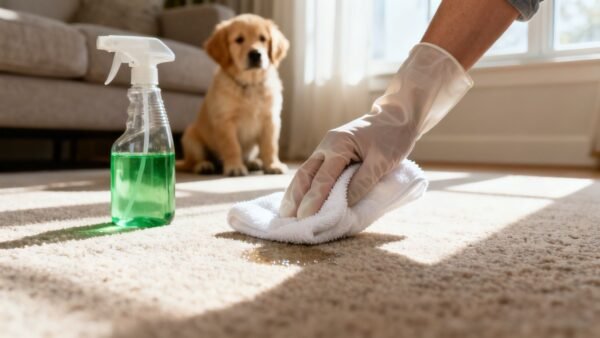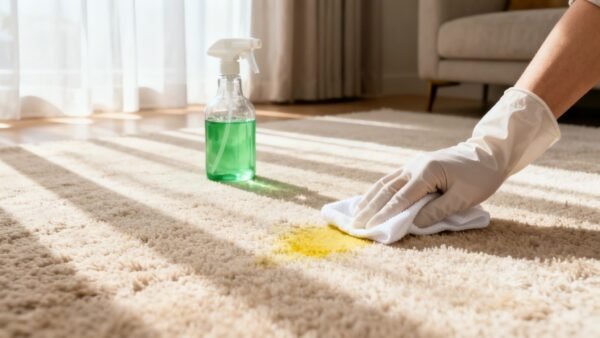

When you find a fresh pet accident on the carpet, what you do in the first few minutes is everything. Forget panicking—your one and only goal is damage control. This is especially true in Southern California homes, where thick carpets can trap moisture and lead to persistent issues.
You need to get that liquid out of the carpet fibers before it soaks into the padding and subfloor. Once it hits the padding, you've got a much bigger, smellier problem on your hands. This isn't just a hunch; untreated urine can lead to significant bacterial growth in over 85% of cases within just 24 hours, which is why a fast response is non-negotiable. Learning how to remove pee stains from carpet effectively starts right now.
If you're dealing with a set-in stain or lingering odor, don't wait.
Get a Free Assessment Now
The Hidden Dangers of Pet Urine in Carpets
Your first instinct might be to grab a scrub brush and go to town. Don't do it. Scrubbing is the single worst thing you can do, as it grinds the urine deeper into the carpet pile and can damage the fibers, making the spot even more obvious later. Instead, you need to blot.
Grab a thick stack of plain white paper towels or a clean, absorbent white cloth. Place it directly over the wet spot and apply firm, even pressure. Don't be afraid to stand on the towels—using your body weight is an incredibly effective way to pull a surprising amount of liquid up and out. Keep replacing the saturated towels with fresh, dry ones until you’re barely pulling up any more moisture. This step alone can remove the majority of the urine, winning you half the battle.
Key Takeaway: Always blot, never scrub. The goal is to lift the urine up and out of the carpet, not spread it around or push it deeper into the padding. This simple technique is your first line of defense.
Before you start cleaning, it helps to know which methods actually work and which common "fixes" can make things worse.
Quick Action Plan for Fresh Urine Stains
| Action | Effective Method (Do This) | Common Mistake (Avoid This) |
|---|---|---|
| Initial Removal | Blot with clean, white towels, using your body weight to apply pressure. | Scrubbing the stain with a brush, which pushes urine deeper into the padding. |
| Rinsing Agent | Lightly spritz with cool water to dilute the remaining urine. | Pouring large amounts of water, which can over-saturate the padding and subfloor. |
| Neutralizer | Apply an equal-parts mix of white vinegar and cool water to neutralize ammonia. | Using harsh chemicals like ammonia-based cleaners, which can attract pets back to the spot. |
| Cleaning Tools | Use fresh, clean cloths for blotting each step. | Re-using a dirty towel, which just reapplies urine and bacteria to the carpet. |
| Heat Application | Let the area air-dry or use fans. | Applying heat with a steam cleaner or hairdryer, which sets the stain permanently. |
Following the "Do This" column gives you the best shot at preventing a permanent stain and lingering odor. After you’ve blotted the spot as dry as possible, you can move on to cleaning. But the products you reach for are just as important as your technique.
Items to Use:
- Cool Water: A simple rinse helps dilute what’s left of the urine.
- White Vinegar Solution: A 50/50 mix of cool water and white vinegar is fantastic for neutralizing the ammonia in fresh urine.
- Clean White Towels: You can't have too many of these. You'll need them for blotting up the cleaning solution.
The most critical thing to avoid at all costs is heat. Never use a steam cleaner, hot water, or a hairdryer on a fresh urine stain. The heat will chemically bond the uric acid proteins to your carpet fibers, permanently setting the stain and locking in an odor that becomes nearly impossible to remove.
Once you're done cleaning, making sure the area dries completely is your final, crucial step. For some effective techniques, check out our guide on how to dry wet carpet fast.
Choosing the Right Cleaning Solution: DIY vs. Pro-Grade
Once you've blotted up as much of the fresh urine as you can, you face a critical choice: what do you use to clean it? This isn't just about scrubbing the spot; it's about picking the right tool for a very specific chemical battle. Your decision between a pantry remedy and a professional-grade product really boils down to the age and severity of the stain.
DIY Solutions for Fresh Accidents
When you catch an accident immediately, a simple homemade solution can work surprisingly well. We've seen this succeed countless times in homes from Santa Monica to Pasadena. The key is to neutralize the chemistry of the urine before it sets.
A go-to formula for fresh spots is a 50/50 mix of plain white vinegar and cool water. The acetic acid in the vinegar is a fantastic neutralizer for the alkaline ammonia in fresh urine, which is the source of that sharp, immediate odor. It's not just masking the smell; it's chemically breaking it down. After treating with vinegar and blotting the area until it's just damp, you can sprinkle a liberal amount of baking soda over the spot to absorb leftover moisture and odors from deep in the carpet fibers. Let it dry completely, then vacuum it up.
A Word of Caution: Never, ever use an ammonia-based cleaner on a urine stain. Urine already contains ammonia, and using a cleaner with a similar scent can actually invite your pet right back to the same spot to mark their territory again. It's a mistake we see all the time in Los Angeles homes.
The Power of Enzymatic Cleaners for Tough Stains
For any stain that’s old, dried, or just plain stubborn, DIY methods are simply outmatched. This is where you bring in the professionals' secret weapon: enzymatic cleaners. These aren't your typical soaps. They are advanced, bio-based formulas loaded with beneficial bacteria and specific enzymes designed for one job: to destroy organic waste.
Here’s why they are so effective:
- They Digest the Stain: The enzymes act as catalysts, specifically targeting and breaking down the complex proteins in urine—most importantly, the uric acid crystals that are impossible to remove with soap and water.
- They Eradicate Odor at the Source: Instead of covering a smell, these formulas literally consume the odor-causing molecules until nothing is left. This is the only way to truly stop a pet from being drawn back to the same area.
- They Work on Old and New Stains: While great for fresh spots, their real value is proven on old, set-in stains that have bonded to carpet fibers and padding over days, weeks, or even months.
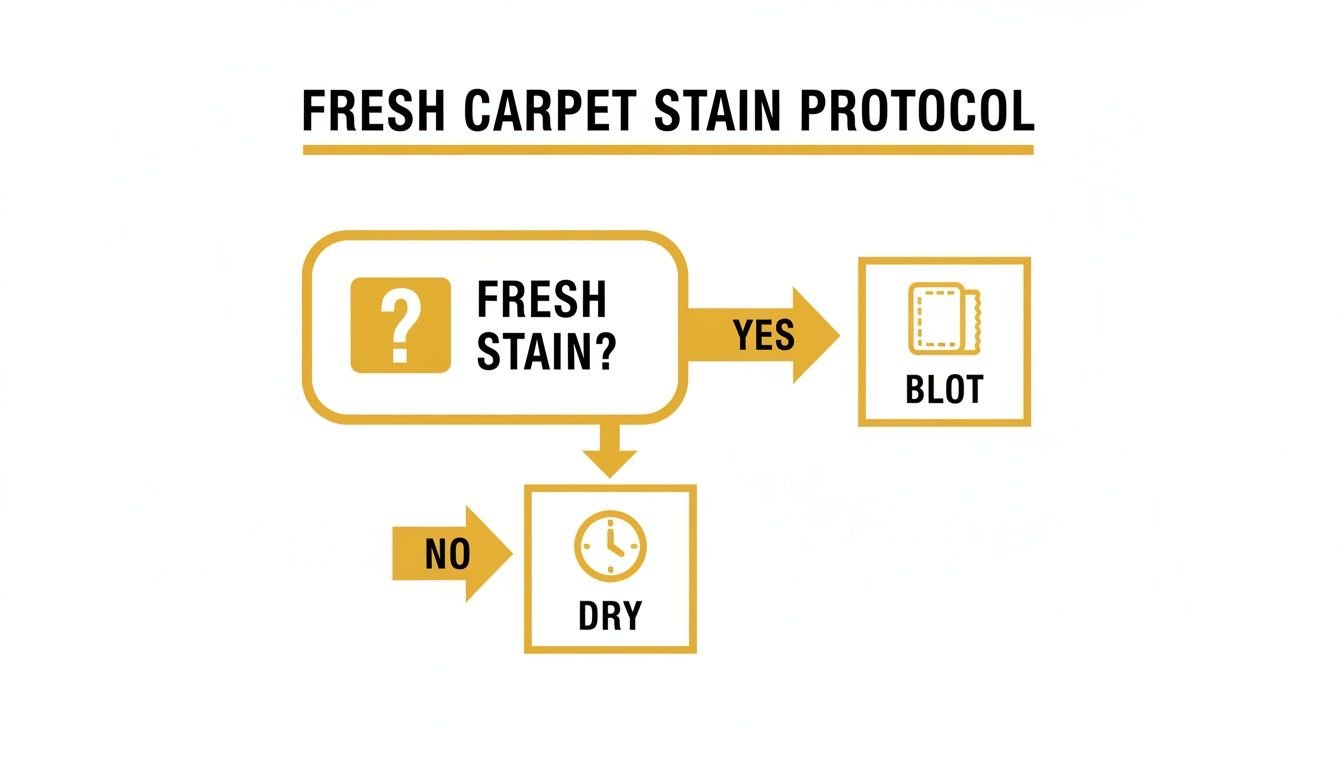
This chart illustrates how your first move—blotting a fresh stain or finding a dry one—sets you on the right path.
When you use an enzymatic cleaner, the most common mistake is not using enough. You have to saturate the area so the cleaner can penetrate as deeply as the urine did. This might mean reaching all the way to the carpet padding. Then, you have to be patient. The enzymes need hours—sometimes up to 24 hours—to fully digest the uric acid. Follow the product’s instructions, cover the area with a damp towel to keep it from drying out, and let science do its job. For a deeper dive, check out our guide on how to completely eliminate urine odor.
Tackling Old Stains and Lingering Odors
So, you missed one. What about the pee stain you didn’t find until it was bone dry? This, right here, is where the real battle begins. A fresh accident is a liquid problem; an old stain is a chemical one, locked deep in your carpet fibers. When urine dries, the water evaporates, but it leaves behind a nasty little present: a concentrated cocktail of pigments and, most importantly, uric acid crystals. These microscopic crystals are the true source of that relentless smell that seems to roar back to life on humid days—a common issue in coastal areas like Malibu.
The Science of the Smell: Uric acid crystals are stubborn. They don't dissolve in water or your average carpet shampoo. Instead, they embed themselves in carpet fibers and padding, lying dormant until moisture—whether from humidity or a failed cleaning attempt—reactivates them and releases that signature ammonia odor all over again.
This is exactly why a quick spray-and-wipe job fails on a set-in stain. You're not just cleaning a spot on the surface; you're trying to neutralize a chemical compound you can't even see.
How to Find Hidden Urine Stains
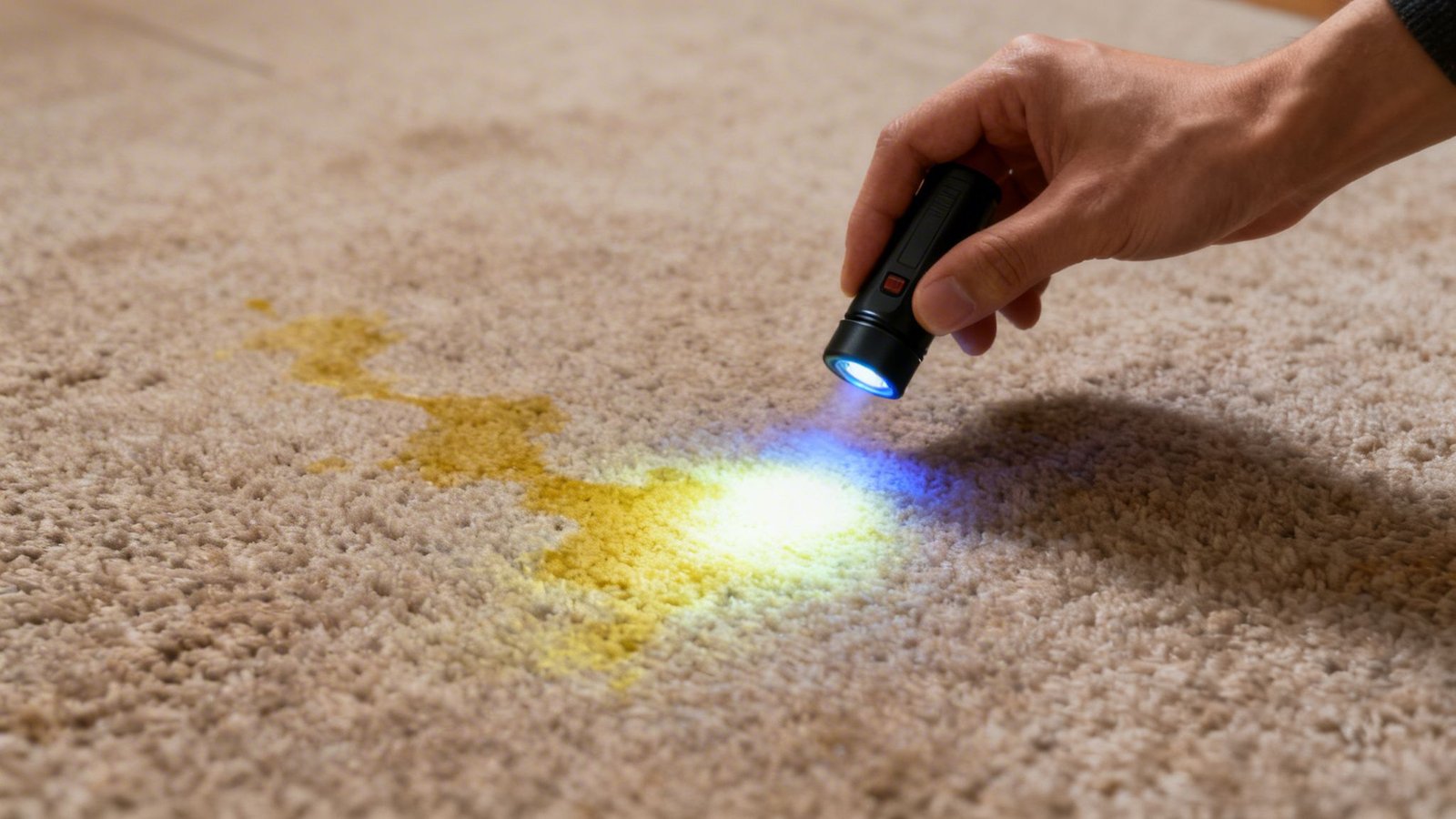
Before you can treat old stains, you have to find all of them. Pets are creatures of habit, and the one spot you know about might just be the tip of the iceberg. This is where we borrow a trick from the pros: a UV blacklight. Phosphorus in dried urine glows a sickly yellow-green under ultraviolet light. Wait for it to get dark, turn off all the lights, and do a slow, methodical sweep of your carpets. You'll create a precise map of every single old accident. You might be shocked at what you find, but treating every glowing spot is the only way to truly kill the odor.
The Rehydration and Enzymatic Attack
Once you've mapped out the problem areas, the strategy is to reverse the drying process and break down the uric acid.
- Rehydrate the Stain: Lightly spritz the spot with cool water—your goal is to make it damp, not to soak the padding again. This starts to loosen the visible discoloration and preps the fibers.
- Apply Enzymatic Cleaner: Grab a high-quality enzymatic cleaner. This is the only DIY product that actually digests uric acid. You need to be generous here; saturate the entire stain and a few inches around it. The cleaner has to penetrate just as deeply as the original urine did.
- Wait Patiently: The enzymes need time to work their magic, often between 12 to 24 hours. To keep them active, cover the treated area with a damp towel.
- Blot and Dry: After the long wait, use clean towels to blot up as much of the moisture as you can, then let the spot air dry completely.
While we're focused on carpet here, these principles are universal. Tackling persistent smells in other materials, like removing pet stains from hardwood floors, requires a similar but tailored approach. For more detailed answers on tough odor challenges, our odor removal service FAQ is a great resource.
When to Call a Professional for Urine Stain Removal
You’ve tried everything. You’ve blotted, sprayed, and used every cleaner in your arsenal, but that phantom smell just won’t quit. We’ve seen this in homes from the Valley to the Westside. It’s not a sign you’ve failed—it’s a clear signal the problem has gone deeper than any surface cleaner can reach.
Call (818) 336‑1800 for a Free Assessment
Signs You Need Professional Help
Certain situations move beyond a simple spot clean and straight into professional restoration territory. If you notice any of the following, it’s time to stop scrubbing and pick up the phone.
- The Odor Keeps Coming Back: You clean the spot, and it seems fine. Then, on the first humid afternoon, the smell is back. This is a classic sign that uric acid crystals are still active deep within the carpet padding or even the subfloor.
- Large or Multiple Accidents: If your UV light reveals a constellation of old stains, like we often find in homes with new puppies, the contamination is too widespread for spot treatment.
- The Stain Has Reached the Subfloor: For severe or repeated accidents in the same spot, urine soaks right through the carpet and padding, contaminating the wood or concrete subfloor beneath. No amount of surface cleaning can fix that.
- Color Damage or Bleaching: Using the wrong chemical cleaner can leave you with a bleached-out spot. A professional can sometimes correct this, but more DIY attempts will almost certainly make it worse.
Before attempting a major cleanup, it’s also important to determine if urine is a biohazard and handle it with the appropriate safety measures.
The Professional Advantage
So, what does a professional bring that you can't get from a bottle off the shelf? It all comes down to specialized equipment and scientific training. IICRC-certified technicians don’t just clean; they restore. They use sub-surface extraction tools, which are designed to flush cleaning agents through the carpet and padding, then use immense suction to pull all that contaminated liquid out. This is followed by truck-mounted hot water extraction, which operates at a level of heat and power that rental units can't even dream of. This process is non-negotiable for anyone serious about how to remove pee stains from carpet for good.
By the Numbers: Urine penetrates carpet padding in 70% of cases within just a few minutes. Even worse, studies show that 92% of carpets cleaned by non-professionals still have detectable urine crystals under UV light, meaning bacteria are still thriving.
Trying to tackle deep contamination yourself often leads to bigger, more expensive problems down the road. To see what a certified team can truly accomplish, learn more about what to look for in a trusted restoration pro.
The Professional Restoration Process Explained
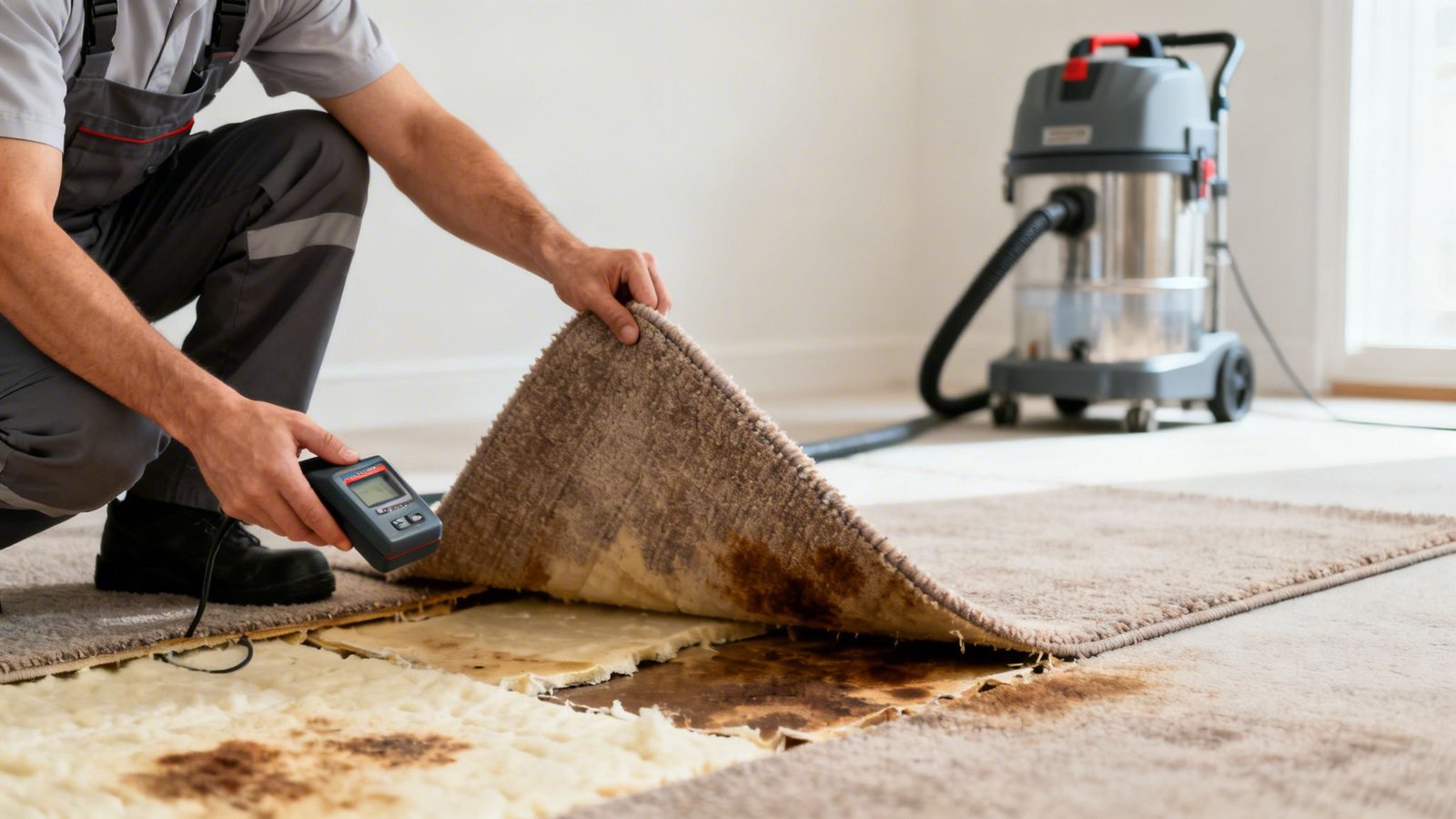
When you finally decide to call in a restoration professional, you’re not just getting a carpet cleaner. You’re kicking off a scientific process designed to fully restore your home's health and safety. Let's walk through exactly what our certified technicians do.
It all starts with a thorough inspection. We use specialized tools like high-intensity UV lights to find every single spot—even the ones you can’t see. Then, we use moisture meters to map out just how far the urine has spread beneath the surface. You'd be shocked how often a small stain on top is a massive problem in the padding below.
Assessment and a Custom Treatment Plan
Once we know the full scope of the problem, we’ll explain our plan of action. The strategy isn't one-size-fits-all; it’s tailored to the severity of the damage, your specific carpet type, and just how deep the urine has penetrated the padding and subfloor. We’ve come a long way in this industry. Back before the 1990s, getting urine out was a coin toss, with removal rates hovering around a dismal 20%. Modern enzymatic technology changed everything, pushing that success rate to over 96%.
Our IICRC-certified process takes it even further. By combining advanced solutions with specialized tools, we can extract 99.5% of contaminants. That’s a level of clean that outperforms home steam cleaners by over 400% when it comes to deep-padding saturation. Our methods also align with CDC and EPA biohazard protocols, slashing health risks from pathogens by up to 92%. For more on why this is so important, the American Kennel Club offers some great insights.
Deep Cleaning and Contaminant Extraction
With a solid plan in place, the real work begins. We start by applying a professional-grade enzymatic formula that immediately gets to work breaking down the stubborn uric acid crystals at a molecular level. This is followed by hot water extraction—what many call steam cleaning. But the truck-mounted equipment we use is in a different league than any rental unit. It powerfully flushes the carpet fibers and padding with clean, hot water while a high-powered vacuum simultaneously extracts the dirty water and dissolved contaminants.
Key Insight: Professional extraction is the only way to effectively flush contaminants from the carpet padding and subfloor. It’s what prevents those stubborn odors from coming back weeks or months later.
If we find the urine has soaked all the way through to the subfloor—a common scenario after a flat-roof leak in Sherman Oaks mixes with old pet spots—we go deeper. This often means carefully pulling back the carpet, cutting out and replacing the contaminated padding, and applying a special odor-blocking sealant directly to the subfloor. This creates a permanent barrier, guaranteeing no residual odor can ever seep back through.
This is the only way to be certain you know how to remove pee stains from carpet for good. This thorough approach shares many steps with other types of remediation; you can learn more by exploring our detailed guide on the water damage restoration process.
FAQs About Urine Stain and Odor Removal
After years in the restoration business in Los Angeles, we've heard just about every question there is. When you’re figuring out how to remove pee stains from carpet, you need clear answers, not guesswork. Here’s what our experts tell clients every day.
Q: Can I use a regular steam cleaner on pee stains?
A: Please don’t. This is one of the biggest—and most common—mistakes homeowners make. The high heat from a personal steam cleaner literally “cooks” the proteins in the urine, permanently bonding them to your carpet fibers and setting the stain. Worse, consumer-grade machines lack the suction to pull all that moisture back out, pushing urine deeper into the padding. Always use cool water and a proper enzymatic cleaner, or call a professional who uses truck-mounted hot water extraction with powerful vacuum systems.Q: Will homeowners insurance cover pet urine damage?
A: Almost never. Standard policies nearly always classify pet damage as a preventable maintenance issue, not a “sudden and accidental” event like a burst pipe. The only potential exception is if the pet damage becomes part of a larger, covered disaster. We always advise you to read your policy carefully, and our team can provide necessary documentation if your situation does fall under a covered claim.Q: How do I stop my pet from peeing on the carpet again?
A: First, you must completely eliminate the odor at a molecular level with a high-quality enzymatic cleaner that digests the uric acid crystals. Your pet’s powerful sense of smell will otherwise draw them back to the same spot. Second, find the root cause of the behavior. It could be medical (like a UTI), separation anxiety, or stress. Your first call should be to your veterinarian to rule out any health issues.Q: Is there a difference between cleaning cat and dog urine?
A: Yes, and it’s a big one. Cat urine is far more concentrated and contains an amino acid called felinine. As it breaks down, it produces thiols—the same sulfurous compounds that give skunk spray its infamous, long-lasting stench. Because of this unique and potent chemical makeup, cat urine almost always requires a more aggressive or repeated treatment with a top-tier enzymatic cleaner to break down every last odor-causing molecule.Don't let urine stains and odors take over your Los Angeles home. If you've tried everything and the problem persists, the IICRC-certified team at Onsite Pro Restoration has the professional-grade equipment and proven expertise to permanently remove even the most stubborn pet stains and smells.
**Get a Free Assessment Now**