
When you're facing property damage, "what is IICRC certification" is one of the most important questions you can ask. Think of IICRC certification as the gold standard for anyone in the property restoration business. It’s like an ASE certification for a master mechanic or a CPA for an accountant—it's the official stamp of approval that tells you a technician or a company meets strict, globally recognized standards for skill, safety, and ethics.
This certification is your peace of mind, proving you’re hiring experts who rely on science-backed methods, not guesswork. It's the credential that separates the professionals from the pretenders, ensuring your home is in capable hands.
Need an IICRC-Certified team in Los Angeles? Don't wait for damage to get worse. Call Onsite Pro Restoration at (818) 336-1800 for a free, no-obligation assessment now.
What is IICRC Certification and Why It Matters for Your Property
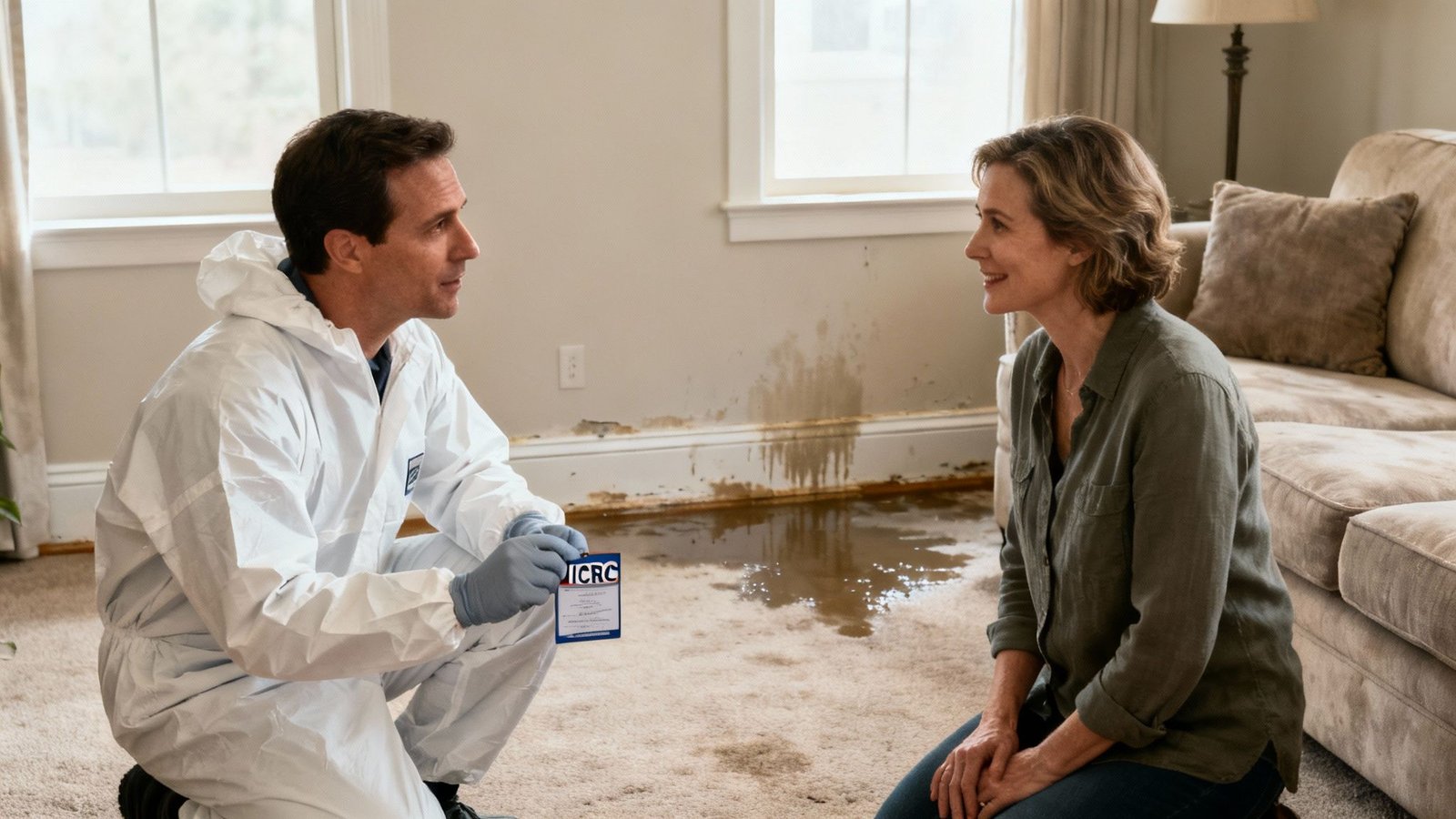
When your property gets hit with water, mold, or fire damage, the absolute last thing you need is a contractor who makes the situation even worse. The IICRC (Institute of Inspection, Cleaning and Restoration Certification) is the non-profit organization that literally writes the playbook for the entire restoration industry.
They set the standards and best practices that separate true professionals from everyone else. Choosing an IICRC-certified firm isn't just a good idea; it's a critical move to protect your property and your family's health, especially after a disaster like a burst pipe in a Sherman Oaks condo or a kitchen fire in a Burbank home.
The Core Benefits for Property Owners
Hiring a certified professional immediately puts you at an advantage, especially when you're dealing with the stress of a property disaster. These experts bring a level of specialized knowledge that a general contractor or handyman simply won't have for this kind of work.
Here’s what you get:
- Proven Expertise: Certified technicians have passed tough exams and gone through hands-on training. They know how to tackle complex issues, like finding hidden moisture pockets or getting rid of that stubborn smoke smell for good.
- Adherence to Safety Standards: They follow a strict set of rules to contain contaminants like mold or sewage, preventing them from spreading to clean areas of your home. This ensures the property is actually safe to live in again.
- Insurance Claim Credibility: This is a big one. Insurance adjusters know, trust, and respect IICRC standards. When they see a certified firm on the job, it means a smoother claims process, fewer questions, and faster approvals because the work is done by the book and documented correctly.
- Peace of Mind: Knowing your restoration team is held accountable to a professional code of ethics gives you confidence that the job will be done right the first time.
An IICRC-certified firm doesn't just clean up the mess. They restore your property according to globally recognized standards designed to prevent long-term problems like hidden mold growth and structural decay.
Ultimately, this certification is what separates the real experts from the rest. It’s your guarantee that the team showing up at your door has the training and ethical commitment to get your property back to its pre-loss condition safely and effectively. By understanding what professional property restoration truly involves, you can make the best decision when it matters most.
The Pillars of IICRC Standards and Trust
So, what is IICRC certification, really? It helps to first understand the organization behind the credentials. The IICRC isn't just another training company; it’s an officially recognized ANSI-accredited Standards Developing Organization (SDO). That single detail makes all the difference.
This isn’t just a fancy title. It means their guidelines aren’t dreamed up in some corporate boardroom. They're forged through a tough, consensus-based process that brings together scientists, public health officials, top-tier restoration contractors, and other industry veterans. This commitment to provable, science-backed methods is why IICRC standards are the absolute foundation of the modern restoration industry.
From Theory to Real-World Protection
These standards aren't just dusty old books on a shelf—they are the practical playbooks that protect your property when disaster strikes. When a pipe bursts in a Sherman Oaks home, a certified technician doesn't guess; they follow a precise protocol to stop secondary damage like mold and structural rot before it even starts.
For homeowners, two standards matter more than any others:
- The IICRC S500: This is the Standard for Professional Water Damage Restoration. It maps out everything from the initial assessment and water extraction to the science of drying, cleaning, and final repairs.
- The IICRC S520: This is the Standard for Professional Mold Remediation. It defines the strict rules for containment, safe removal, and post-job testing to guarantee your property is free of harmful contaminants.
Following these standards is what separates a true restoration professional from a handyman with a shop vac. A certified expert knows exactly how to handle the unique challenges of a flood in a low-lying Burbank property versus smoke damage from a fire near the dry hills of Glendale.
A Legacy of Excellence
This focus on high standards isn't a new trend. The IICRC was founded way back in 1972 with a clear mission: to raise the bar for the entire industry by setting superior ethical and technical benchmarks. Fast forward to today, and it's a global force with more than 53,000 active certified technicians and over 6,000 certified firms across the world.
When an IICRC-certified technician shows up at your door, they aren’t just bringing equipment. They’re bringing a proven methodology, a deep commitment to safety, and the expertise to restore your property correctly the first time.
This bedrock of trust ensures every single step, from the first assessment to the final walkthrough, is handled with precision and professional care. As you look deeper into the role of a certified restoration professional, it becomes obvious that this certification is your single best guarantee of quality and safety.
Decoding Key IICRC Certifications for Property Damage
Not every property disaster is the same, and your restoration team needs specialized expertise to match the specific problem you're facing. Understanding the key IICRC certifications helps you ask the right questions and ensures the technicians handling your emergency have the precise skills required for the job.
Instead of just a dry list of acronyms, let's connect these credentials to real-world scenarios you might encounter as a Los Angeles homeowner. This approach helps clarify exactly what is IICRC certification and why specific, hands-on training matters so much.
Key IICRC Certifications for Homeowners
To make this easier to digest, here’s a quick breakdown of the most common certifications you’ll see and what they actually mean for your situation.
| Certification (Acronym) | Full Name | What It Means for You |
|---|---|---|
| WRT | Water Damage Restoration Technician | This is the foundational certification for water emergencies. A WRT pro knows exactly how to handle extraction, moisture assessment, and drying to prevent secondary damage from a burst pipe or appliance leak. |
| ASD | Applied Structural Drying | This is the next level up. An ASD technician has advanced skills in drying building materials in place, potentially saving walls, floors, and cabinets that might otherwise be demolished. It's a game-changer for complex jobs. |
| AMRT | Applied Microbial Remediation Technician | If water damage leads to mold, this is the expert you need. AMRTs are specialists in safely containing, removing, and preventing the spread of mold, all while protecting your home's air quality. |
| FSRT | Fire & Smoke Restoration Technician | These pros are trained to handle the unique chemistry of smoke and soot. They know how to clean different surfaces without causing more damage and, most importantly, how to permanently eliminate stubborn smoke odors. |
Each of these certifications represents a deep dive into a specific type of disaster, ensuring the person in your home is following proven, science-backed methods.
Water and Mold Expertise
Water damage is one of the most common calls we get, but how it's handled in the first few hours determines whether it becomes a long-term headache.
A technician with the Water Damage Restoration Technician (WRT) certification is your first line of defense. This is the foundational credential, proving they know how to manage everything from a washing machine overflow in a Glendale laundry room to significant flooding from a burst pipe. Their training is laser-focused on proper water extraction and moisture assessment.
But what if the water has soaked deep into your walls or floors? That’s where Applied Structural Drying (ASD) comes in. This is the next level of expertise, training technicians to dry building materials in place, which can save walls, floors, and cabinetry that might otherwise be demolished. This skill is crucial for complex water mitigation scenarios.
And if that water sits too long and mold appears, you absolutely need an Applied Microbial Remediation Technician (AMRT). These are the specialists in safe and effective mold containment and removal, following strict protocols to protect your family and your home's air quality.
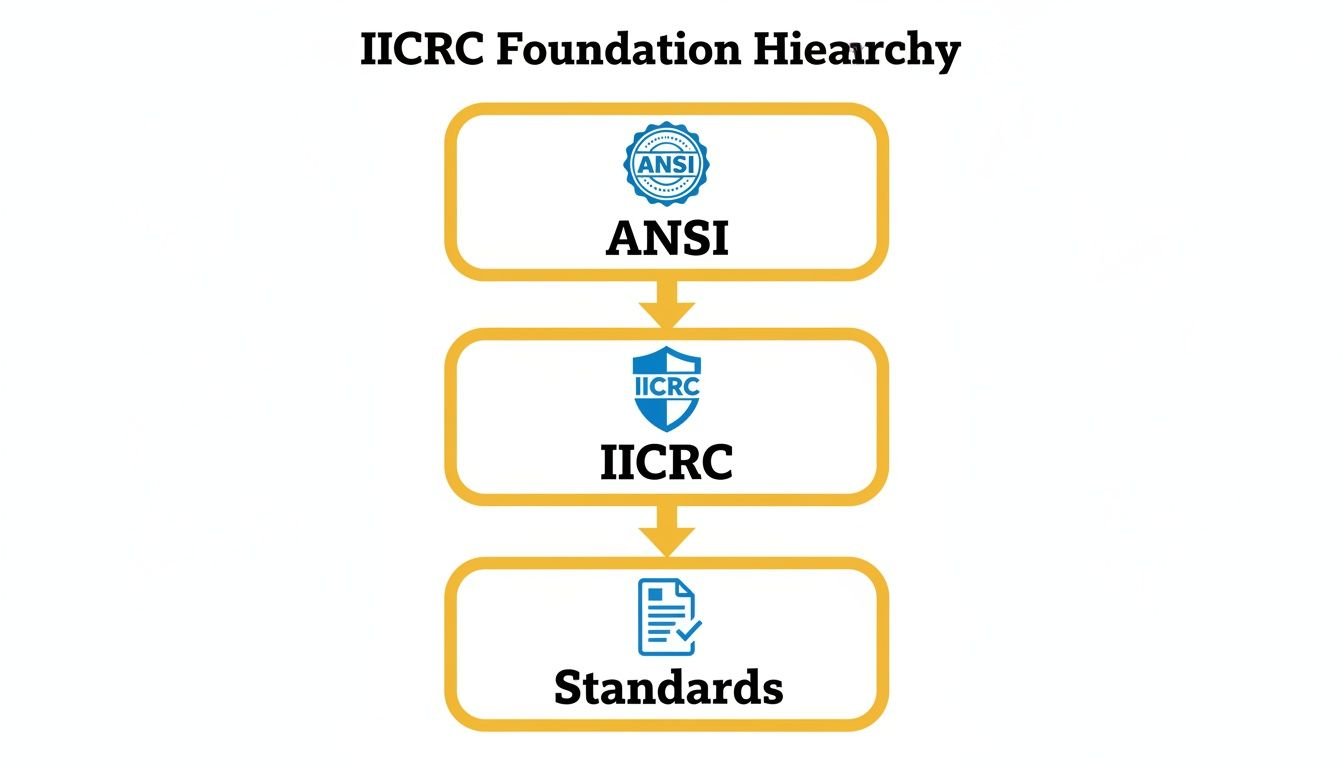
This hierarchy shows that the IICRC doesn't just make up its own rules. It operates under the rigorous oversight of ANSI, ensuring its standards for certifications like WRT and AMRT are credible and science-based.
Fire and Smoke Restoration Credentials
Recovering from a fire involves so much more than just cleaning up debris. It requires specialized knowledge to address hidden dangers and persistent odors that can make a home unlivable.
Choosing a technician with the right credentials is not just about getting the job done—it's about getting it done safely, correctly, and in a way that protects your property's value for the future.
The most critical certification here is the Fire & Smoke Restoration Technician (FSRT). These professionals are trained to handle the unique chemistry of smoke and soot. They know how to clean different types of surfaces without causing further damage and, most importantly, how to permanently eliminate stubborn smoke odors that can linger for years if not treated correctly. It's also vital for homeowners to know what to do after a house fire to mitigate further loss while waiting for professionals to arrive.
At its core, IICRC certification is all about rock-solid standards and education. There are nearly 30 different certification courses available, from WRT to AMRT, all backed by ANSI-accredited documents like the S500 for water restoration and the S520 for mold remediation.
Why Hiring an IICRC Certified Firm Is a Game Changer
While having individual certified technicians on a job is a great start, choosing an IICRC Certified Firm gives you a much stronger guarantee of quality and accountability. It’s a critical distinction.
Think of it this way: a certified tech is like a skilled surgeon. But a Certified Firm is the entire accredited hospital—it operates with proven systems, ethical oversight, and a deep-rooted commitment to getting things right.
This isn't just a fancy title. To earn and maintain the "Certified Firm" status, a company has to meet a strict, ongoing set of requirements that go far beyond just training. It means the entire organization, not just a few key employees, is dedicated to upholding the industry's highest standards on every single job.
The Certified Firm Advantage
So, what really sets a Certified Firm apart from a company that just happens to employ a few certified techs? The IICRC holds these firms to a rigorous code of conduct and several key operational benchmarks.
For a homeowner in Los Angeles, this translates into real, tangible benefits:
- Proof of Insurance: A Certified Firm is required to carry adequate liability insurance. This is your financial safety net, protecting you from risk in the rare case something goes wrong during the restoration.
- A Commitment to Training: They must keep certified technicians on staff. This ensures the people actually doing the work are up-to-date on the latest, most effective methods.
- Ethical Business Practices: Every Certified Firm pledges to operate with total integrity. That means clear, honest communication and handling every project with professionalism.
- A Formal Complaint Process: If you ever run into an issue, you have direct recourse through the IICRC’s formal complaint procedure. It’s a powerful layer of consumer protection you just don’t get otherwise.
Hiring a Certified Firm takes the guesswork out of the equation. It's like having a pre-vetted, trusted partner on your side right when you need it most.
A Critical Partner for Insurance Claims
For insurance companies, working with an IICRC Certified Firm is a massive advantage. Insurers trust the IICRC standards because they lead to predictable, reliable outcomes. When a Certified Firm handles a water damage claim in Beverly Hills or a fire cleanup in Studio City, the insurance carrier knows the job will be done right—the first time.
This strict adherence to a standardized, documented process is exactly what streamlines insurance claims. It leads to fewer disputes, faster approvals, and the confidence that the restoration work prevents costly future problems, like hidden mold growth.
This is precisely why so many insurance carriers recommend—or even require—their policyholders to use IICRC Certified Firms. They know this designation minimizes risk for everyone and ensures the property is restored to its proper pre-loss condition, protecting their investment and yours.
For homeowners, this means a smoother, far less stressful claims experience. If you need help finding qualified local professionals, our guide to the top water damage restoration companies is a great place to start.
Protect your property with proven expertise. Schedule your free assessment with our IICRC-Certified Firm today by calling (818) 336-1800.
How to Easily Verify IICRC Certification
In the restoration industry, talk is cheap. Anyone can say they're "certified," but an actual IICRC certification is a credential that has to be earned and maintained. Verifying it is your best defense against hiring someone with a good sales pitch but bad practices.
Thankfully, checking a company’s credentials is straightforward and only takes a minute. This quick step is what separates the legitimate, accountable firms from the ones who might cut corners, leaving you with a much bigger mess down the line. It puts the power back in your hands when it matters most.
Using the IICRC Global Locator
The single most reliable way to confirm a company’s or technician’s status is through the official IICRC database. It's a free tool built for homeowners just like you to check credentials in real-time.
Here’s how simple it is:
- Go to the IICRC Website: Just head over to the official IICRC Global Locator page.
- Enter the Company’s Info: You can search by the company name or even an individual technician’s name. For those of us in Los Angeles, typing the company name and selecting "California" usually does the trick.
- Check the Results: If the company is a legitimate IICRC Certified Firm, they will pop up in the search. A listing here confirms they meet the strict requirements for insurance, ethics, and continuous training.
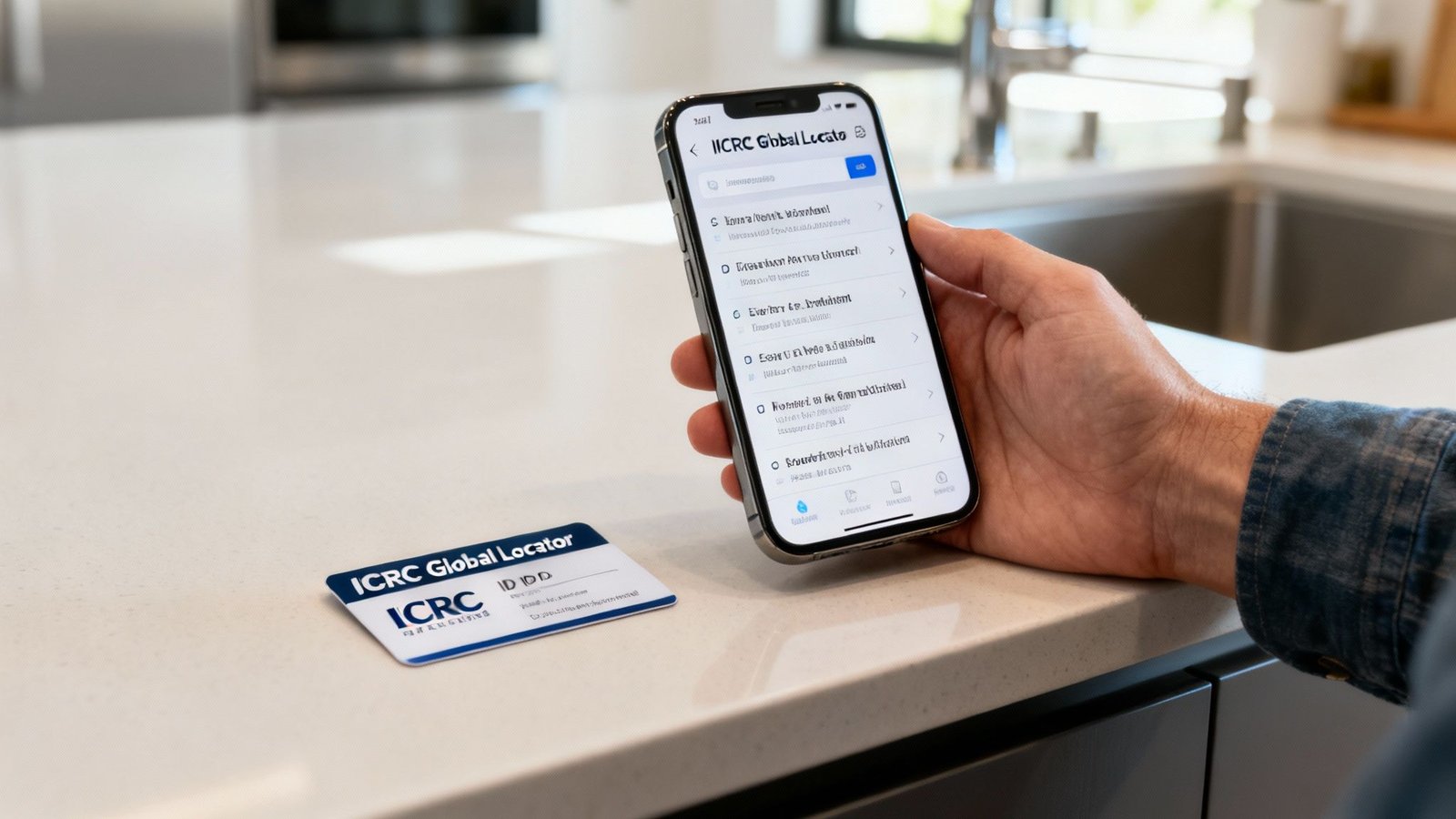
This locator is your direct pipeline to the IICRC’s official records, so you know the information is always accurate and current.
Spotting Red Flags
Knowing what to look for can help you weed out unqualified contractors fast. Pay close attention to vague language or any hesitation to show you proof of their certification.
A huge red flag is when a contractor claims they are "trained to IICRC standards" but can't provide a valid certification number or doesn't show up in the locator. This tricky phrasing often means they've sat in a class or read the book but haven't actually passed the exams or kept their credentials active.
Key Takeaway: An IICRC-certified technician will always have an ID card—either physical or digital—with their name, photo, certification number, and an expiration date. Don't be afraid to ask to see it.
For any true professional, this is a standard request. Their willingness to show you their credentials immediately is a great sign of transparency and proves they’re confident in their qualifications. If you want to dive deeper into what to ask a restoration company, our water damage restoration FAQ has more detailed answers.
Your IICRC Certified Partner for Los Angeles Restoration
When you’re dealing with property damage, you’re not just hiring a company—you’re looking for a local partner who lives and breathes the IICRC’s commitment to getting the job done right. Here at Onsite Pro Restoration, we take those high standards and turn them into real results for homeowners and property managers all across Los Angeles.
Our team’s IICRC certification isn’t just a piece of paper; it’s the blueprint for every single job we do. It’s what guides our response to a burst pipe in the San Fernando Valley, a smoke damage emergency in Beverly Hills, or a mold problem discovered in a Santa Monica apartment. We blend that technical, by-the-book expertise with a genuine understanding of the unique challenges LA properties face.
Our Pledge to IICRC Principles
We’re all-in on upholding the core pillars of the IICRC on every project, no exceptions.
- Expertise: Our technicians aren't just trained; they are certified specialists. They show up with state-of-the-art equipment and proven methods to restore your property correctly the first time.
- Ethics: We operate with total transparency. From the first free assessment to the final walkthrough, you'll get clear communication and honest advice. No runaround, no surprises.
- Customer Care: We get it—property damage is incredibly stressful. Our job is to manage the entire restoration process as efficiently as possible, giving you the peace of mind you deserve.
Your home is your biggest investment. Trusting its restoration to an IICRC Certified Firm is the best way to ensure it gets the highest standard of care, protecting its value and your family’s well-being.
As you look for an IICRC Certified Partner for restoration, it's also smart to know about other specialized local providers. For anyone in the area, exploring different home Los Angeles services can be a big help in coordinating your project effectively.
Ultimately, our team’s IICRC certification is your guarantee. It’s a promise of quality, safety, and a restoration process designed to get your life back to normal as fast as we can. We’re ready to put our certified expertise to work for you.
Frequently Asked Questions About IICRC Certification
Q: Is IICRC certification a legal requirement for restoration companies?
A: While not always required by state law, it is the undisputed professional standard. Most insurance companies and commercial property managers require IICRC certification because it guarantees the work is done correctly and safely, minimizing liability and preventing future issues.
Q: How long does an IICRC certification last?
A: Certifications are not a one-time achievement. Technicians must earn Continuing Education Credits (CECs) annually to maintain their status. This ensures they are always current on the latest industry science, safety protocols, and restoration technologies.
Q: Does it cost more to hire an IICRC-Certified Firm?
A: No, in fact, it almost always saves you money in the long run. Certified firms work efficiently using proven methods that prevent costly secondary damage, like hidden mold growth or structural rot. The real cost comes from hiring an uncertified crew whose corner-cutting leads to expensive rework down the line.
Q: What if a contractor says they "follow IICRC guidelines" but aren't certified?
A: This is a major red flag. Anyone can claim to follow the rules, but only a certified professional has passed a rigorous exam and is held accountable to a professional code of ethics. Always ask to see their certification card and verify their status in the official IICRC database.
When disaster hits your home, don't leave your recovery to chance. Onsite Pro Restoration delivers IICRC-certified expertise 24/7 across Los Angeles. Call us for a free, no-obligation assessment and get your property—and your life—back on track the right way. https://onsitepro.org