
When a traumatic event, sewage backup, or crime scene occurs at a property, the aftermath requires more than just standard cleaning. Biohazard clean up is a highly specialized service that restores safety by professionally removing and disinfecting areas contaminated with blood, bodily fluids, and other hazardous biological materials. This isn't janitorial work; it's a science-driven process governed by strict safety regulations to eliminate invisible threats like bacteria and viruses. For homeowners and property managers in Los Angeles, understanding this process is the first step toward making a safe, informed decision.
Trying to handle biohazard remediation yourself is not only dangerous but can lead to significant legal and health consequences. Wiping a surface might make it look clean, but pathogens can linger, posing a serious risk. Professional biohazard clean up ensures every threat is neutralized, making your property truly safe again.
Need immediate, professional biohazard clean up? Call Onsite Pro Restoration now for a 24/7 rapid response and a free, no-obligation assessment of your property.
Understanding What Biohazard Clean Up Really Means
A contaminated site looks normal to the naked eye — that’s the problem. Wiping down a surface might make it look clean, but dangerous pathogens can still be lurking, posing a major health risk to anyone who enters the area. Your average janitorial service just isn't equipped—or legally allowed—to handle these kinds of situations.
True biohazard clean up is all about scientifically restoring safety. It requires a systematic, step-by-step approach to contain, remove, and disinfect any area affected by blood, bodily fluids, raw sewage, or other hazardous biological materials. It’s a process that’s absolutely essential for health, legal compliance, and your own peace of mind.
The Science of Safety and Containment
The number one rule in professional remediation is containment. The whole goal is to stop cross-contamination in its tracks, making sure that pathogens from an affected area—say, a Burbank apartment after a trauma—don't spread to the rest of the property. The first step to understanding biohazard cleanup is appreciating these containment strategies. They're a lot like the principles of isolation rooms in hospitals, which are designed specifically to stop pathogens from escaping.
This meticulous work is exactly why you need to call in a professional. Certified technicians are trained to follow strict protocols, which include:
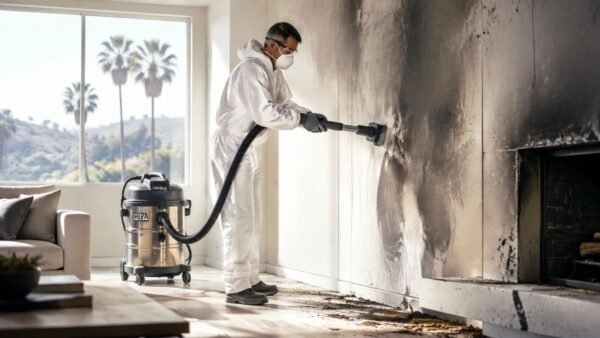
- Personal Protective Equipment (PPE): Technicians wear full hazmat suits, respirators, and multiple layers of gloves to protect themselves and to ensure they don’t carry contaminants off-site.
- Regulated Disinfectants: We only use EPA-registered, hospital-grade chemicals that are proven to eliminate viruses, bacteria, and fungi on contact.
- Compliant Disposal: All contaminated waste is carefully packaged, transported, and disposed of at a licensed biohazard facility, following all state and federal laws.
A Critical Service for Los Angeles Properties
From a sewage backup flooding a home in Sherman Oaks to an unattended death in a West Hollywood condo, the need for professional biohazard services is a stark reality in a dense city like Los Angeles. As public awareness of health and safety has grown, this specialized field has become more important than ever.
Biohazard cleaning services dominate the home decontamination market, capturing a whopping 42.50% revenue share in 2023. This is within a global sector valued at $4,979.4 million in 2024, which is expected to expand at a 9.5% annual growth rate through 2030. This demand highlights the critical need for professional sanitization in homes and apartments. You can explore more data on the home decontamination services market to understand the industry's growth.
At the end of the day, our job is to turn a dangerous, contaminated environment back into a safe space for you and your family. For a closer look at how we handle these complex situations across Los Angeles, you can learn more about our certified hazardous materials cleanup services.
When You Absolutely Need Professional Biohazard Remediation
It's crucial to know when a tough cleaning job crosses the line into a genuine biohazard emergency. We’re not talking about minor spills or everyday messes. These are real-world crises that carry invisible but potent risks, and they demand the skill of certified experts. Standard janitorial services aren't just unequipped for this work—they're often legally prohibited from even trying.
Here's a simple rule of thumb: if the situation involves blood, bodily fluids, sewage, or chemical residues, it’s time to call for professional biohazard clean up. Trying to handle these scenarios yourself without proper training and gear can lead to severe health problems and serious legal trouble.
Crime Scenes and Trauma Situations
After law enforcement finishes their investigation at a crime or trauma scene, the property owner is left with the overwhelming task of cleaning up. These sites are almost always contaminated with blood and other bodily fluids, which are notorious for carrying dangerous bloodborne pathogens.
The real threat is what you can't see. Pathogens like Hepatitis B, Hepatitis C, and HIV can survive on surfaces for days or even weeks, posing a grave risk to anyone who comes into contact with them. A technician handling a biohazard clean up at a trauma scene in a West Hollywood high-rise isn't just wiping things down; they're following strict protocols to decontaminate every single affected surface, making sure the property is biologically safe, not just visually clean.
Unattended Death Remediation
An unattended death, where a person passes away and isn't found for some time, creates one of the most hazardous and emotionally difficult environments imaginable. The natural process of decomposition releases biological fluids that soak deep into porous materials like flooring, drywall, and furniture.
This creates a severe biohazard that also produces powerful, persistent odors that are impossible to remove with household products. It takes specialized enzymes, hospital-grade disinfectants, and advanced deodorization equipment to fully restore the area. This is a delicate and complex task that has to be handled with both technical mastery and deep compassion.
Sewage Backups and Black Water Intrusion
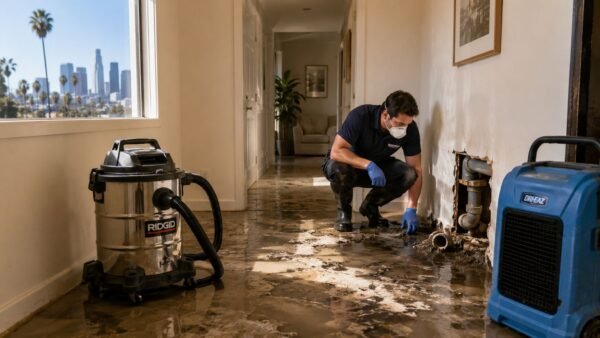
When a sewer line backs up, it floods a property with what’s known as Category 3 water, or "black water." This isn't just dirty water; it's a dangerous cocktail of bacteria, viruses, parasites, and fungi.
Picture a winter storm causing a sewage disaster that floods a Glendale home. That water contains pathogens like E. coli, Salmonella, and Giardia. Simply pumping the water out is nowhere near enough. Every surface the water touched must be meticulously cleaned, disinfected, and often physically removed to stop mold growth and the spread of disease. This is a textbook case where only professional biohazard clean up can make a home safe again.
A critical distinction must be made between clean water (Category 1), gray water (Category 2), and black water (Category 3). Black water from sewage or floodwaters is considered an immediate biohazard and requires a professional response to effectively mitigate health risks.
Hoarding Environments
Hoarding situations often hide severe biohazards under mountains of clutter. These environments can harbor everything from decomposing organic waste and animal feces to pest infestations and rampant mold growth.
Cleaning a hoarding site is a multi-layered operation. It involves far more than just removing debris; it’s about identifying and neutralizing hidden biological threats. Technicians must wear full Personal Protective Equipment (PPE) to safely navigate these conditions and bring the property back to a sanitary state.
Clandestine Drug Labs
Properties that were once used as clandestine drug labs, especially for making methamphetamine, are contaminated with a toxic legacy of hazardous chemical residues. These invisible chemicals can permeate walls, carpets, and even the ventilation system, posing serious long-term health risks like respiratory problems and neurological damage.
It takes specialized training to identify, neutralize, and remove these volatile chemical compounds. The biohazard clean up process for a former meth lab is highly regulated and often involves stripping the property down to its structural bones to guarantee every last trace of toxic residue is gone. In every one of these situations, the consequences of incomplete cleanup fall on whoever enters the space afterward. Professional expertise isn’t optional.
The Professional Biohazard Clean Up Process Step By Step
Professional biohazard clean up is far more than just "cleaning." It's a precise, highly regulated process designed to bring a contaminated space back to a safe, livable condition. Every step follows strict protocols from OSHA and the IICRC — organizations that set the legal and professional standards for this work.
Understanding how we handle these situations helps clarify why you can't just grab a mop and bucket.
Each scenario—whether it's a crime scene, an unattended death, or a raw sewage backup—triggers a specific, methodical workflow to guarantee total decontamination. This flowchart shows how different events all lead to the same essential response: a professional, structured cleanup.
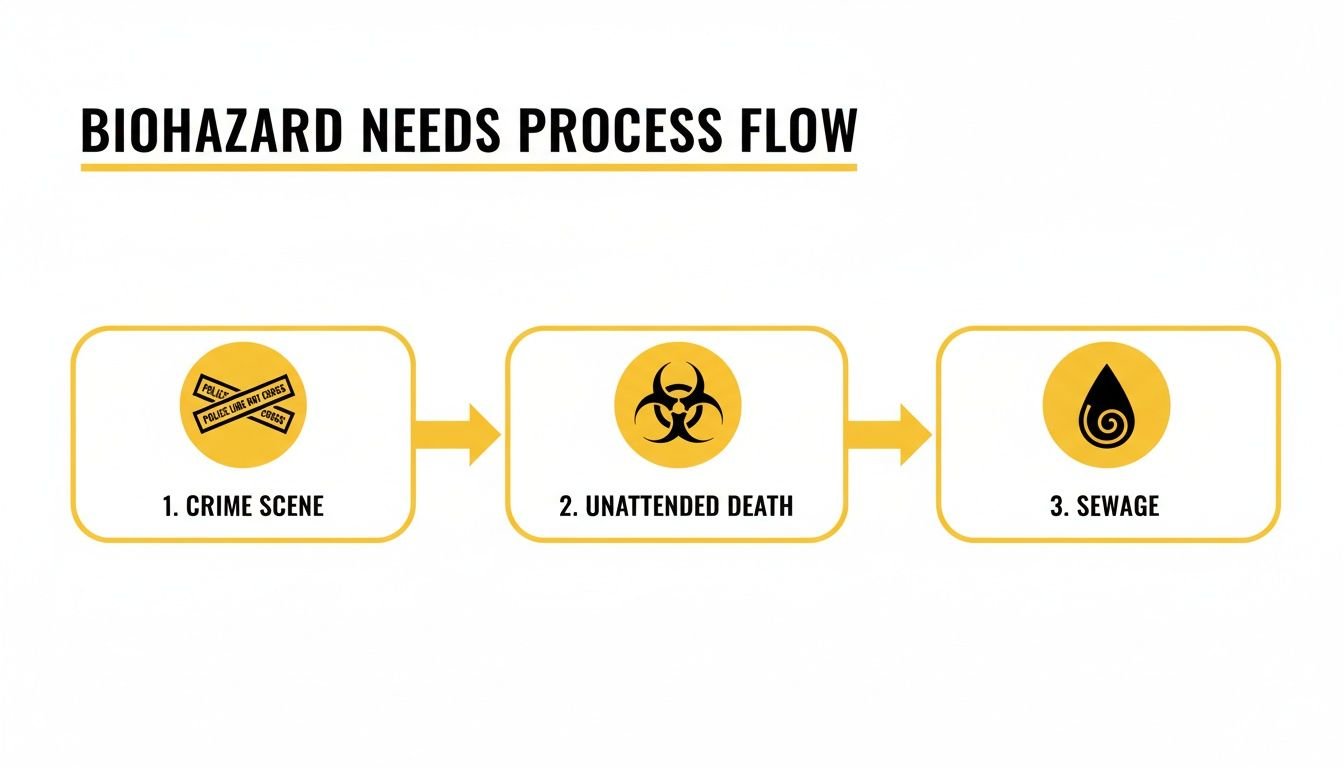
As you can see, distinct incidents all funnel into one necessary outcome: eliminating biological threats and making the area safe again. Let’s walk through what that looks like, step by step.
Step 1: Site Assessment And Securing The Area
The moment our technicians arrive, safety is the first and only priority. They start with a detailed assessment to map out the scope of the contamination, identifying every affected area and all potential hazards. This isn't a quick glance; it's a meticulous inspection to understand how far the biological material has spread and what porous materials it has soaked into.
Right after the assessment, the area is completely secured. We use warning tape and physical barriers to block off the site, preventing anyone from accidentally walking in and getting exposed. This is the critical first move to control the environment before any hands-on work begins.
Step 2: Isolating The Contamination Zone
Containment is everything in a successful biohazard clean up. To stop cross-contamination in its tracks, our technicians establish a controlled zone. It's a lot like setting up a hospital isolation room. We use heavy-duty plastic sheeting to seal off doorways, air vents, and any other pathway where airborne pathogens could escape.
Often, an air scrubber with a HEPA filter is brought in to create negative air pressure. This clever technique pulls clean air into the contaminated zone and traps any microscopic particles, making sure nothing dangerous gets pushed out into the rest of the property.
Before any physical work begins, understanding the proper use of Personal Protective Equipment (PPE) is non-negotiable for worker safety. Our teams are rigorously trained in donning and doffing hazmat suits, respirators, and multiple layers of gloves to eliminate any risk of exposure.
Step 3: Removing All Biohazardous Materials
With the site secure and contained, we move on to the "gross decontamination" phase. This is the careful removal of all visible biological matter and any items that have been directly contaminated. Our techs use specialized tools to handle everything—from blood-soaked drywall and carpeting to furniture and personal items that simply can't be saved.
Every single item we remove is treated as regulated medical waste. It's carefully placed into specially designed, puncture-proof biohazard containers marked with that universal biohazard symbol. This methodical process ensures every contaminant is safely locked away for transport.
Step 4: Deep Cleaning, Disinfecting, And Deodorizing
Once the main sources of contamination are gone, the real deep cleaning begins. This is a multi-stage process that goes miles beyond what simple surface wiping could ever achieve. Technicians apply EPA-registered, hospital-grade disinfectants to every single surface in the contained area—walls, floors, ceilings, and any structural elements left behind.
The specific disinfectants we use are chosen based on the biohazard we're dealing with. A sewage backup, for instance, requires formulas that kill dangerous bacteria like E. coli and Salmonella. If you're facing that kind of situation, it's worth understanding the specifics of a professional sewage damage cleanup response.
Finally, we use advanced deodorization methods, like thermal fogging or ozone generation. These techniques neutralize any lingering odors at the molecular level, ensuring that absolutely no trace of the incident is left.
Step 5: Compliant Disposal Of Contaminated Waste
Proper disposal isn't just a good idea—it's a legal and ethical requirement. All the sealed biohazard containers are transported by a licensed and certified waste hauler to a designated bio-waste facility. This entire process is strictly regulated by federal and California state laws to protect public health and the environment.
We maintain a detailed chain of custody for all waste, tracking it from the moment it leaves your property until it's been properly destroyed. This guarantees full compliance and gives you peace of mind that everything was handled by the book.
Step 6: Final Verification And Testing
Our job isn't done until we can prove the area is safe. After the final cleaning and disinfecting, a supervisor conducts a thorough visual inspection to confirm that all our high standards have been met.
In certain cases, especially with invisible threats like mold from a sewage backup or chemical residues, we may use post-remediation verification testing. This involves taking surface or air samples and sending them to an independent lab for analysis. It provides scientific proof that the property has been returned to a safe, pre-incident condition.
The professional biohazard remediation process is a sequence of deliberate, essential actions. The table below breaks down each stage to clarify its specific purpose and the critical tasks involved.
Key Stages Of Professional Biohazard Remediation
| Stage | Primary Goal | Key Actions |
|---|---|---|
| 1. Assessment | Identify scope and hazards | Inspect contamination, map affected areas, and establish a safety plan. |
| 2. Containment | Prevent cross-contamination | Seal off the zone with plastic sheeting and set up negative air pressure. |
| 3. PPE | Ensure worker safety | Wear full hazmat suits, respirators, and multiple glove layers. |
| 4. Removal | Eliminate biohazard sources | Carefully remove all contaminated materials into marked biohazard containers. |
| 5. Cleaning | Sanitize affected surfaces | Apply EPA-registered, hospital-grade disinfectants to all structures. |
| 6. Disposal | Handle waste legally | Use a licensed hauler to transport sealed containers to a bio-waste facility. |
| 7. Verification | Confirm safety | Conduct a final inspection and, if needed, perform third-party lab testing. |
Each step builds on the last, ensuring that by the end of the process, the environment is not just visually clean but biologically safe.
Navigating The Costs And Insurance Claims for Biohazard Clean Up
When you’re dealing with a traumatic event, the last thing you want to worry about is money. But for most property owners, two questions jump to mind almost immediately: “What will this cost?” and “Will my insurance cover it?”
The answers are often more straightforward than you might expect. Let’s break down how costs are determined and how insurance can provide significant peace of mind during a stressful time.
Factors That Determine Cleanup Costs
There’s no flat rate for biohazard clean up because no two situations are the same. A small blood spill on a tile floor is a world away from a widespread sewage backup that has soaked into drywall and carpeting.
To give you a transparent and accurate quote, we assess a few key variables:
- Type of Contamination: The nature of the biohazard dictates everything—the protocols we follow, the disinfectants we use, and the level of risk involved. Sewage cleanup requires a completely different approach than trauma scene remediation.
- Size of the Affected Area: This one’s simple: a larger contaminated zone requires more labor, materials, and equipment to decontaminate thoroughly and safely.
- Extent of Saturation: How deep did the contamination go? This is a critical factor. Biohazards that have soaked deep into porous materials like wood, concrete, or subflooring demand much more intensive work, sometimes including the removal of structural elements.
- Required Labor and PPE: The job's complexity determines how many certified technicians we need on-site and the specific Personal Protective Equipment required to keep everyone safe.
Will Insurance Cover Biohazard Remediation?
This is the single most important question we get, and the good news is that in most cases, yes, it’s covered. Most standard homeowner and commercial property insurance policies do cover the cost of professional biohazard clean up, especially when it’s the result of a covered event.
For example, a burst pipe is a covered peril in most policies. If that pipe leads to a major sewage backup, the cleanup and restoration are almost always covered. The same goes for remediation needed after a crime or trauma—it typically falls under the policy's property damage provisions.
Navigating an insurance claim can feel overwhelming on a good day, let alone after a traumatic event. You don’t have to do it alone. A professional restoration company acts as your advocate, providing the detailed documentation and direct communication that adjusters need to process your claim quickly.
We partner with you right from the start. Our team creates comprehensive reports with photographic evidence and detailed, line-item estimates that align with insurance industry standards. We speak directly with your adjuster to explain the necessary procedures, answer their questions, and get the approvals moving.
If you're dealing with a plumbing failure, understanding how homeowners insurance covers sewer backup can give you valuable insight into your policy.
Our goal is to manage the entire claims process so you can focus on what really matters. By handling the insurance side of things, we minimize your out-of-pocket expenses and lift the financial stress off your shoulders.
Why Certifications And Regulations Are Non-Negotiable
When you’re dealing with a biohazard scene, the urge to just get someone—anyone—on the phone to make it go away is completely understandable. But this is one of those critical moments where the credentials of the company you hire aren't just a nice-to-have; they are absolutely everything. Certifications and a strict adherence to regulations are the only things standing between a truly safe, restored property and a lingering health disaster waiting to happen.
Think about it this way: you’d never let an unlicensed person touch your home’s main electrical panel. The risk of a fire is just too high. The logic is identical for biohazard clean up, except the dangers are invisible pathogens, serious legal blowback, and long-term health consequences. Hiring an uncertified team is a massive gamble, and your family’s well-being is what’s on the table.
The Key Governing Bodies And What They Mean For You
A few key organizations set the professional standards for the biohazard remediation industry. When a company is certified or compliant, it’s not just a piece of paper—it's proof they’ve been trained to protect you, their own workers, and the wider community from harm.
OSHA (Occupational Safety and Health Administration): This federal agency’s Bloodborne Pathogens standard (29 CFR 1910.1030) is the absolute foundation of our industry. It dictates exactly how workers must be protected from blood and other infectious materials, covering everything from the right PPE to wear to mandatory vaccination protocols. Following OSHA rules isn't optional; it's the law.
IICRC (Institute of Inspection, Cleaning and Restoration Certification): The IICRC is the gold standard for setting best practices in cleaning and restoration. An IICRC-certified firm has proven its technical skills and is bound by a professional code of ethics. Their ANSI/IICRC S540 Standard for Trauma and Crime Scene Cleanup is essentially the expert playbook for doing this work safely and correctly.
EPA (Environmental Protection Agency): The EPA has the final say on how biohazardous waste is handled. A certified company knows the precise rules for packaging, transporting, and legally disposing of contaminated materials. This protects the public and saves you from the massive fines that come with illegal dumping.
The High Cost Of Cutting Corners
An unlicensed or uncertified operator is a magnet for risk. They might use the wrong chemicals, fail to properly seal off the contaminated zone, or just illegally dump hazardous waste—leaving you legally responsible for any fines or future damages. If pathogens are left behind, you could face future illnesses, and improper cleaning techniques can cause permanent damage to your property.
The professional biohazard clean up industry is not just a niche service; it's a rapidly growing and highly regulated market. The global biohazard and crime scene cleanup sector was valued at around $2.5 billion annually and is projected to hit $9 billion by 2033. This growth is driven by rising awareness and stricter regulations from bodies like OSHA, cementing the need for professional, compliant intervention. Discover more insights on the global biohazard cleanup market.
This market growth really highlights why professionalism is so important. Choosing a certified company like Onsite Pro Restoration ensures that every single step, from that first assessment to the final disposal, is handled with the highest level of proven expertise. We give you all the documentation you need for your own records and for insurance, proving the job was done right. To learn more about how we handle different types of contaminants, check out our guide on hazardous waste and spill cleanup.
Ultimately, those certifications are your guarantee that a dangerous and stressful situation has been truly, completely resolved, leaving your property safe, clean, and compliant.
How To Choose The Right Biohazard Company In Los Angeles
When you’re facing a biohazard situation, choosing the right cleanup company is the most critical decision you'll make. The health and safety stakes are incredibly high, and this is no time to risk hiring an unqualified or inexperienced crew. You need to ask tough, direct questions and listen for clear, confident answers. This checklist is designed to help you find a trustworthy, professional partner in Los Angeles who knows exactly what they're doing.
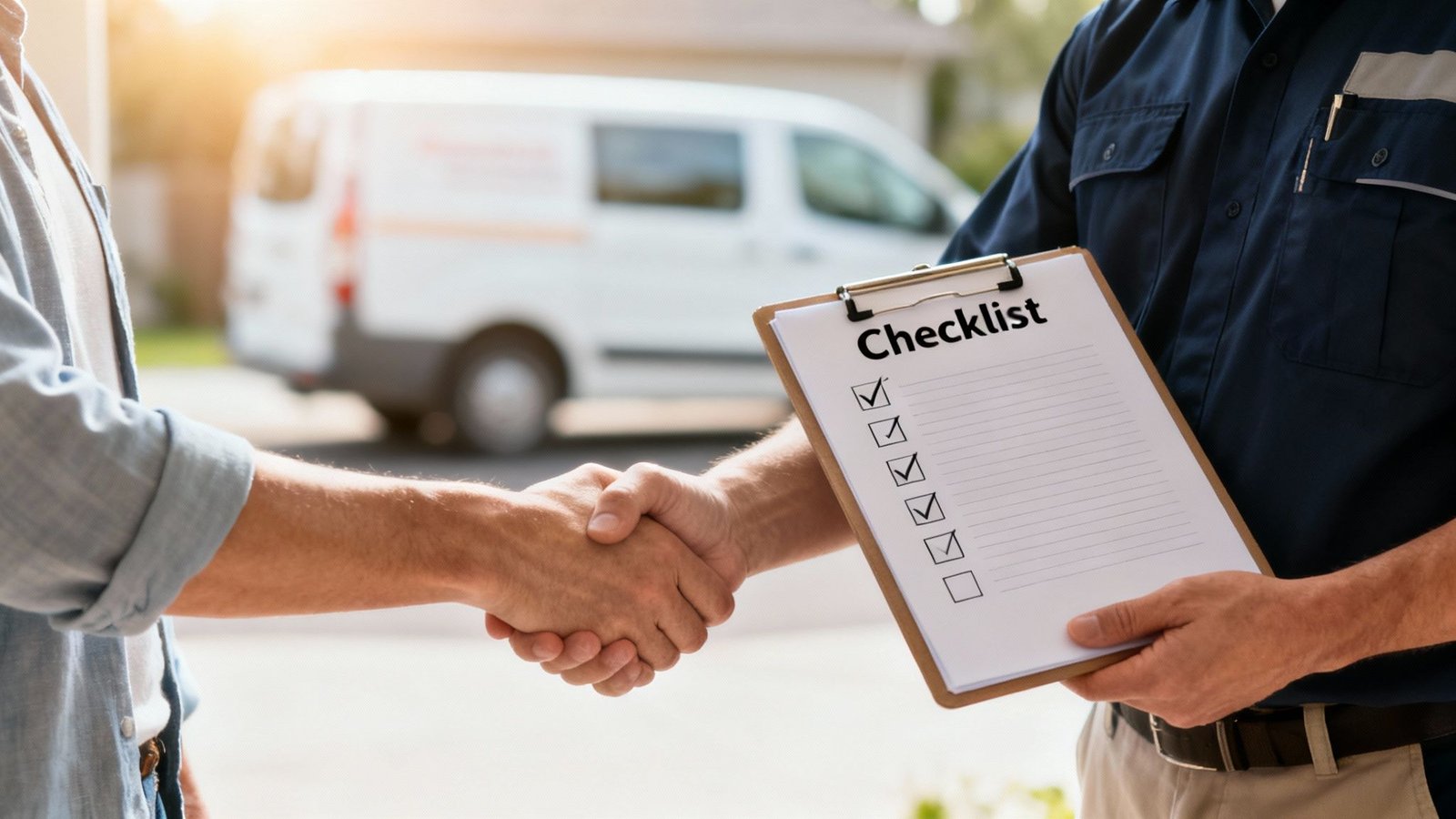
Before you sign a single document, use these questions to vet any company you're considering.
Verifying Certifications And Training
Your first questions should always be about qualifications. A company's certifications aren't just pieces of paper; they're proof of their commitment to safety, training, and the latest industry standards.
Are your technicians IICRC-certified? The Institute of Inspection, Cleaning and Restoration Certification (IICRC) is the gold standard in our industry. If the answer is "yes," it means their team is properly trained in the specific protocols for trauma and crime scene cleanup. It’s a must-have.
Is your company compliant with OSHA regulations? Get specific. Ask them directly about their adherence to OSHA's Bloodborne Pathogens standard. This is completely non-negotiable. It ensures their workers are protected, which in turn protects you and your property from cross-contamination.
Checking Insurance And Liability
Proper insurance is your shield. It protects you from any liability while the cleanup is happening on your property. Don't feel awkward asking for proof—a professional company expects it.
- Can you provide a certificate of insurance? Any reputable team will immediately provide documentation showing they have comprehensive general liability and workers' compensation insurance. This is your guarantee that if an accident happens, you're not on the hook.
Understanding Their Process And Experience
You need to know how they work and confirm they’ve handled situations like yours before, especially right here in Los Angeles. A team that understands local regulations for waste disposal is absolutely essential.
How do you handle and dispose of hazardous waste? Listen closely to their answer. It should include sealed, labeled biohazard containers, a licensed medical waste transporter, and a certified disposal facility. This confirms they follow all EPA and California state laws to the letter.
Can you provide references for similar jobs in the LA area? An experienced company will have a long list of successful projects, whether it was a trauma scene in Burbank or a sewage disaster down in Sherman Oaks. Their track record tells you everything you need to know.
A true professional will always provide a detailed, written work plan before they start. This document should clearly outline the scope of the job, all safety protocols they'll use, and a realistic timeline. It gets everyone on the same page from the beginning.
Ultimately, choosing a certified, insured, and experienced local expert is the only way to guarantee a safe and complete restoration. Many property owners find it helpful to learn about the different types of restoration and water damage companies near them just to understand what separates a true biohazard specialist from a general cleaner. Making the right call ensures your property is brought back to a safe, clean condition the first time.
Frequently Asked Questions About Biohazard Clean Up
When you're facing a potential biohazard situation in Los Angeles, you have urgent questions. Getting straight, honest answers is the first step toward making a safe and informed decision. Here’s what we hear most often from property owners.
Can I clean up blood or biohazards myself?
For a tiny drop of blood on a hard, non-porous surface, a properly equipped individual might handle it. However, any spill larger than a small plate, on porous materials like carpet or wood, or involving unknown pathogens requires professional biohazard clean up. The risk of exposure to bloodborne pathogens like Hepatitis is too high. Certified technicians have the correct PPE, hospital-grade disinfectants, and legal disposal methods to ensure safety.
How much does biohazard remediation cost in Los Angeles?
The cost varies based on several factors: the type and extent of contamination, the size of the affected area, how deeply materials are saturated, and the required labor. A small, contained trauma scene will cost less than a widespread sewage backup that requires removing drywall and flooring. Reputable companies provide a detailed, on-site assessment and transparent quote before work begins.
Does homeowners insurance cover the cost of trauma or crime scene cleanup?
In most cases, yes. Standard homeowner and commercial property insurance policies typically cover the cost of professional biohazard clean up resulting from a covered event, including trauma, crime scenes, or sewage backups. A professional restoration company can work directly with your insurance adjuster, providing the necessary documentation to streamline your claim and minimize out-of-pocket expenses.
How long does the biohazard clean up process take?
The timeline depends entirely on the situation. A simple incident might be resolved in a few hours, while a complex case like a hoarding environment or severe unattended death scene could take several days. The goal is never speed but thoroughness. A professional team will provide a realistic timeline after the initial assessment and ensure the property is 100% decontaminated and safe before completion.
What happens to the contaminated items that are removed?
Any item that cannot be safely decontaminated is considered regulated medical waste. This includes materials like contaminated drywall, carpeting, furniture, and personal belongings. These items are carefully sealed in labeled, puncture-proof biohazard containers and transported by a licensed waste hauler to a designated bio-waste facility for proper disposal according to federal and California state laws.
Is the property safe to re-enter immediately after the cleanup?
Yes. The primary goal of a professional biohazard remediation service is to return the property to a safe, pre-incident condition. Once the technicians have completed the cleaning, disinfecting, and deodorizing process, they conduct a final inspection and, if necessary, post-remediation testing to verify that the area is biologically safe. You will receive documentation confirming the property is safe for re-entry.
If you're facing a biohazard emergency in the Los Angeles area, don't wait. The Onsite Pro Restoration team is on standby 24/7 for a rapid, professional response. Call us now for a free, no-obligation assessment to restore safety to your property. Learn more about our dedicated biohazard cleanup services in Los Angeles.