
When you find soot on your walls, your first instinct might be to grab a wet rag and start scrubbing. Don't do it. That's the single biggest mistake you can make. The secret to effective soot removal from walls is to lift the dry particles first, before any liquid touches the surface. If you don't, you'll just smear that fine black powder deep into the paint, creating a permanent stain that's much harder to fix. This guide will walk you through the professional steps to safely and effectively clean soot from your home.
Don't let soot and smoke damage overwhelm you. For professional, fast, and reliable restoration in the Los Angeles area, trust the experts at Onsite Pro Restoration.
First Steps for Tackling Soot on Your Walls
Seeing those dark, ugly stains creeping up your walls is alarming. It could be from a candle left burning too long, a fireplace that isn't drafting correctly, or a minor kitchen fire. Whatever the cause, you need to understand what you're up against before you can clean it effectively.
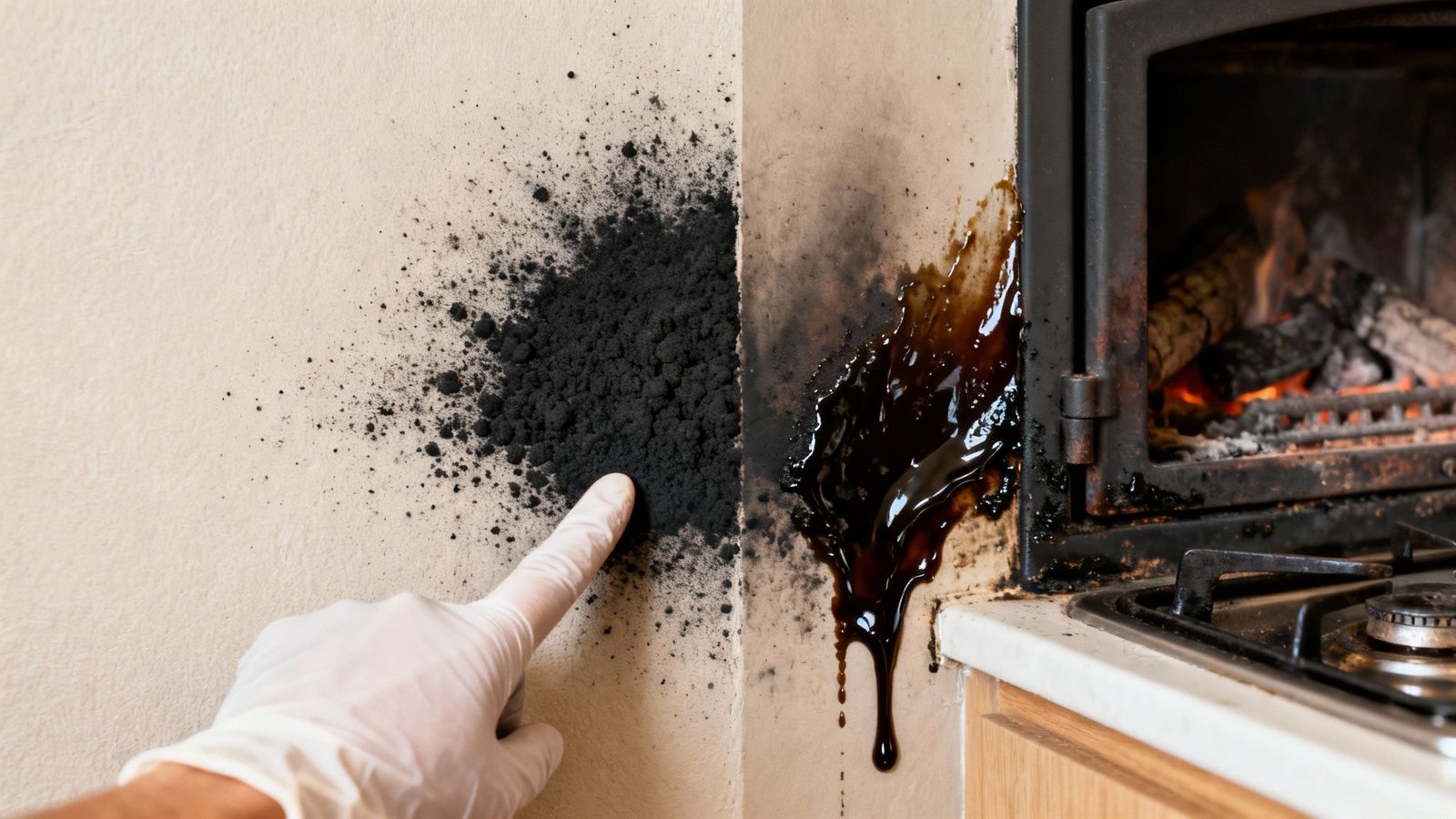
Not all soot is created equal. It’s a carbon-based particle that behaves very differently depending on what burned to create it. You're typically going to run into one of two kinds in your home.
Soot Types and Recommended Cleaning Approaches
To get started, you need to identify what kind of soot you're dealing with. This quick table breaks down the common types you'll find and the best way to approach each one. Getting this right from the beginning makes all the difference.
| Soot Type | Common Source | Appearance | Best Cleaning Method |
|---|---|---|---|
| Dry Soot | Wood-burning fires, candles | Light, fluffy, powdery, loose | Dry-cleaning soot sponge followed by a light degreaser |
| Oily Soot | Kitchen grease fires, burning plastic | Sticky, thick, greasy, smeary | Chemical degreasing agent followed by a soot sponge for residue |
| Fuel Oil Soot | Malfunctioning furnace, oil lamps | Oily, gray or brown, harder to remove | Heavy-duty alkaline cleaners and professional-grade solvents |
| Synthetic Soot | Burning foam, rubber, plastics | Dense, black, often sticky and odorous | Degreasing solvents and potentially sealing/repainting the surface |
Once you know the type, you can choose your tools. A dry soot problem is often manageable with the right technique, but oily or synthetic soot is a much bigger challenge that requires stronger chemicals and more expertise.
Beyond just being an eyesore, those tiny soot particles can get into the air, hurting your indoor air quality and posing a risk to anyone with respiratory issues. If you're looking at a large area of contamination, calling a professional is always the safest bet.
Key Takeaway: The type of soot dictates your cleaning method. Oily soot from a kitchen fire in a Sherman Oaks apartment requires a completely different strategy than powdery soot from a fireplace in a Beverly Hills home.
Knowing when to DIY versus when to call for backup is crucial. For a small patch of candle soot, you can probably handle it. But for anything more significant, professional services are the way to go. The cost to have a pro clean soot-damaged walls averages around $440 for a standard 10-by-10-foot room—a worthwhile investment for severe cases to ensure it's done right.
For a deeper dive into the entire process from start to finish, check out our comprehensive smoke damage restoration guide.
How to Properly Prepare for Soot Cleanup
Jumping into a soot cleanup without the right prep work is like trying to paint a room without drop cloths—you’re guaranteed to make a much bigger mess than you started with. The first, most critical step is to protect yourself and the rest of your home from the very particles you’re trying to remove.
Before you even think about touching a single stain, your focus has to be on containment and safety. Soot particles are incredibly fine. They go airborne in an instant and can spread from a single wall to your entire HVAC system in minutes.
Create a Safe Work Environment
Your absolute top priority is to isolate the affected area. This means protecting surfaces that aren't yet dirty and making sure the air you're breathing is clean. A few straightforward steps can stop cross-contamination in its tracks.
- Seal Off the Area: Grab some plastic sheeting and painter's tape to cover doorways leading to other rooms. This simple barrier is surprisingly effective at keeping airborne soot contained.
- Protect Your Floors and Furniture: Lay down heavy-duty plastic sheeting or canvas drop cloths across the floor. If you can, move furniture completely out of the room. Otherwise, cover it completely with plastic.
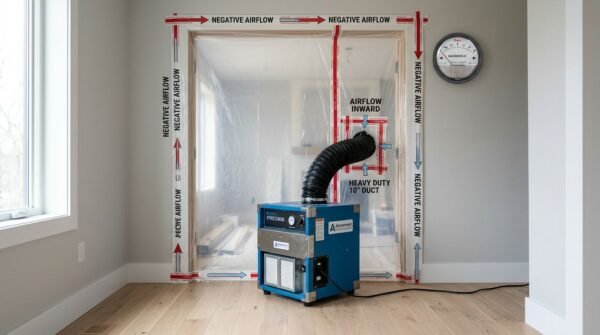
- Establish Cross-Ventilation: Open up the windows and stick a box fan in one, making sure it's facing out. This creates negative air pressure, which pulls the contaminated air outside instead of pushing it deeper into your house. For heavier contamination, you might need a professional-grade solution like an air scrubber rental to really filter the air effectively.
Shut Down Your HVAC System
This step is completely non-negotiable. Your HVAC system is designed to circulate air through every corner of your property. If it's running while you clean, it will suck up soot particles and blast them everywhere, contaminating the ductwork and every room it serves.
Crucial Tip: Turn your HVAC system off at the thermostat and, just to be extra safe, flip the corresponding circuit breaker. Don't even think about turning it back on until the cleanup is 100% finished and the area has been completely aired out.
Once the soot is gone, remember that proper surface cleaning is key to preventing future stains, especially if you plan to repaint. It's worth learning about the proper techniques for cleaning walls before painting to ensure you get a flawless, long-lasting finish.
Mastering the Art of DIY Soot Removal from Walls
Once your space is prepped and protected, it’s time to get down to business. The most important rule in soot removal from walls is simple, but it’s absolutely non-negotiable: never start with water.
I’ve seen it happen dozens of times. A homeowner grabs a wet rag, tries to wipe the soot, and ends up smearing the fine carbon particles deep into the paint. What was once a surface-level problem is now a permanent stain. Don't make that mistake.
The infographic below nails the foundational steps you must take before you ever touch the wall itself. Ventilation, protection, and HVAC shutdown are your first priorities.
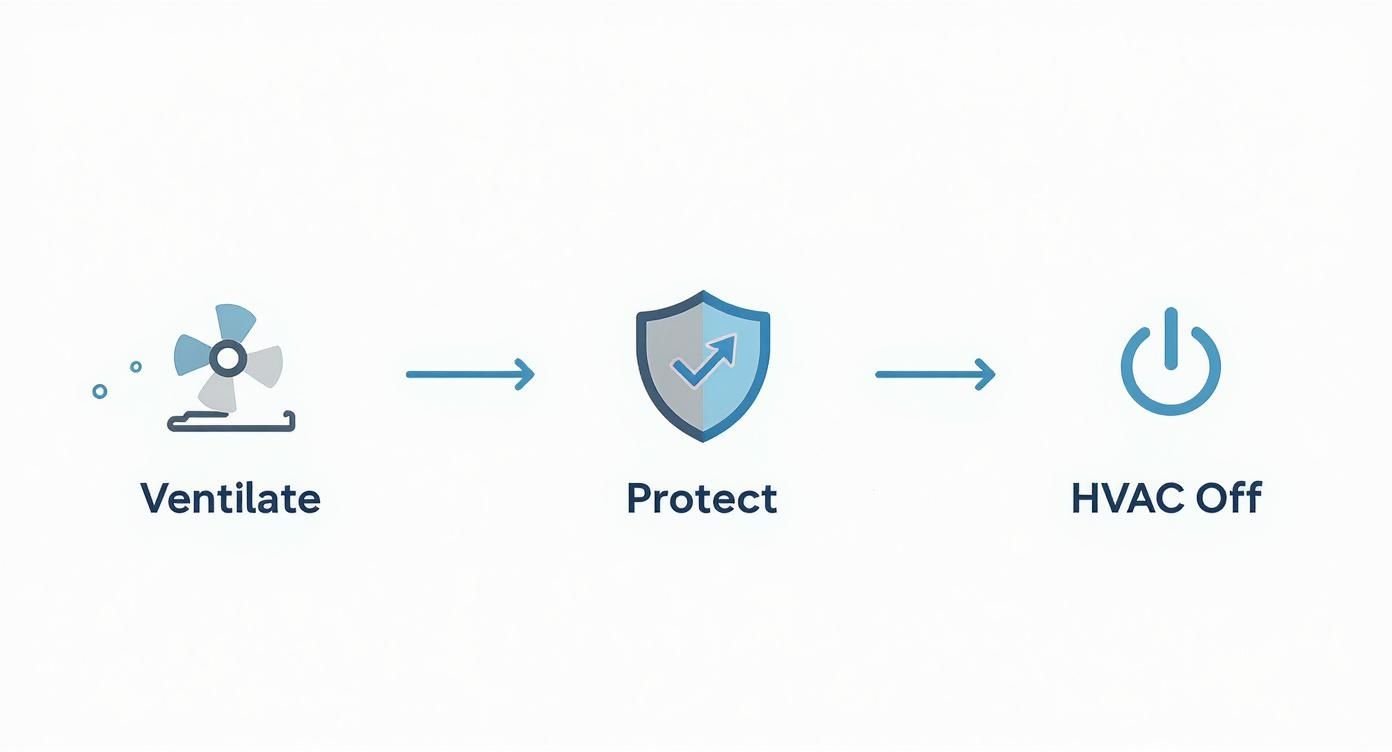
Think of this as your pre-flight checklist. Getting these right prevents a localized issue from contaminating your entire home.
The Dry-Cleaning Phase
Your go-to tool for this first step is a chemical dry-cleaning sponge, often just called a soot sponge. This isn't your average kitchen scrubber; it's made from vulcanized natural rubber specifically designed to grab and lift fine, dry particles like soot without grinding them into the surface.
Always start at the top of the wall and work your way down. Use firm, straight, overlapping strokes moving in one direction only. Fight the urge to scrub back and forth or in circles—that will just embed the soot. With each pass, you should see a clean path emerge.
Pro Tip: As the sponge gets loaded with soot, it stops working. Use a utility knife to carefully slice off the dirty outer layer, exposing a fresh surface. This simple trick is what separates a frustrating job from a successful one.
The Wet-Cleaning Phase
Only after you’ve removed every bit of loose, dry soot should you even think about introducing liquid. This second phase is for tackling the oily, greasy residue or faint stains that the dry sponge couldn't lift.
For tough, greasy soot—the kind you get from a kitchen fire—Trisodium Phosphate (TSP) is a trusted, powerful solution. Just be sure to handle it with care.
- Mixing Your Solution: Always wear gloves and eye protection. Mix about one tablespoon of TSP into a gallon of warm water.
- Application: Grab a clean sponge or cloth, dip it in the solution, and wring it out well. Gently wipe the remaining stains, working in small, manageable sections. Rinse your sponge frequently in a second bucket filled with clean water to avoid spreading grime around.
- Final Rinse: Once you're done cleaning with the TSP mix, go over the entire wall with a new cloth dampened with plain water. This removes any lingering chemical residue, leaving the surface ready for priming and painting.
This two-phase approach isn't just experience talking; it's backed by science. Recent studies show that just wiping with water is pretty useless, while the right mechanical cleaning methods can remove nearly 80% of soot particles. The technique really does matter.
Keep in mind, cleaning the walls is only half the battle. Soot often comes with a stubborn smoky smell that requires its own strategy. For those persistent odors, you’ll want to learn the best way to get smoke out of your house. And if you're dealing with other tough wall stains, this guide to cleaning mould from walls offers another great perspective.
Recognizing When You Need a Professional
While you can tackle minor soot from a tipped candle yourself, some situations are just too big, complex, or dangerous to handle alone. Knowing when to call in the pros is the most important step in protecting your property and your health.
There are a few clear red flags that tell you it's time to put down the sponge and pick up the phone.
The most obvious sign is the sheer scale of the damage. If soot has coated multiple rooms or is the result of a significant house fire, a professional response is non-negotiable. The residue from a major fire isn't just simple ash; it's a toxic, stubborn cocktail of every material that burned.
Hidden Dangers and Contamination Risks
What you see on the walls is often just the tip of the iceberg. Soot particles are microscopic, and they get everywhere—especially inside your home’s HVAC system. Once those contaminants are in the ductwork, they will circulate through your home indefinitely, wrecking your air quality and creating long-term health risks.
Professionals are trained to decontaminate the entire HVAC system, a critical step that’s almost always missed in a DIY cleanup.
Another key factor is the type of soot. Go ahead and touch it (with a glove on). If the residue feels thick, greasy, or oily, you're dealing with a much tougher cleanup. This kind of soot smudges and smears, and it requires powerful, professional-grade degreasers to break it down without leaving permanent stains.
Key Insight: A pro doesn't just clean what you can see; they address the entire system. They use advanced tools like thermal foggers to neutralize odors that have seeped deep into porous materials and HEPA air scrubbers to capture unseen airborne particles.
The Professional Toolkit
The equipment used for professional soot removal from walls is on a completely different level than anything you can buy at a hardware store. For instance, on large commercial soot jobs, specialized firms deploy industrial-grade, HEPA-filtered vacuums to guarantee every last particle is removed from massive surface areas.
If there's any concern about structural integrity or if the contamination is widespread, only a certified team has the training to manage the risks safely. For comprehensive solutions, you can explore our professional fire damage restoration services to see how we handle even the most severe cases.
The Final Touch: Sealing and Repainting
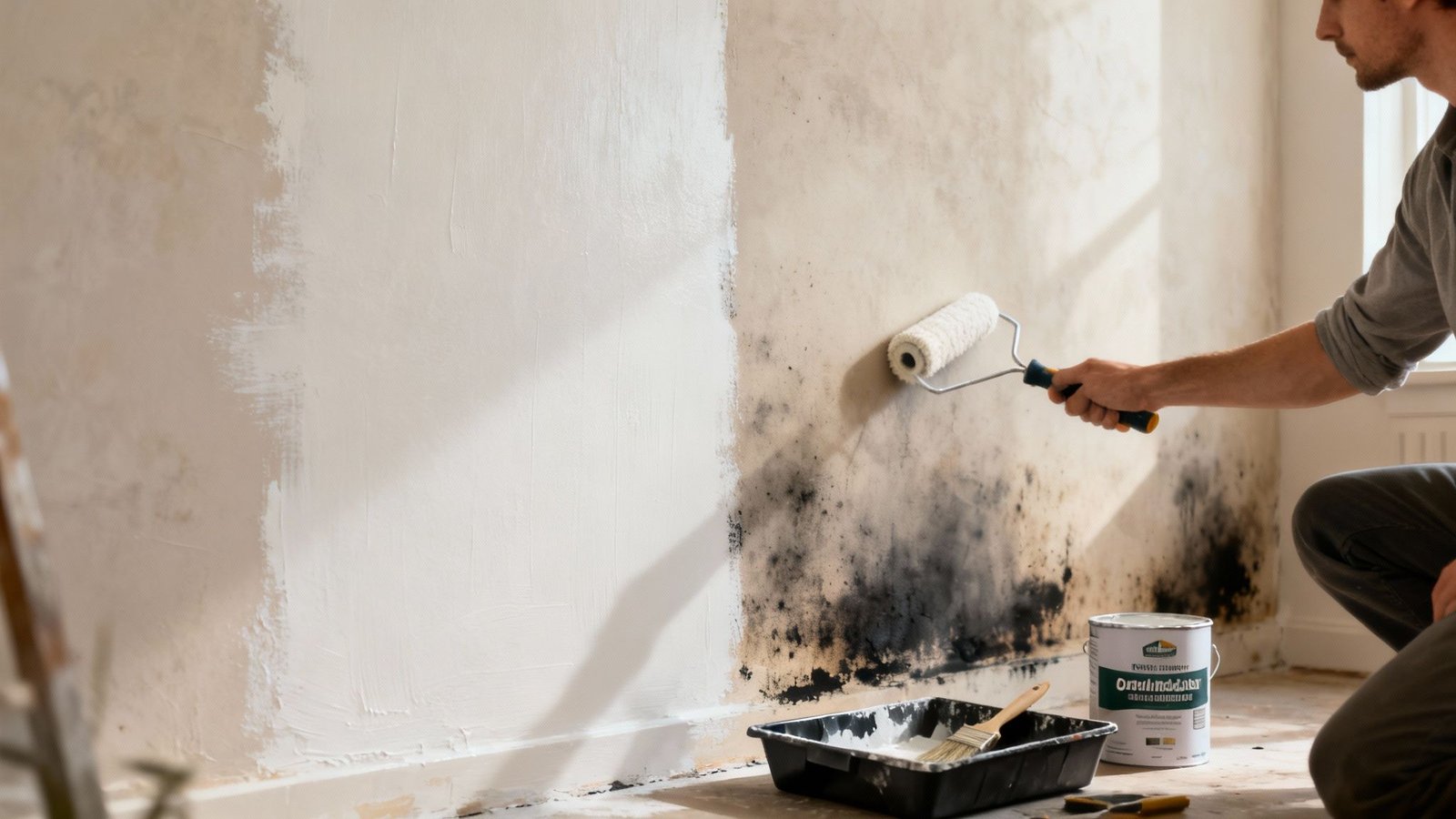
Getting that last bit of soot off the wall feels like a huge win, but you're not quite at the finish line yet. Even with the best cleaning job, tiny soot particles and odor molecules burrow deep into porous surfaces like drywall. If you don't handle this right, you'll be dealing with faint stains and a smoky smell that loves to reappear on humid days.
A common mistake is to just jump straight to painting over the cleaned wall. This almost always ends in frustration. Sooner or later, those stubborn stains and smells will bleed right through the new paint, and you'll be right back where you started.
Sealing Stains and Odors for Good
The real secret to a fully restored wall is using the right kind of primer. You need a specialized stain-blocking, odor-sealing primer that’s built to create an impermeable barrier. This step is non-negotiable—it physically locks in any leftover discoloration and smoky odors so they can't escape.
When it comes to primers that get the job done, you have a couple of fantastic choices:
- Shellac-Based Primers: These are pretty much the gold standard for blocking severe stains and odors. They dry fast and create an incredibly tough seal.
- Oil-Based Primers: Also a highly effective option, oil-based primers offer amazing adhesion and powerful stain-blocking capabilities.
I remember a job at a Santa Monica condo where the client was at their wits' end with a smoky smell that just wouldn't quit, no matter how many times the walls were cleaned. We applied a single coat of a shellac-based primer, and it completely encapsulated the odor before we even opened a can of paint. Problem solved for good.
Choosing Your Final Paint Finish
Once the primer has had a chance to fully cure, you're finally ready to bring the room back to life with paint. Pick a high-quality interior paint in your desired color and finish.
Applying two fresh coats will completely restore the wall to its original look, leaving no trace of the fire damage behind. This final step isn't just about looks; it also gives you a durable, cleanable surface for the future.
If the fire involved synthetic materials like plastic or foam, you might be dealing with more than just simple soot. To ensure you're not leaving any hazardous residues behind, you might want to learn more about professional hazardous materials cleanup.
FAQs on Soot Removal from Walls
Even with a solid plan, it’s normal to have questions when you’re staring at a soot-stained wall. Here are the straight-up answers to the most common things we’re asked by homeowners dealing with this messy job.
Q: Can I just use soap and water to clean soot off my walls?
A: Please don’t. This is one of the most common mistakes people make, and it’s a big one. Water-based cleaners almost always smear greasy soot and will actually push dry soot deeper into porous surfaces like drywall. What you end up with is a much larger, darker stain that’s nearly impossible to remove later. Always, always start with a dry-cleaning method first, like a soot sponge, before you even think about introducing any liquids.
Q: How do I know if the soot in my home is hazardous?
A: The honest answer? All soot is bad for you to breathe in. But the soot that comes from burning plastics, synthetic fabrics, or electronics is especially toxic. If the damage is the result of a house fire, covers more than a small area, or if anyone in your home has asthma or other respiratory issues, you absolutely have to treat it as hazardous. In those cases, your safest bet is to call a professional restoration company.
Q: Is a soot sponge a magic eraser for all types of soot?
A: They’re fantastic, but not for everything. Soot sponges work best on that dry, fluffy soot—the kind you get from a rogue candle or a puff-back from the fireplace. They aren't nearly as effective on the heavy, oily soot from a kitchen grease fire. They can still be a good first pass to lift off the loose top layer, but you'll need a powerful degreasing cleaner to finish the job. For sticky, greasy residue, you will always need a chemical degreaser as your primary cleaning agent after the initial dry pass.
Q: Will I have to repaint my walls after cleaning the soot?
A: More than likely, yes. Even after the most thorough cleaning, faint stains and that stubborn smoky smell often linger deep inside the drywall. We get into the science of why certain smells stick around in our odor removal FAQ. To truly get rid of it for good, you'll need to apply a specialized stain-blocking and odor-sealing primer before you paint. It’s the only reliable way to guarantee a fresh finish and stop old stains and smells from bleeding through your new paint job.
Don't let soot and smoke damage overwhelm you. For professional, fast, and reliable restoration in the Los Angeles area, trust the experts at Onsite Pro Restoration.