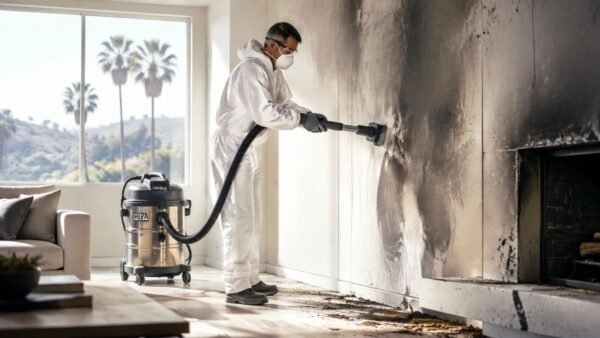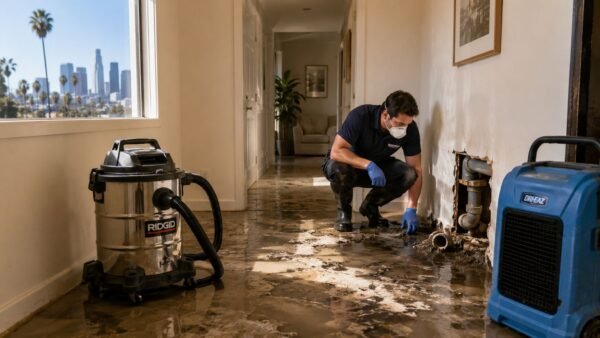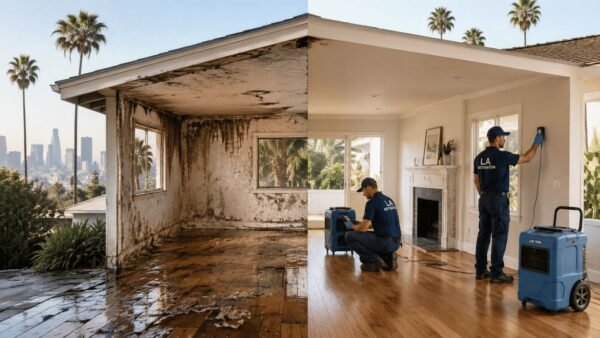

When water floods your business, it’s not just an inconvenience—it's a direct threat to your bottom line. Commercial water damage restoration is the specialized, multi-step process designed to get you back up and running as fast as possible after a water intrusion. The goal isn't just to dry things out; it's about minimizing business interruption, protecting valuable assets, and preventing long-term problems like structural rot and dangerous mold growth. From a burst pipe in a Los Angeles high-rise to a storm surge affecting a coastal warehouse in Santa Monica, a rapid and professional response is non-negotiable.
Don't let water damage put your business on pause. The expert team at Onsite Pro Restoration is on call 24/7 to deliver immediate, professional commercial water damage restoration services.
Why Immediate Commercial Water Damage Restoration is Critical
When your business is hit by water—whether it’s a burst pipe in a Sherman Oaks office, a storm flood, or a sprinkler system malfunction—every second counts. Unlike a residential flood, the stakes here are much higher. We're talking about lost revenue, ruined inventory, damaged equipment, and even potential liability issues.
That's why professional commercial water damage restoration isn't just about mopping up. It’s a systematic, multi-phase process designed to restore your property safely and efficiently. The entire process is built on a few critical phases that protect your assets and ensure a complete recovery.
This infographic gives you a bird's-eye view of the restoration journey, from the moment you make that emergency call to the final nail of the repairs.
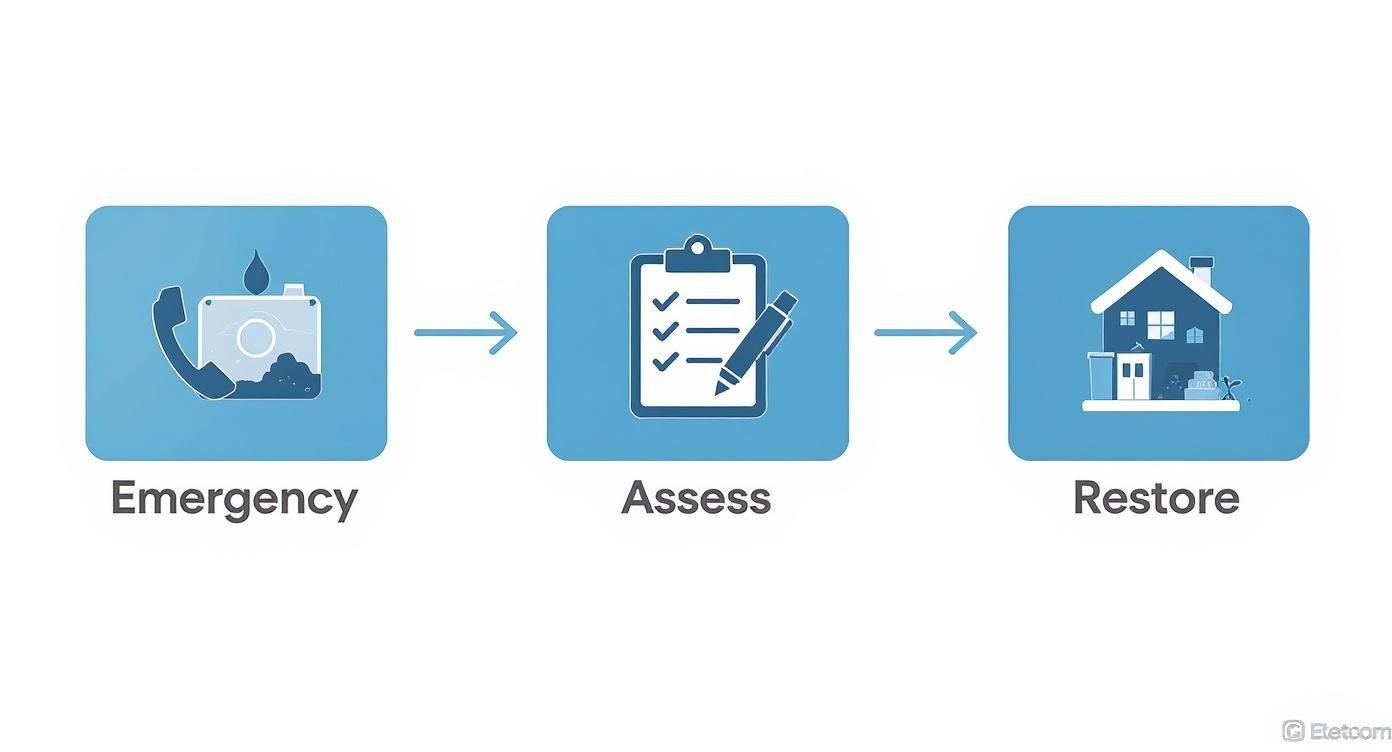
As you can see, the entire response hinges on rapid action, expert evaluation, and systematic execution. It’s a proven formula.
The Key Phases of Commercial Water Damage Restoration
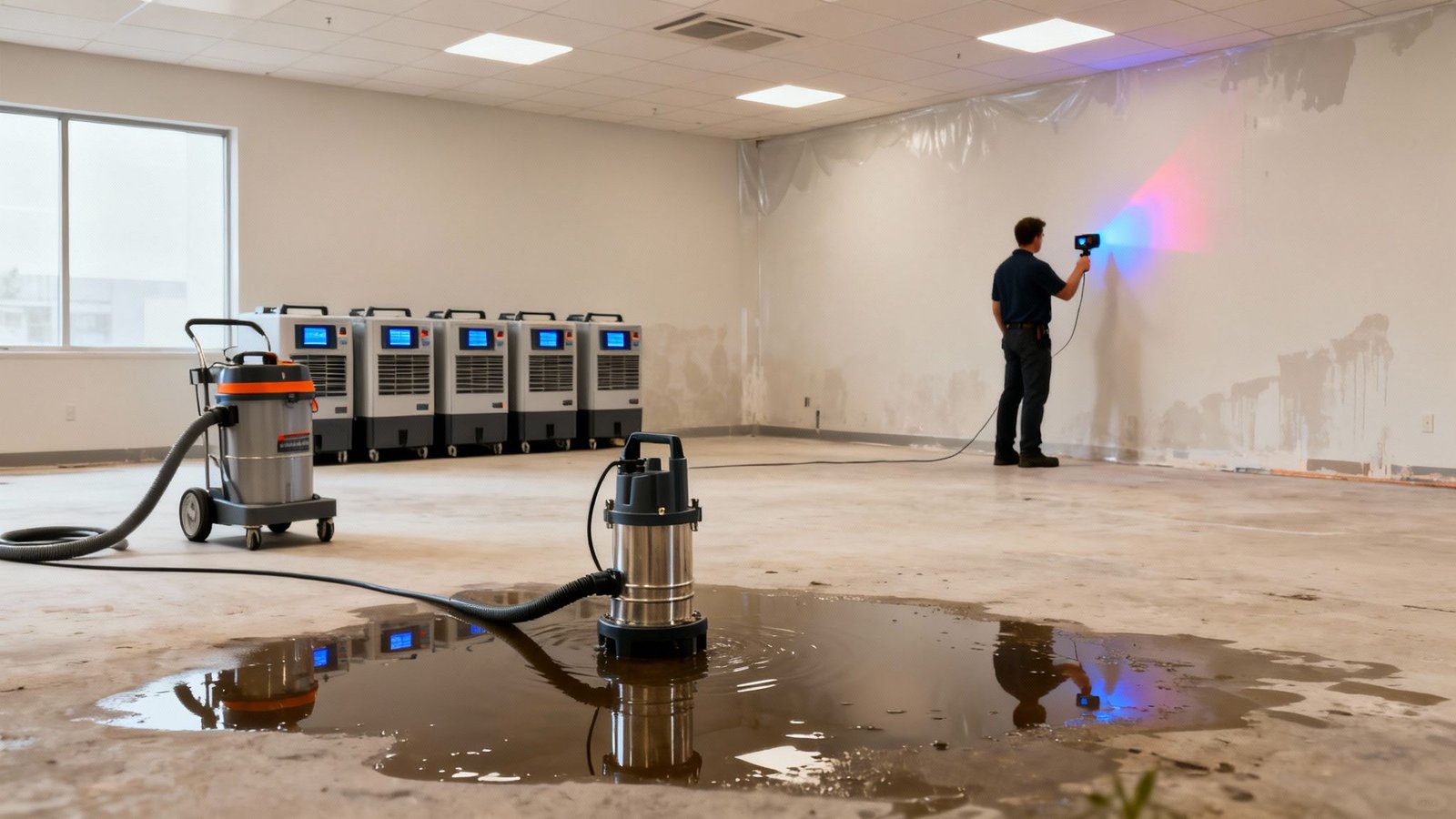
The absolute first priority is always safety and damage control. That means a lightning-fast response to shut down the water source and secure the building. From there, certified technicians conduct a detailed assessment, using advanced tools like moisture meters and thermal cameras to map out exactly how far the water has traveled.
This initial evaluation is the foundation for the entire project, ensuring every subsequent action is targeted and effective. Here’s how the workflow typically breaks down:
- Emergency Contact and Rapid Response: The clock starts ticking the moment you call a 24/7 restoration company. Immediate action is the single best way to prevent secondary damage from setting in.
- Damage Assessment and Inspection: Technicians arrive on-site to evaluate the full scope of the damage. They’ll identify the water's source and, just as importantly, classify its contamination level (clean, gray, or black water).
- Water Extraction and Removal: Forget shop vacs. This step involves high-powered, truck-mounted pumps and vacuums to remove thousands of gallons of standing water quickly.
- Drying and Dehumidification: Once the bulk water is gone, the real science begins. A strategic grid of industrial-grade air movers and dehumidifiers is set up to pull stubborn moisture from deep within walls, floors, and other structures.
- Cleaning and Sanitizing: Every affected surface and item that can be salvaged is thoroughly cleaned. Professionals use antimicrobial agents to kill off any lingering bacteria and prevent mold from taking hold. You can explore a full range of Onsite Pro Restoration services to see just how comprehensive these solutions are.
- Full Restoration and Repair: The final phase is all about putting things back together. This can involve anything from replacing drywall and flooring to major structural repairs, all aimed at returning your property to its pre-loss condition.
The First 24 Hours: Assessment and Mitigation
When it comes to commercial water damage, the first 24 to 48 hours are everything. That initial window is where the battle is won or lost—it’s the difference between a manageable cleanup and a catastrophic, long-term disruption to your business. A professional commercial water damage restoration crew knows this, and their first move is always a rapid, methodical assessment to stop the bleeding and set the stage for a full recovery.
The moment our certified technicians arrive, safety is the only thing that matters. They immediately scan the area for hazards: are there live electrical outlets underwater? Is the ceiling sagging and unstable? Are there slick spots that could cause a fall? Once the site is secured, the next priority is shutting down the source of the water. Getting a handle on what went wrong is key, which is why understanding and preventing burst pipes and other common issues is so crucial for property managers.
Classifying the Threat Level
One of the most critical steps happens right away: classifying the water itself. This isn't just industry jargon; it’s a decision that dictates every single action that follows, from the type of protective gear our team wears to the specific cleaning agents we use. The IICRC has clear standards for this, and they’re non-negotiable for a safe and effective restoration.
We break down the water into three categories, and understanding them helps business owners grasp the seriousness of the situation.
Understanding Water Contamination Levels
| Category | Description | Common Sources | Necessary Response |
|---|---|---|---|
| Category 1 | Clean Water. This is water from a sanitary source, like a broken water supply line. While it starts out clean, it can quickly become contaminated if left to sit. | Broken water supply lines, overflowing sinks (with no contaminants). | Rapid extraction and drying. Porous materials can often be saved. |
| Category 2 | Gray Water. This water is significantly contaminated and can cause illness if you come into contact with it. Think of it as used water. | Dishwasher overflows, washing machine leaks, sump pump failures. | Requires specialized cleaning protocols. Carpet padding is usually removed. |
| Category 3 | Black Water. Grossly unsanitary and a serious health threat. This water is teeming with harmful bacteria, viruses, and other pathogens. | Sewage backups, river flooding, any water that has come into contact with raw sewage. | Demands full personal protective equipment (PPE) and removal of all affected porous materials. |
Each category requires a fundamentally different approach, with Black Water demanding the highest level of caution and expertise to protect everyone involved.
Protecting Your Assets and Containing the Damage
As the assessment wraps up, our team is already in motion with initial mitigation. This means protecting what matters most to your business—we’ll move or shield expensive equipment, critical documents, and valuable inventory.
Next comes containment. Using heavy-duty plastic sheeting and negative air pressure machines, we create a sealed barrier around the affected zone. This is a vital step. It prevents moisture—and any airborne contaminants—from migrating into untouched areas of your building. Our team at First Onsite Pro Restoration has honed these rapid containment strategies to minimize business interruption and protect your property.
These quick, decisive actions are part of a massive global effort. The disaster restoration market is on track to hit an incredible USD 55.53 billion by 2030, a number fueled by the growing risks of flooding and aging infrastructure. It's a clear sign that being prepared for water emergencies is more important than ever.
Advanced Water Extraction and Structural Drying
Getting standing water out of your commercial property is only the first, most visible step. The real challenge in commercial water damage restoration is tackling the moisture you can't see—the water that has soaked deep into drywall, subflooring, and even the structural beams.
Hidden moisture left in walls, subflooring, and beams doesn’t stay hidden — it causes mold, wood rot, and structural decay that compounds fast. If left alone, it's the perfect recipe for mold growth, wood rot, and long-term structural decay that can cripple a business.

To fight back, professional technicians deploy a serious arsenal of specialized equipment. This isn’t a job for shop vacs and household fans; it’s a scientific process. High-powered, truck-mounted vacuums and submersible pumps are brought in to extract thousands of gallons of water in a shockingly short amount of time. It's a crucial first strike.
You can get a better sense of these powerful methods by exploring our emergency water extraction services.
The Science of Structural Drying
Once the bulk of the water is gone, the focus shifts to something called psychrometry—the actual science of drying. This is where technicians manipulate temperature, humidity, and airflow to create the perfect drying environment inside your property.
- Industrial-Grade Dehumidifiers: These are the heavy hitters. They pull massive amounts of water vapor right out of the air, stopping it from reabsorbing into building materials.
- High-Velocity Air Movers: Positioned strategically, these powerful fans create an airflow vortex. This controlled current sweeps across surfaces like carpet and drywall, dramatically speeding up evaporation.
Together, these create a powerful drying effect that methodically pulls moisture from deep within the building’s structure.
Finding Hidden Moisture with Technology
So, how do professionals know when a building is truly dry? They don’t guess. They rely on advanced diagnostic tools to hunt down and measure hidden moisture pockets that would otherwise go completely unnoticed.
Technicians use thermal imaging cameras to "see" temperature differences in walls and ceilings, which are often a dead giveaway for trapped water. They also use penetrating and non-penetrating moisture meters to get precise readings of moisture content in materials like wood and concrete, ensuring every last drop is accounted for.
This meticulous, technology-driven approach is what separates professional restoration from a simple cleanup job. It's the only way to guarantee the property is returned to a safe, stable state and to prevent the costly secondary damage that can plague a business for years to come.
Cleaning, Sanitizing, and Preventing Mold Growth
Once the big fans and dehumidifiers go quiet, you might think the job is done. The space looks dry, but looks can be deceiving. The next critical phase of commercial water damage restoration is a deep clean and sanitization—a step you absolutely cannot skip, especially if you’re dealing with contaminated Gray or Black Water.
This isn’t just about wiping things down. It’s a deliberate process to kill off any lingering contaminants and, more importantly, stop a potential mold infestation before it ever starts.
Simply drying the air and surfaces is never enough. Any microscopic bacteria or mold spores left behind have to be neutralized, or you’re just setting yourself up for bigger problems down the road.
Proactive Mold Prevention and Treatment
The whole point here is to get ahead of mold. Because mold spores can colonize damp materials in as little as 24-48 hours, we have to be aggressive and proactive with treatment.
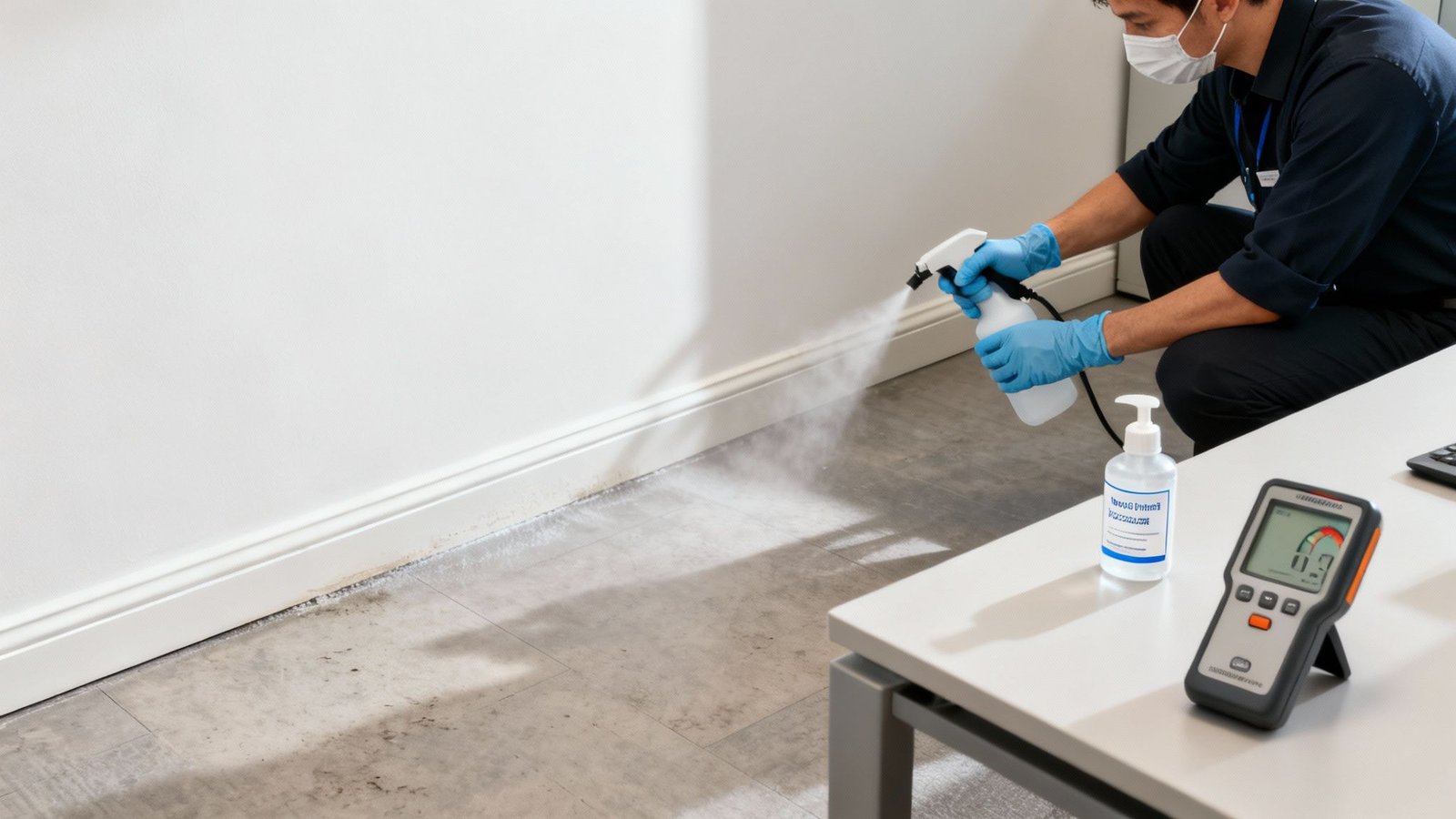
- Antimicrobial Treatments: Technicians will apply EPA-registered antimicrobial agents to every affected surface. These aren't just cleaners; they’re designed to kill existing fungi and bacteria while making the surfaces hostile to future growth.
- Disinfection of Salvageable Items: Anything non-porous that can be saved gets a thorough cleaning and disinfection. Porous materials like drywall, insulation, or carpet that got hit with contaminated water are almost always torn out and replaced.
- HVAC System Cleaning: Your building’s ventilation system is like a superhighway for contaminants. A professional team will inspect and often clean the HVAC system to make sure it isn't circulating spores throughout the entire property.
A common mistake is thinking that if you can't see mold, there’s no problem. Professionals treat materials based on their exposure to moisture, not just what’s visible. This ensures those hidden spores are wiped out before they have a chance to grow.
This isn’t a niche service, either. The global market for these services was valued at USD 5.821 billion in 2023 and is projected to nearly double by 2033. That growth is fueled by a wider understanding of the serious health risks that come with water damage.
Ultimately, this sanitization and mold prevention stage is what turns a damp, damaged property back into a safe, healthy one. Without it, even the best drying job can fail, leading to significant health hazards for your employees and customers—not to mention more expensive repairs later on. If your business is dealing with water damage, understanding the details of professional mold remediation services is the key to a true and lasting recovery.
Navigating the Commercial Insurance Claim Process
Dealing with an insurance claim can feel more stressful than the water damage itself. For a business, the stakes are even higher. Every day your doors are closed, you're losing revenue. The key to getting through the commercial water damage restoration process smoothly comes down to one thing: meticulous documentation.
From the moment you spot the water, document everything before anything is moved or cleaned. Take hundreds of photos and videos from every angle — soaked carpets, damaged inventory, warped drywall—everything. Then, create a detailed list of every single affected item, from furniture and computers to structural materials. This collection of evidence is your single most powerful tool when you talk to your insurance carrier.
Partnering for a Stronger Claim
To really strengthen your position, you need a restoration partner who speaks the insurance industry's language. The pros don't just write up a number on a piece of paper; they use specialized estimating software, and the gold standard is Xactimate. This program builds a line-item estimate using pricing data that insurance companies already know, use, and trust.
When your restoration partner hands the adjuster an estimate written in Xactimate, it cuts right through the confusion. There's no back-and-forth haggling over fair market costs. The entire claim becomes transparent, defensible, and based on industry-accepted pricing, which is critical for getting the full settlement your business deserves.
Communicating with Your Adjuster
Clear, consistent communication is what keeps a claim moving. A few simple habits can make all the difference between a quick settlement and a long, drawn-out headache.
Here’s what works:
- Be Proactive: Don't sit around waiting for the adjuster to call you. Send them your detailed documentation right away and check in regularly for updates.
- Keep a Communication Log: Write down every single conversation—the date, the time, who you spoke with, and what was said. This creates an undeniable paper trail.
- Organize Everything: Save every receipt. Temporary repairs, emergency supplies, anything you spend money on related to the loss needs to be documented.
By staying organized and hiring a restoration company that provides professional-grade documentation, you turn a chaotic claims process into a manageable one. It minimizes the financial hit to your business and gets you back to normal operations that much faster.
Final Repairs and Restoring Business Operations
Once the water is gone, the equipment is packed up, and the site is dry and sanitized, the real work of rebuilding begins. This is the final and most critical phase of commercial water damage restoration, where we transition from a clean, stable worksite back into a fully operational business.
The goal isn’t just to patch things up. It’s to restore your commercial space to its pre-damage condition—or even better.
The scope of these repairs can vary dramatically. A minor leak might just need some new drywall, fresh paint, and carpet replacement. But a major flood or burst pipe could demand a full-scale reconstruction effort, involving everything from structural framing to electrical and plumbing systems.
From Restoration Crew to General Contractor
This is where a true full-service restoration company proves its worth, shifting seamlessly from a mitigation crew into the role of a general contractor. Instead of leaving you to juggle multiple trades, they take over and manage the entire rebuild.
- Skilled Trades Coordination: They bring in their network of trusted electricians, plumbers, carpenters, and painters, scheduling them efficiently to keep the project moving.
- Material Sourcing: They handle the procurement of all necessary building materials, from insulation and flooring to fixtures and finishes.
- Project Management: They oversee the entire reconstruction timeline, ensuring all work is completed to code, on schedule, and with minimal disruption.
This integrated approach is designed for one purpose: to get you back in business as fast as possible. Specialized skills are often required, such as expertise in restoring hardwood floors after water damage, which an experienced team can manage without a hitch.
The final walkthrough is a critical checkpoint. Before any project is signed off, a project manager will inspect every detail with you. The job isn’t done until the quality meets—and exceeds—your expectations, guaranteeing a safe and professional finish.
The commercial water damage restoration field is a massive industry for a reason. In the U.S. alone, damage restoration services are projected to hit a market size of $7.1 billion in 2025. With nearly 14,000 water damage emergencies happening every single day, having a streamlined, professional repair process is absolutely essential for business continuity.
After the last nail is hammered and the final coat of paint is dry, the space gets a final, deep clean. This is more than just a quick sweep; you can learn more about this step in our guide to post-construction cleaning services. This last touch is what makes the space pristine, safe, and ready for you to reopen your doors with confidence.
Frequently Asked Questions About Commercial Water Damage
Q: How long does commercial water damage restoration take?
A: The timeline is completely driven by the scope of the damage. A minor leak contained to a single office might be a 3-5 day job from drying to final touches. But for something serious, like a major flood that compromises walls, flooring, and electrical systems in a large facility, you could be looking at several weeks or even months. A professional team will provide a clear, detailed project timeline right after their initial assessment.
Q: Can I handle a small water leak myself at my business?
A: While it’s tempting, it's a huge gamble in a commercial setting. Water quickly gets into subflooring, insulation, and behind baseboards, creating hidden moisture that breeds mold and causes rot. Professionals use specialized tools like moisture meters and thermal imaging cameras to find and measure moisture the naked eye can't see. For anything more than a small puddle on a non-porous surface, calling an expert is the only way to prevent bigger, more expensive problems down the road.
Q: Will my business insurance cover this water damage?
A: Coverage depends on your specific commercial policy and the cause of the damage. Most standard policies cover sudden and accidental events, like a burst sprinkler head or a failed water supply line. However, damage from slow, gradual issues (like a neglected leak) or from overland flooding is almost always excluded. Flood damage requires a separate policy. It's crucial to review your policy now and partner with a restoration company that provides the detailed documentation needed for a strong claim.
Q: What is the difference between water damage and flood damage for insurance?
A: Insurance companies make a key distinction. "Water damage" typically refers to water originating from inside your property, such as from burst pipes or appliance malfunctions, and is usually covered by standard commercial property insurance. "Flood damage" refers to water from a natural source, like a river overflowing or storm surge, and is explicitly excluded. For flood coverage, you need a separate policy from the National Flood Insurance Program (NFIP).
Don't let water damage put your business on pause. The expert team at Onsite Pro Restoration is on call 24/7 to deliver immediate, professional commercial water damage restoration services.