
When you own a condo, your standard insurance policy (called an HO-6) generally covers water damage that happens out of the blue. Think sudden and accidental events, like a pipe bursting under your sink in Studio City or a dishwasher flooding your kitchen in Santa Monica.
This coverage is designed to protect the inside of your unit—your drywall, flooring, and personal belongings. But it's critical to know it won't cover slow leaks, city-wide floods, or sewer backups unless you’ve specifically added that protection. Navigating condo insurance coverage for water damage requires understanding where your responsibility ends and the building's begins.
Dealing with water damage? Don't wait. Call Onsite Pro Restoration at (818) 336‑1800 for a free, no-obligation inspection.
What Every Condo Owner Must Know About Water Damage
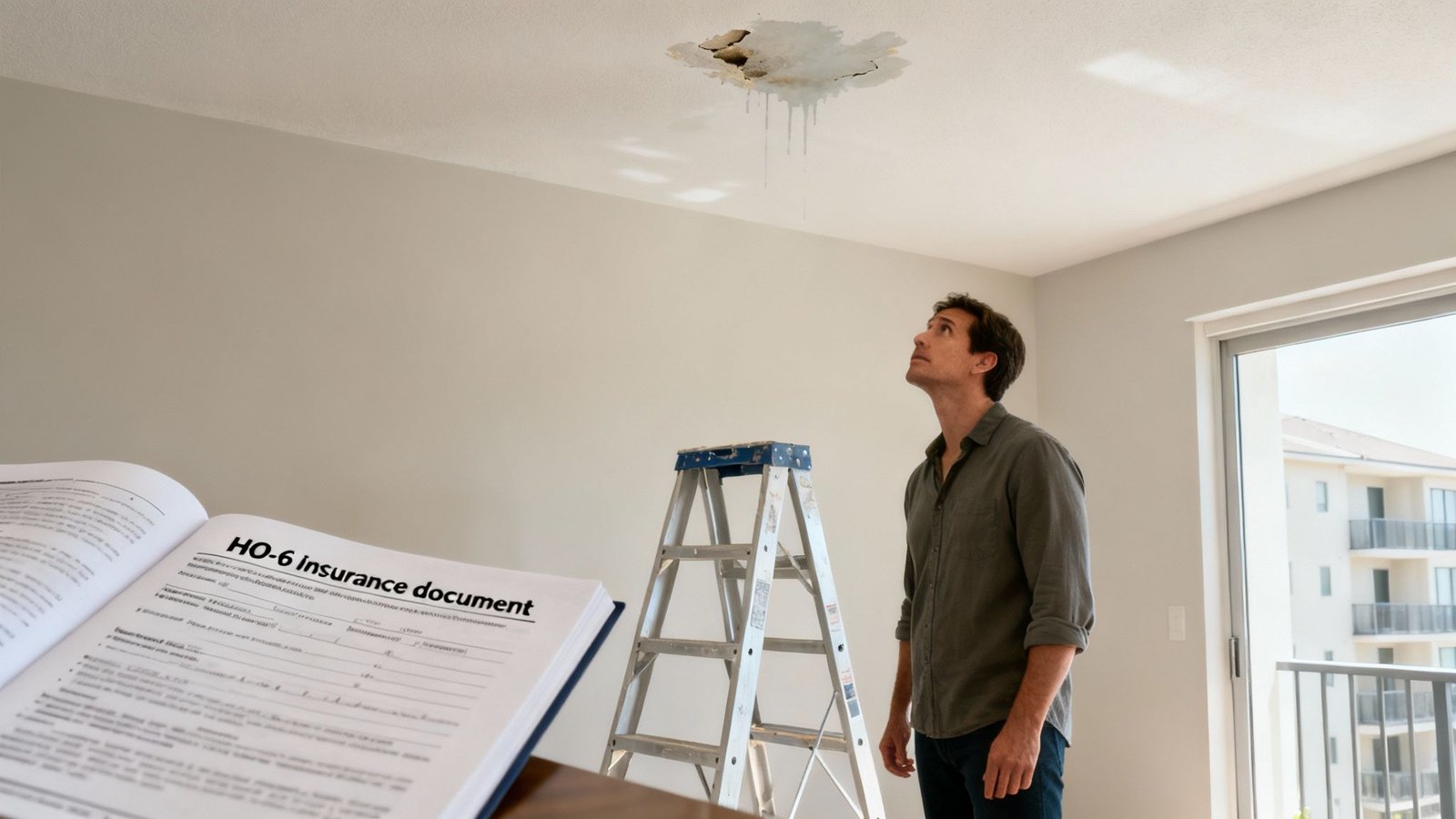
The moment you see a water stain spreading across your ceiling, the first question that pops into your head is, "Am I covered for this?" For condo owners, the answer isn't a simple yes or no. It’s complicated because financial responsibility is split between two different policies: your personal HO-6 insurance and the building's master policy.
Getting a handle on this division of responsibility is absolutely critical. It’s the key to protecting yourself from a mountain of unexpected costs after a water event in your Los Angeles-area condo.
Think of your HO-6 policy as the financial shield for everything that makes your unit your home. It’s built to cover the parts of the building you own, which usually means from the drywall inward. This typically includes:
- Flooring, cabinets, and countertops
- Personal belongings like furniture, clothes, and electronics
- Any interior fixtures you've installed or upgraded
- Liability protection if you’re the one responsible for damage to a neighbor’s unit
The master policy, on the other hand, is what your condo association (HOA) manages. It covers the building’s shared structure and common areas—the roof, exterior walls, elevators, and the main plumbing lines running through the walls. How these two policies work together determines who foots the bill when water starts flowing where it shouldn’t.
Your HO-6 Policy vs The Master Policy for Water Damage
Understanding who is responsible for what can feel confusing in the middle of a crisis. This table breaks down the typical division of coverage between your personal HO-6 policy and the building's master policy during a water damage event.
| Damage Type | Typically Covered by Your HO-6 Policy | Typically Covered by the Master Policy |
|---|---|---|
| Interior Drywall & Paint | Yes, from the studs inward. | The shared structure behind the drywall. |
| Flooring & Carpets | Yes, these are considered part of your unit. | No, unless specified in the governing docs. |
| Personal Belongings | Yes, your furniture, electronics, etc. | No, this is your personal responsibility. |
| Cabinets & Fixtures | Yes, if they are part of your unit. | Only original, "as-built" fixtures, if any. |
| Common Area Hallways | No, this falls under the master policy. | Yes, including carpets, walls, and lighting. |
| Roof or Exterior Wall Leak | Damage to your unit's interior is covered. | The repair to the roof or wall itself. |
| Burst Pipe Inside Your Wall | Your damaged interior finishes and belongings. | The pipe itself and any common area damage. |
Keep in mind, this is a general guide. The specifics can always vary based on your HOA's governing documents, so it's always a good idea to have a copy of those handy.
The Financial Reality of Water Damage Claims
Water damage isn't just a small hassle; it's a massive financial risk for any property owner. In fact, it's one of the most frequent and expensive issues that insurance companies deal with.
According to the Insurance Information Institute, water damage and freezing are consistently the second most common cause of property insurance claims. To put that in perspective, in 2023, about 1 in 67 insured homes had to file a claim for this exact problem. That shows just how common this headache really is.
Prevention and Immediate Action
Since the source of the water often decides who pays, being proactive with maintenance and acting fast are your best defenses. For instance, just understanding the common causes of burst pipes and how to prevent them is fundamental knowledge that can save you from a complete disaster.
But when damage happens anyway, your response is just as important. The first few moments after you spot a leak are crucial. Having a plan for emergency water cleanup can dramatically reduce the total damage and make your insurance claim go a whole lot smoother. Find a 24/7 service here: https://onsitepro.org/emergency-water-cleanup/
Understanding What Your Condo Insurance Policy Actually Covers
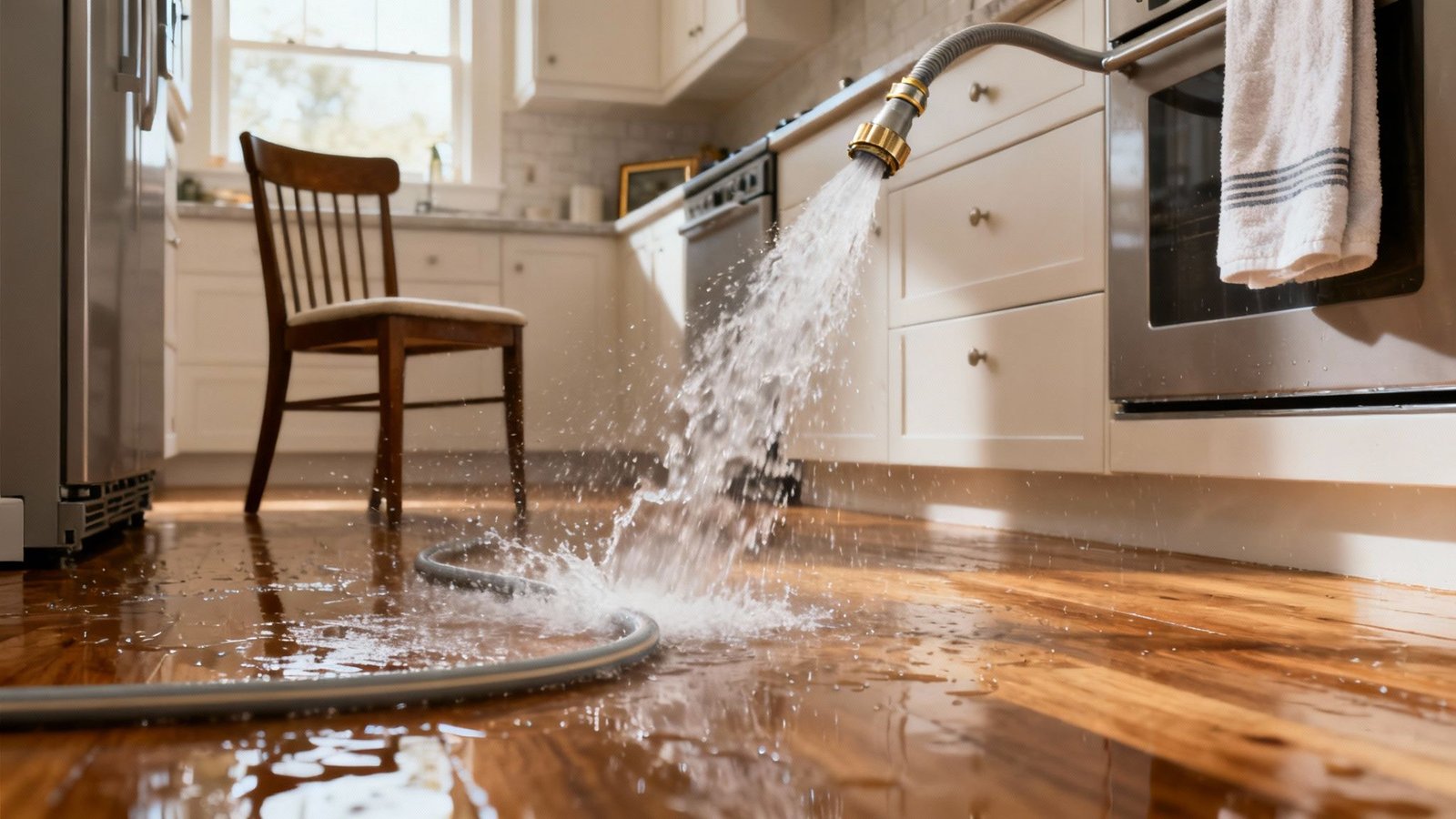
Insurance policies are notoriously packed with fine print, but when it comes to condo insurance coverage for water damage, two words matter more than any others: "sudden and accidental."
Getting a firm grip on this phrase is the single most important thing you can do. It's the line in the sand that determines whether your claim gets paid or you're stuck with a massive repair bill.
Think of "sudden and accidental" as damage from something that happened out of the blue, and fast. It wasn't a problem that festered for weeks or months because of neglect or simple wear and tear. A classic example? The supply line to your dishwasher suddenly lets go, unleashing a flood across your kitchen floor in your Burbank condo. That event is abrupt, totally unexpected, and the damage is a direct result. Your HO-6 policy was built for exactly this kind of mess.
What “Sudden and Accidental” Looks Like in Real Life
To really nail this down, let’s compare a covered event with one that isn’t. The critical difference isn't the water itself, but how it behaved. Was it a sprint or a marathon?
- Covered (The Sprint): A pipe under your bathroom sink freezes and cracks during an unexpected cold snap, flooding the room in just a few minutes. That's a textbook sudden and accidental event.
- Not Covered (The Marathon): That same pipe has a slow, persistent drip you never noticed. Over months, the constant moisture rots out the vanity cabinet and fuels a nasty mold problem. This is gradual damage, and it’s almost always excluded.
Insurers view that marathon scenario as a maintenance issue, plain and simple. It's on you, the condo owner, to catch and fix slow leaks. Your policy is there to bail you out of a catastrophe, not to pay for the slow decay of deferred maintenance. Our guide on homeowners insurance coverage for water damage dives into even more examples that apply to condos, too.
Key Takeaway: Your insurance policy acts like an emergency response team, not a long-term maintenance crew. It’s designed for the sudden crisis, not the slow-burn problem that could have been fixed with routine upkeep.
Other Covered Water Damage Scenarios
Beyond burst pipes, plenty of other common household disasters fall under that "sudden and accidental" umbrella, triggering your condo insurance coverage for water damage. These frequently include:
- Appliance Malfunctions: Your washing machine hose gives out mid-cycle, turning your laundry area into a swimming pool.
- Plumbing Overflows: A toilet clogs and overflows without warning, soaking the bathroom floor and everything around it.
- HVAC Leaks: The drain line for your air conditioner suddenly cracks, sending water through the ceiling below.
These kinds of incidents are becoming incredibly common, and they're shaking up the insurance market. In fact, water damage and freezing accounted for a staggering 43.21% of all property damage claims in 2024, making them a top cause of loss for homeowners.
This trend has a direct impact on your premiums and policy terms. As industry experts at GuardianService have pointed out, these water-related incidents are now a dominant force driving claims across the board.
Common Exclusions in Condo Insurance for Water Damage
The worst time to learn what your policy doesn't cover is right after a disaster. It’s a nightmare scenario. While your HO-6 policy is a powerful safety net, it’s not a blank check for every water-related problem.
Understanding the most common exclusions in condo insurance coverage for water damage is the single best way to avoid expensive, frustrating surprises down the road. Insurers draw a very hard line between a sudden crisis and a problem that developed over time, and that distinction is where many claims fall apart.
The Problem with Gradual Damage
The biggest, most common exclusion you'll run into is for gradual damage. This covers any issue that stems from a slow, persistent leak or moisture problem rather than a sudden burst. From an insurer's point of view, these situations are maintenance failures, not insurable accidents.
Think about a tiny, slow drip from a pipe hidden behind your shower wall in a Sherman Oaks condo. Over six months, it quietly saturates the drywall, rots the wooden studs, and creates the perfect breeding ground for mold. By the time you finally spot the damage, the repair bill is huge.
Unfortunately, your insurance company will almost certainly deny the claim. Why? Because the source was a long-term issue, not "sudden and accidental." This is also why understanding your separate insurance coverage for mold is so important, as it’s often tied directly to how the initial water damage happened in the first place.
Other Major Coverage Exclusions
Beyond slow leaks, several other specific events are almost always left out of a standard HO-6 policy. Leaving these gaps unplugged can expose you to some serious financial risk.
Commonly excluded perils include:
- Surface Flooding: Water from heavy rain, overflowing rivers, or a storm surge that enters your ground-floor unit is considered flooding. This requires a completely separate policy, usually from the National Flood Insurance Program (NFIP) or a private flood insurer.
- Sewer & Drain Backups: If a city sewer line or your building's main drain backs up and pushes wastewater into your condo, a standard policy won't cover the cleanup. You need a specific "water backup" endorsement for that.
- Neglected Maintenance: Any damage that can be traced back to your failure to keep up with property maintenance is a clear exclusion. This could be anything from not replacing a visibly corroded water heater to ignoring a leaky faucet for months.
Crucial Insight: Insurance is designed to protect you from unforeseen events, not to pay for repairs that could have been prevented with regular upkeep. Keeping a simple log or receipts for your maintenance efforts can be a huge asset if you ever need to file a claim.
Recognizing these exclusions is the first critical step. The next is to actively fill these coverage gaps with the right endorsements to make sure you're protected from every angle.
How Endorsements Protect You From Financial Disaster
Finding out about the gaps in your condo insurance after a disaster hits is a brutal, expensive lesson. A standard HO-6 policy is a great starting point, but it leaves you dangerously exposed to certain high-cost events.
Think of endorsements—also called riders—as affordable upgrades for your policy. They're designed to plug these specific financial holes. For a relatively small cost, you can add powerful protection that turns your basic safety net into a solid shield, saving you from what could easily become five-figure repair bills.
Water Backup Coverage: An Essential Add-On
One of the most common and damaging gaps in a standard policy is damage from backed-up drains or sewers. Imagine a clog in your building's main sewer line suddenly forces raw sewage up through your shower drain, flooding your bathroom and bedroom. Without a specific endorsement, every penny of the cleanup and repair cost falls on you.
This is where water backup and sump pump overflow coverage becomes a financial lifesaver. For what often amounts to less than $100 a year, this add-on covers:
- Cleanup Costs: Paying for professional services to remove contaminated water and fully sanitize your unit.
- Structural Repairs: The cost to tear out and replace ruined flooring, drywall, and cabinetry.
- Personal Property: Reimbursing you for damaged furniture, rugs, and anything else the sewage destroyed.
Real-World Scenario: A city sewer line on your street gets overwhelmed during a heavy storm. The pressure forces wastewater back into your ground-floor condo, causing $15,000 in damage. A standard policy pays $0. But with a water backup endorsement, the entire restoration is covered, minus your deductible.
Overland Flood Insurance: A Non-Negotiable for At-Risk Areas
Here’s a devastating misconception that trips up countless homeowners: standard condo and home insurance policies do not cover flood damage. If heavy rains cause a nearby river to swell or surface water pours into your unit from outside, your HO-6 policy offers zero protection. This requires a completely separate policy.
For this kind of disaster, you need overland flood insurance, which is usually provided through the National Flood Insurance Program (NFIP) or private insurers. This policy is built specifically to cover damage from rising water caused by natural events—a major exclusion in all standard property insurance.
Securing the right endorsements is a critical part of managing your condo insurance coverage for water damage. It's all about looking at the specific risks you face and making sure you have a financial solution ready before you ever need it.
Navigating a Water Damage Claim Step by Step
The second you spot water spreading across your floor or dripping from the ceiling, the clock starts ticking. What you do in those first critical hours can make or break your insurance claim and dramatically change the extent of the damage to your condo.
Dealing with the claims process can feel like a nightmare, but if you break it down into a clear plan, you can turn chaos into a manageable response. Think of this as your emergency playbook. Follow these steps—in order—to protect your property and build a rock-solid case for your condo insurance coverage for water damage.
Your Immediate Action Plan
Before you even think about insurance paperwork, your top priority is safety and damage control. You have to stop the problem from getting any worse.
- Stop the Water Source: If it's safe, find and shut off the main water valve to your condo or the specific appliance that’s leaking. This one move is the single most important thing you can do to prevent more destruction.
- Document Everything (Before Cleanup): This is non-negotiable. Before you move a single piece of furniture or mop up a drop of water, get your phone out. Take tons of photos and videos of the damage from every possible angle. Capture the source of the leak, how far the water has spread, and every single damaged item. This visual proof is gold for your claim.
- Notify Your Insurer Immediately: As soon as you can, call your insurance agent or the carrier's 24/7 claims hotline. The faster you report the incident, the faster they can get an adjuster on the case and start the process.
That initial documentation and quick call set the stage for a much smoother claims process. The detailed evidence you gather creates a clear "before" picture that justifies all the repairs you'll need.
Managing the Claims Process
Once you've handled the immediate crisis, the paperwork side of things begins. Your best defense against delays or disputes is to stay organized.
Keep a detailed log of every single conversation you have with your insurance company. Note the date, time, and the name of the person you spoke with. When the insurance adjuster is scheduled to visit, have all your documentation ready and be prepared to walk them through exactly what happened. It’s also a huge help to understand the professional water damage restoration process, so you can ask the right questions and make sure no steps are missed.
This graphic shows how an endorsement acts like an upgrade for your standard policy, beefing up your protection.
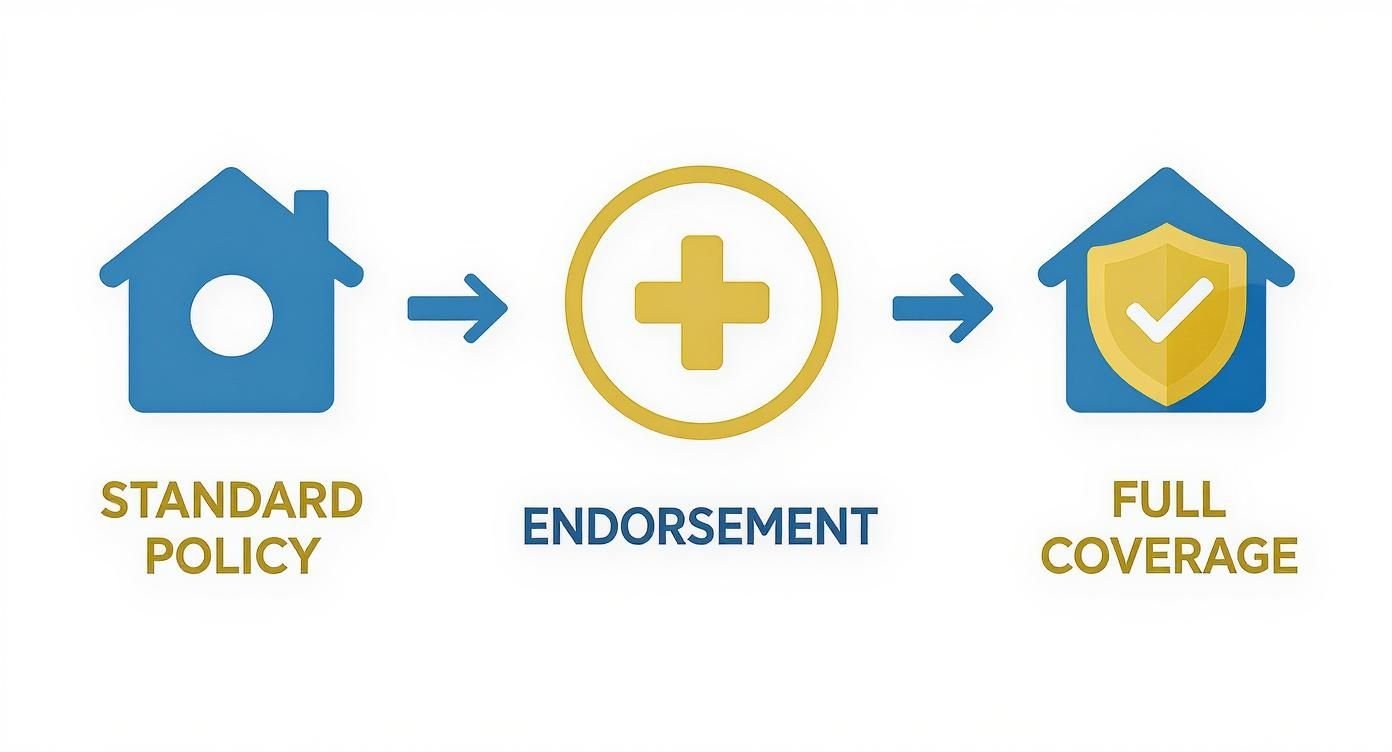
As you can see, adding specific endorsements plugs the gaps in a basic policy, turning it into comprehensive coverage that shields you from common, costly exclusions.
When you're ready to file, or if you run into any pushback from the insurer, looking into proven strategies to handle water damage insurance claims and maximize your payout can be a game-changer. That kind of expert advice can make a massive difference in your final settlement.
Solving Conflicts Between Your Policy and the Master Policy
In a condo, water damage doesn't respect property lines. When a pipe bursts in a shared wall or a unit upstairs leaks, it creates a tangled mess of responsibility, pitting your personal HO-6 policy against the condo association's master policy. Figuring this out is the key to protecting your finances.
The first question is always: where did the water come from? If a pipe inside your unit fails, you'll start the claim process with your own insurance company. But if the leak originates from a common element—like the building's roof or a main plumbing line running through the walls—the master policy is usually the first line of defense.
Even so, it's rarely that simple. Your policy is designed to cover damage to your personal belongings and interior finishes. The master policy handles the big structural repairs. The real confusion starts when you look at the specific type of master policy your HOA has in place.
Walls-In vs. All-In Master Policies
The exact wording in your condo association’s governing documents can mean a difference of thousands of dollars coming out of your own pocket. Understanding your building’s master policy is just as important as knowing your own. For a complete picture of how these policies interact, you can learn more about the fundamentals of a homeowners insurance policy in our detailed guide.
There are two main types of master policies you'll run into:
- "Walls-In" (or "Studs-In") Coverage: This is the most basic version. The master policy covers the building's exterior, roof, and common areas, but its responsibility stops right at the drywall of your unit. Everything inside—your flooring, cabinets, fixtures, and even the paint on the walls—is on you.
- "All-In" (or "Single-Entity") Coverage: This offers much broader protection. It covers the structure plus certain original fixtures inside your unit, like the builder-grade cabinets and plumbing. A key detail here is that it almost never covers any upgrades or improvements you’ve made yourself.
Crucial Distinction: Imagine a common pipe bursts inside your wall. If your building has a "walls-in" policy, the master policy might only pay to fix the pipe and patch the drywall. You would be left footing the bill to replace your ruined hardwood floors and custom cabinets.
FAQs on Condo Insurance Coverage for Water Damage
When you're dealing with a leak, you need clear answers, fast. Let's tackle the most common questions condo owners have about water damage, from mold and appliances to tricky situations involving neighbors.
Q: Does my condo insurance cover mold from water damage?
A: It depends. If mold grows directly from a covered "sudden and accidental" event, like a pipe burst, your policy likely offers some coverage. However, this is usually limited, often capped at just $1,000 to $5,000. If the mold is from a slow, gradual leak or general humidity in your coastal Santa Monica condo, you are almost always responsible for the full cost.
Q: Is damage from a broken dishwasher or washing machine hose covered?
A: Yes, this is a textbook example of a covered peril. A sudden appliance malfunction is considered "sudden and accidental." Your HO-6 policy is designed to pay for the resulting damage to your floors, cabinets, and personal items. Just remember, it won't pay to fix or replace the appliance itself unless you have a separate equipment breakdown endorsement.
Q: What should I do if my neighbor's leak damages my condo?
A: First, act fast to minimize the damage in your unit and document everything with photos and videos. Report the incident to your own insurance company and the condo association immediately. The standard process is to file a claim under your own HO-6 policy to get repairs started. Your insurer will then likely try to recover the costs from your neighbor's insurance company if they were negligent—a process known as subrogation.
Q: My toilet overflowed and damaged the floor. Is that covered?
A: In most cases, yes. A sudden toilet overflow is a classic "sudden and accidental" event covered by a standard HO-6 policy. Your insurance should cover the cost to repair the flooring and anything else that got wet. However, if the overflow was caused by a main sewer line backing up into your unit, you will only have coverage if you purchased a specific water backup endorsement beforehand.
If you're facing water damage in your Los Angeles condo, don't wait for the problem to get worse. The experts at Onsite Pro Restoration are available 24/7 to provide a free assessment and start the restoration process. We work directly with insurance companies to make your claim seamless. Get professional help now by visiting us at Onsite Pro Restoration.