
To get rid of urine odor for good, you have to go deeper than just surface cleaning. The only way to permanently eliminate urine odor is by using a specialized enzymatic cleaner designed to break down the microscopic uric acid crystals that cause the smell. This is a lesson many Los Angeles homeowners learn the hard way, especially with the coastal humidity making old smells reappear.
Regular soaps and even vinegar-based solutions often seem to work at first, but they can't destroy these odor-causing crystals. That's exactly why the smell always comes back, especially on humid days.
Struggling with a persistent odor? The pros at Onsite Pro can locate and destroy the source for good.
Get a Free Odor Removal Quote
The Hidden Dangers of Lingering Urine Odor
Have you ever cleaned a urine spot in your Sherman Oaks home, only to have that foul smell reappear a week later? You’re not alone. It’s not your cleaning method failing you—it's the frustrating chemistry of urine itself. The reason that smell just won't quit comes down to one incredibly resilient compound: uric acid.
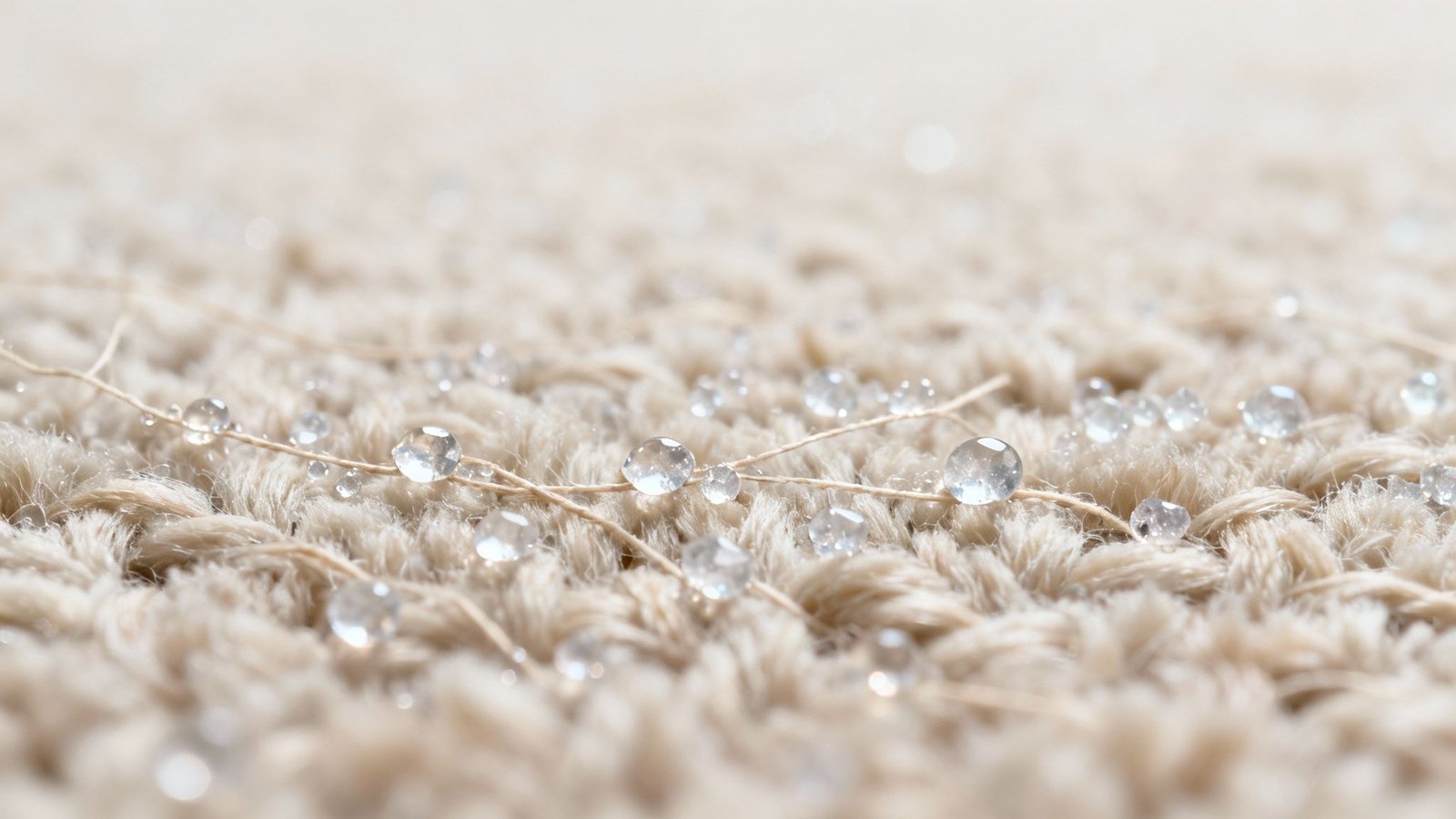
Here's what happens. When urine dries, most of its components break down. The urea and urochrome create the initial stain and smell, which are relatively easy to clean. But the uric acid forms stubborn, non-soluble crystals that are a whole different beast. These tiny, salt-like crystals embed themselves deep into any porous surface they touch—think carpet fibers, wood grain, tile grout, and mattress foam.
The key takeaway here is that uric acid crystals are not water-soluble. This means that traditional cleaning with soap and water might remove the visible stain, but it leaves the real odor-causing source—the crystals—completely untouched.
Why Southern California Humidity Makes It Worse
Humidity is the secret trigger that brings old urine smells roaring back to life. On a damp or rainy day in Santa Monica, the moisture in the air is all it takes to rehydrate these dormant uric acid crystals. As soon as they get wet, they release a concentrated burst of ammonia and mercaptans, the same compounds that make the original odor so offensive.
This is why you need a more advanced game plan. You can’t just mask the smell or clean the surface; you have to find a way to destroy the source. This is especially true when dealing with pets:
- Cat Urine: This stuff is in a league of its own. It's often more concentrated and contains unique proteins and hormones, making its odor notoriously potent and stubborn.
- Dog Urine: While it's usually less concentrated than a cat’s, it can still soak deep into carpet padding and subfloors, creating a large, hidden source of odor that’s tough to pinpoint.
This persistent problem has fueled a massive industry. The global pet odor control market, which is almost entirely focused on urine, was valued at a staggering $15.3 billion in 2024. North America alone accounts for over half of that demand, which tells you just how common this issue is.
Just as important as the cleaning itself is making sure the area is dried properly afterward. Any lingering moisture can not only lead to mold growth but also reactivate any crystals you might have missed. Understanding the basics of structural drying gives you a huge advantage in making sure a surface is completely and truly moisture-free.
How to Find Hidden Urine Stains in Your Home
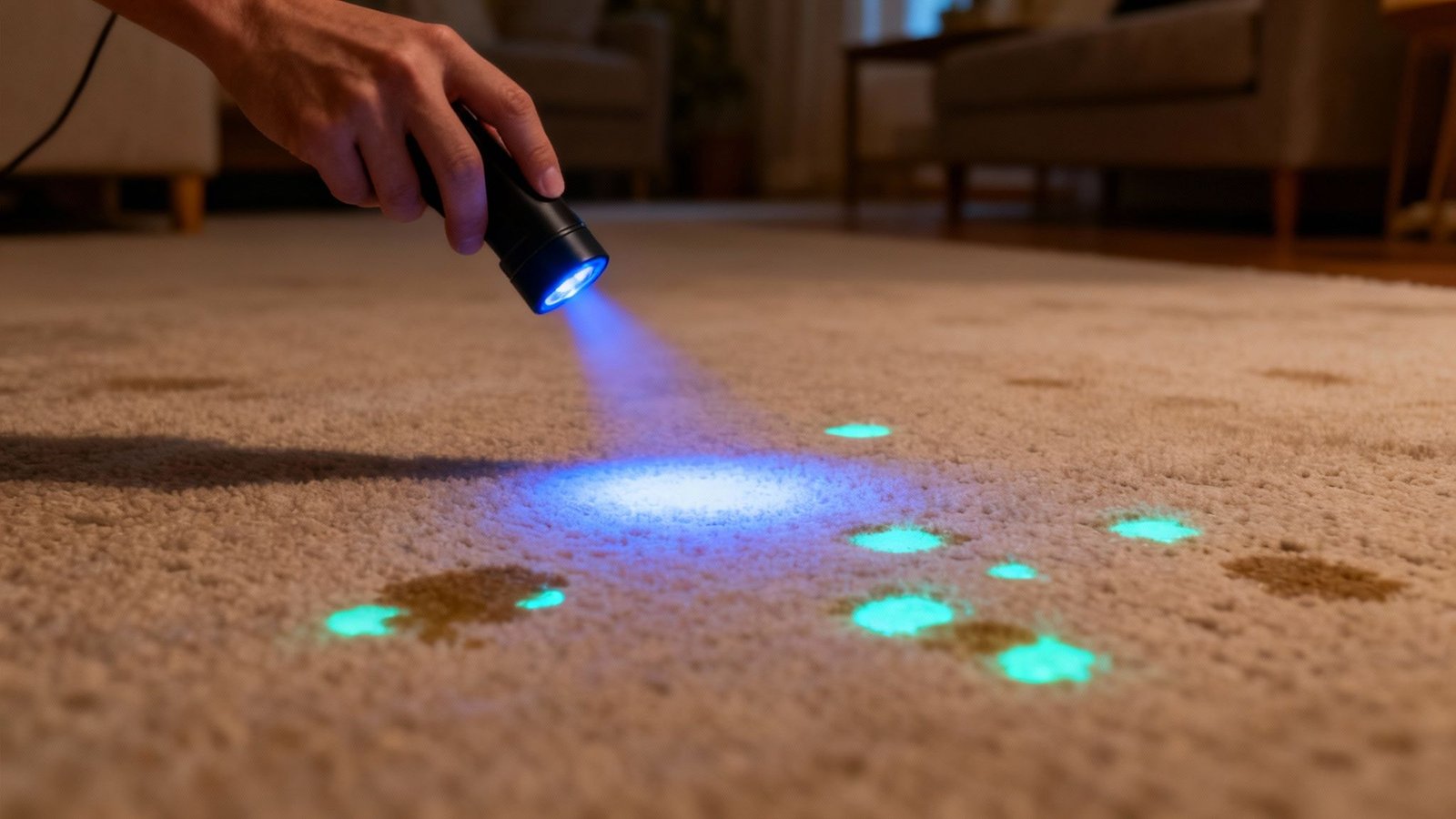
You can't clean what you can't find. It’s that simple. If you miss even a single spot, those stubborn uric acid crystals will hang around, just waiting for a humid day to release that awful, unmistakable smell all over again.
To eliminate urine odor for good, you have to play detective first. Your mission is to locate every single source, not just the obvious ones.
Harnessing the Power of a UV Blacklight
Your best tool for this job, hands down, is a UV blacklight. When you shine it in a dark room, dried urine salts and proteins glow a bright yellow or greenish color, revealing stains that are completely invisible to the naked eye.
I've seen it time and time again—clients in Beverly Hills are shocked to see how far a single accident actually spread beyond the initial puddle they cleaned up.
When you're using a blacklight, follow these ground rules for the best results:
- Wait for darkness: The room needs to be as dark as possible. Any ambient light will wash out the glowing effect, making stains harder to spot.
- Mark the spots: Have some chalk or small pieces of painter's tape ready. As you find each glowing area, mark its outline so you know exactly where to treat when you turn the lights back on.
- Check vertical surfaces: Don't just look at the floor. Pets often target walls, baseboards, and furniture legs, so scan everything from the ground up.
Pro Tip: Remember that other things can glow under a blacklight, too—like certain cleaning products, spilled tonic water, and even some types of fabric dye. What you're looking for are the distinct splatter patterns or puddle shapes that signal a genuine urine accident.
Detection Without a Blacklight
No UV light? No problem. You can still track down hidden spots the old-fashioned way. You’ll have to get down on your hands and knees and rely on your other senses.
Look for faint discoloration on carpets or stiff, crusty patches on upholstery. And of course, there’s your nose. It’s not pleasant, but your sense of smell is a powerful tool for zeroing in on problem areas.
In really severe situations, like a major leak or overflow, the contamination can be far more widespread than you think. If you suspect deep saturation has occurred, it can be helpful to understand the professional approach to sewage damage cleanup, as it shows how deeply embedded biological contaminants are properly managed.
Essential Pre-Treatment Steps
Once you've mapped out all the contaminated zones, the prep work you do is absolutely critical. If you rush this part, the rest of your cleaning efforts will be for nothing.
If you find a fresh accident, gently blot the spot with super-absorbent paper towels. Press down firmly to soak up as much liquid as possible. Never scrub or rub the area. All that does is mash the urine deeper into the carpet fibers and the padding underneath, making your job ten times harder.
For older, dried stains, start by scraping off any crusty residue from the surface with a dull knife or a plastic scraper. Getting rid of this solid waste first clears the way for your cleaning solution to penetrate deeply and get to the real source of the odor.
Choosing the Right Odor-Fighting Solution
Walking down the cleaning aisle can feel like a guessing game. Dozens of bottles promise to be the magic bullet for foul smells, but how do you pick the one that will actually eliminate urine odor for good? The secret isn’t in the flashy marketing—it’s in the science.
Making the right choice is a big deal. The global market for odor eliminators is massive, projected to hit around $6.6 billion by 2025, with North America driving much of that demand. That means you have a ton of options, but only a few are truly built to handle the stubborn chemistry of urine.
The Power of Enzymatic Cleaners
When you’re up against dried uric acid crystals, you need a specialized weapon. This is where enzymatic cleaners really prove their worth. These aren't just soaps; they're bio-active formulas loaded with beneficial bacteria that produce enzymes.
Think of these enzymes as tiny Pac-Men, specifically designed to seek out, break down, and literally consume the organic stuff in urine—especially those uric acid crystals. This isn't just covering up a smell. An enzymatic cleaner destroys the source at a molecular level so it can't come back.
Here’s why they are the gold standard for pros:
- They target the source. Unlike air fresheners or basic soaps, enzymes physically dismantle the uric acid that causes the smell.
- They’re incredibly versatile. You can use them safely on almost anything porous: carpets, upholstery, mattresses, and even sealed hardwood.
- They offer a permanent fix. Once the enzymes have done their job, the odor source is gone. Completely. There's nothing left to reactivate on a humid day.
DIY Solutions: The Honest Truth
So many people reach for vinegar and baking soda first. I get it—they're cheap and already in the pantry. But while these staples have a place in cleaning, they just don't cut it for serious urine odors.
A vinegar solution might neutralize some of the ammonia in a fresh spot, which helps with the initial smell. Baking soda can absorb some lingering airborne odors. The problem? Neither can break down the non-soluble uric acid crystals. Using them is like putting a bandage on the problem. The relief is temporary, and the smell will almost certainly return.
Oxygen-Based Cleaners: A Good Alternative
Another option you'll see are oxygen-based cleaners, often sold as powders like OxiClean. These products work through oxidation, releasing oxygen bubbles that help lift stains and kill some of the odor-causing bacteria on the surface.
When to Use Them: Oxygen cleaners are fantastic for lifting visible stains and sanitizing surfaces. They’re a solid choice for fresh accidents on tough, colorfast fabrics. However, for deep-set, old, or really strong urine smells, they still can't match the targeted power of an enzymatic formula that breaks down the core uric acid crystals.
To help you decide, here's a quick comparison of the most common options available.
Urine Odor Removal Product Comparison
Choosing the right cleaner depends entirely on the type of surface, the age of the stain, and how deep the urine has penetrated. What works for a fresh spill on tile won't solve a soaked-in carpet pad problem. This table breaks down your main choices.
| Cleaner Type | How It Works | Best For | Pros | Cons |
|---|---|---|---|---|
| Enzymatic Cleaners | Beneficial bacteria produce enzymes that consume organic waste (uric acid). | Old or deep-set odors in porous materials like carpet, upholstery, and subfloors. | Permanently eliminates the odor source. Safe for most surfaces. Non-toxic. | Requires time to work (dwell time). Can be more expensive. |
| Oxygen-Based Cleaners | Uses oxidation to lift color stains and sanitize surfaces. | Fresh stains on colorfast fabrics, hard surfaces, and laundry. | Excellent stain removal. Disinfects surfaces. Widely available. | Less effective on the uric acid crystals causing deep odors. Can cause color loss on some fabrics. |
| Vinegar & Baking Soda | Vinegar neutralizes ammonia; baking soda absorbs surface odors. | Minor, fresh spills on hard surfaces. Deodorizing the air. | Inexpensive and non-toxic. Good for initial odor reduction. | Does not break down uric acid. Provides only temporary relief. Smell often returns. |
| Traditional Carpet Shampoo | Uses detergents and surfactants to clean surface-level dirt and grime. | General carpet cleaning and removing visible dirt. | Good for surface appearance. Can leave a fresh scent. | Often just masks odors. Can leave a sticky residue that attracts more dirt. Ineffective on urine crystals. |
Ultimately, for a problem that keeps coming back, enzymes are the only solution that truly gets to the root of the problem. For everything else, it's just a temporary fix.
For deeply embedded odors that have soaked into subflooring or drywall, even the best store-bought products might not be enough. When the problem is that severe, professional intervention is the only way to truly solve it. If you're facing a stubborn, widespread issue, looking into a professional odor removal service can save you a ton of time, frustration, and money in the long run.
How to Eliminate Urine Odor on Any Surface
Alright, you’ve got the right tools for the job. Now it’s time to get to work. The big secret here is that different materials need different cleaning techniques to truly eliminate urine odor without accidentally causing more damage. Your whole strategy depends on matching the approach to the surface so the enzymatic cleaner can do its thing.
This graphic gives you a quick visual of how to think about your cleaning options, from simple solutions to the heavy hitters.
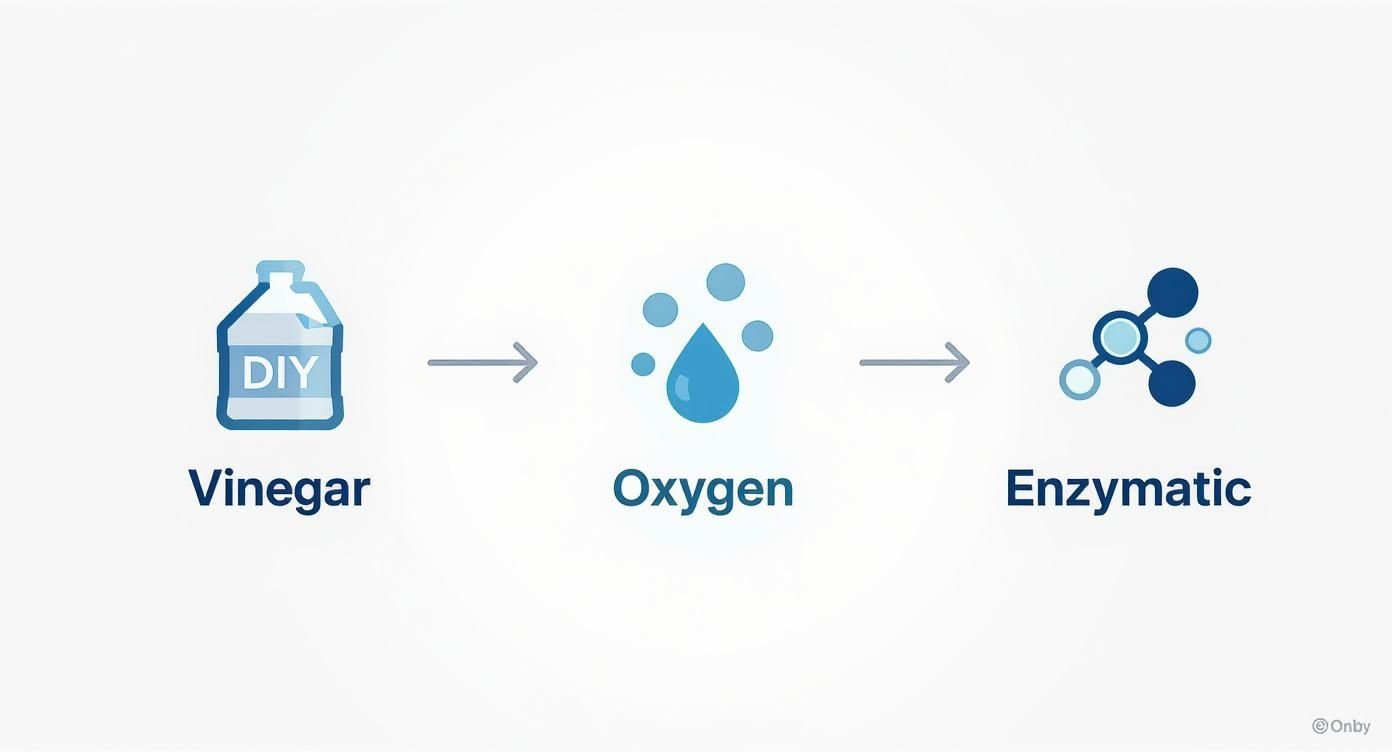
As you can see, you’ll typically move from basic DIY methods to more powerful enzymatic treatments as the odor problem gets older or more severe.
Tackling Carpets and Upholstery
Let's start with soft, absorbent surfaces like carpets and couches. The single biggest mistake I see people make is just spraying the top of the stain. Urine doesn't stay on the surface; it soaks deep down into the carpet padding or the foam core of a cushion. Your cleaner has to follow that exact same path.
This means you need to use a saturation technique. Don't be timid with your enzymatic cleaner. Pour it directly onto and around the spot, using about 1.5 times the amount of the original urine puddle. This guarantees the solution completely surrounds and breaks down those uric acid crystals.
Crucial Tip: After soaking the area, cover it with a damp towel and then a layer of plastic wrap. This little trick slows down evaporation and extends the cleaner's "dwell time," giving the enzymes the hours they need to work their magic. For really old, set-in stains, you might need to leave it for up to 24 hours.
Once the dwell time is up, grab some clean, dry towels and blot the area to soak up as much moisture as you can. Then, just let it air dry completely. For a more detailed walkthrough, you can find a great guide on how to effectively clean dog urine from carpet for good.
Cleaning Hardwood and Laminate Floors
When you're dealing with hard or semi-porous floors, the game changes. Your goal is to kill the odor without causing water damage. Urine is sneaky—it can seep right into the seams between floorboards or penetrate worn sealant, getting to the raw wood underneath.
For sealed hard surfaces, follow this process:
- Spray and Wait: Spray the enzymatic cleaner generously over the affected area.
- Allow Dwell Time: Let it sit for the time recommended by the manufacturer, which is usually around 15-30 minutes.
- Wipe Clean: Use a clean, damp microfiber cloth to wipe the entire area thoroughly.
- Dry Immediately: Go over the spot with another dry cloth to buff it completely dry. Never let moisture sit on a wood or laminate surface.
If you’re working with unsealed wood, the risk of damage is much higher. Always test the cleaner in a hidden spot first. If you think urine has soaked deep into the wood or subfloor, you may be looking at a professional job involving sanding, sealing, or even replacement in the worst-case scenarios.
Treating Tile Grout and Mattresses
Grout is extremely porous, making it a notorious trap for odors. To treat it, spray your enzymatic cleaner directly onto the grout lines. Let it soak in for a bit, then give it a gentle scrub with a soft-bristled brush before wiping it clean. You might need to repeat this a few times for stubborn smells.
Mattresses are a different beast entirely. Over-saturating a mattress is a huge no-go, as it can lead to mold and mildew growing deep inside. Instead of pouring, use a spray bottle to lightly dampen the surface with the enzymatic cleaner. Then, use a clean towel and apply heavy pressure to blot and pull the moisture back out. Finish by propping the mattress up so air can circulate, and point a fan at the spot to speed up drying.
Sometimes, dealing with deeply soaked materials or widespread contamination is just too much to handle on your own. When you're facing complex biological spills that could pose health risks, it helps to understand the professional protocols for hazardous waste and spill cleanup. It really underscores why a thorough, safe approach is so critical.
Preventing Future Odor Problems
You've deep-cleaned the spot, but don't celebrate just yet—the job is only half done. Getting the area completely dry is non-negotiable. If you leave any moisture behind, you’re just trading a urine smell for a musty mildew problem, and all that hard work goes down the drain.
The name of the game is air circulation. You want to get that spot bone-dry as fast as humanly possible. Crack open some windows and get a couple of box fans aimed directly at the damp area. If you're wrestling with a soaked carpet in a humid room, a dehumidifier is your absolute best friend here. It'll pull that moisture right out of the air.
For those really stubborn situations where the smell seems to be hanging in the air, you might need to bring in the heavy artillery. Pros use specialized gear, but you can get the same effect with an air scrubber rental. These machines are fantastic for filtering out any lingering odor particles and restoring fresh, clean air to the room.
Long-Term Prevention Strategies
Okay, the spot is finally clean and dry. Now comes the most important part: prevention. If you want to eliminate urine odor for good, you have to stop the accidents from happening in the first place. It’s time to shift from cleanup mode to management mode.
First, you have to play detective. Why are the accidents happening? Is it a pet with a behavioral issue, a toddler in the throes of potty training, or could it be a medical problem? A quick trip to the vet can rule out things like a urinary tract infection, which is a surprisingly common reason for sudden incontinence in pets.
Understanding the 'why' behind the accidents is the most effective long-term strategy. Cleaning up is reactive; prevention is proactive and saves you endless frustration.
Creating an Odor-Proof Environment
Beyond figuring out the root cause, you can also make your home more resilient. Think of it as creating layers of defense and having a rapid-response plan ready to deploy.
- Use Waterproof Protectors: Don't skimp here. High-quality, washable waterproof covers for mattresses, sofas, and pet beds are a lifesaver. They create a barrier that stops urine from ever soaking into the padding.
- Establish a Cleaning Caddy: Put together a dedicated kit with paper towels, your go-to enzymatic cleaner, and gloves. Keep it somewhere you can grab it in seconds. The faster you get to a fresh accident, the less likely it is to set in.
- Consider Pet-Safe Deterrents: If your pet keeps returning to the same spot, you can use a commercial deterrent spray. The scents—usually something like citrus or bitter apple—are pleasant to us but unpleasant for them.
Managing incontinence is a huge industry for a reason. In fact, the global urine collection devices market is expected to hit $4.57 billion by 2032, largely because of an aging population and the growing need for effective management solutions. This just goes to show how critical proactive containment is. Using effective pet incontinence solutions isn't just about cleaning; it's a key part of maintaining a fresh, odor-free home for the long haul.
Get Professional Help for Your Toughest Odors
Q: Why does the urine smell return on humid days in Los Angeles?
A: You’re not imagining it—the smell gets worse with coastal humidity. This happens because of uric acid crystals left behind from incomplete cleaning. When the air is dry, they are dormant. But moisture in the air "reactivates" them, causing them to release a fresh wave of that foul, ammonia-like smell. Only an enzymatic cleaner can destroy these crystals.
Q: Can I use bleach to eliminate urine odor?
A: Absolutely not. Bleach is not only ineffective on uric acid crystals but also dangerous. The ammonia in urine reacts with bleach to create toxic chloramine gas. Inhaling this gas can cause coughing, shortness of breath, and serious respiratory irritation. Stick to safer, more effective solutions designed for pet stains.
Q: How long should I let an enzymatic cleaner sit to work properly?
A: Patience is key. The "dwell time" is critical for the enzymes to consume the organic waste. For fresh stains, 30-60 minutes is often enough. For old, set-in odors in a Glendale home, you may need to keep the area damp with the cleaner for several hours, sometimes up to 24 hours. Covering the spot with a damp towel helps.
Q: What if urine has soaked into my subfloor?
A: This is a tough scenario but fixable. You must access the subfloor by pulling back the carpet and removing the contaminated padding. Clean the subfloor (wood or concrete) with an enzymatic cleaner, let it dry completely, and then seal it with an odor-blocking primer before installing new padding and reinstalling the carpet.
If you're facing a stubborn odor that just won't go away, it might be time for professional help. The experts at Onsite Pro Restoration have the tools and expertise to permanently eliminate urine odor from any surface in the Los Angeles area. Contact us today for a free assessment!