Restoration & Remediation Posts

A man inspects mold and water damage under a kitchen sink with a flashlight and meter.
Restoration & Remediation Posts
Pete M.

How to Remove Musty Smell in a Los Angeles Home: A Complete Guide

Removing a musty smell permanently means eliminating the moisture source — not masking the odor. That damp, earthy smell signals active mold or mildew growth somewhere in the structure. This Los Angeles guide covers how to locate the moisture source room by room, the treatment sequence for minor mildew vs. larger mold growth, when air scrubbers and dehumidifiers are needed, and when the problem requires professional remediation. Call (818) 336-1800.

Read More »
A decision tree flowchart showing steps to diagnose and address ceiling condensation or water leaks.
Restoration & Remediation Posts
Pete M.

Solving Condensation on Ceiling Mysteries in Your Los Angeles Home

Moisture on your ceiling isn’t always a roof leak — it’s often condensation caused by warm interior air hitting a cold ceiling surface, usually above a bathroom, kitchen, or poorly ventilated attic space. Either way, ignoring it causes paint failure, wood rot, and mold. This LA guide covers how to diagnose condensation vs. an active leak, the ventilation and insulation fixes for each cause, and when ceiling moisture signals hidden structural damage. Call (818) 336-1800.

Read More »
Severe winter weather causes icicles to form on copper pipes and garage door rails inside a garage.
Restoration & Remediation Posts
Pete M.

How to Prevent Frozen Pipes in Winter and Avoid Costly Damage in Los Angeles

Even in Los Angeles, a cold snap can freeze exposed pipes in unheated garages, crawl spaces, and exterior walls — and a tiny crack from a frozen pipe can release hundreds of gallons before you notice. This guide covers which pipes are most vulnerable in Southern California homes, the insulation and heat tape solutions that protect them, what to do during a cold weather warning, and emergency steps if a pipe has already burst. 24/7 response: (818) 336-1800.

Read More »
A man kneels, inspecting a leaking washing machine with his phone's flashlight, a puddle on the floor.
Restoration & Remediation Posts
Pete M.

How to Get Rid of Musty Smell in Your Los Angeles Home

Getting rid of a musty smell for good requires eliminating the moisture source — not cleaning the surface or adding air fresheners. The smell means mold or mildew is actively growing somewhere. This Los Angeles guide covers how to identify the source (hidden leaks, poor ventilation, crawl space moisture), the step-by-step treatment for each scenario, and when professional mold remediation is the only path to permanent odor elimination. IICRC-certified: (818) 336-1800.

Read More »
Infographic showing three immediate steps after property damage: stop the source, document the damage, and call for assistance.
Restoration & Remediation Posts
Pete M.

Navigating Your Insurance Claim for Property Damage in Los Angeles

A successful property damage insurance claim depends on two things: stopping damage from spreading and documenting everything before cleanup begins. In Los Angeles, the hours after discovering water, fire, or mold damage are critical. This guide covers the exact steps in the right order — mitigation, documentation, notification, adjuster coordination — and how a professional restoration contractor protects your claim from underpayment. Call (818) 336-1800.

Read More »
Desk with property photos, documents, a receipt, and an infrared thermometer for assessment.
Restoration & Remediation Posts
Pete M.

How to Negotiate with an Insurance Adjuster: A Homeowner’s Guide

Insurance adjusters work for the insurer — their job is to settle claims as efficiently as possible, not to maximize your payout. Knowing how to negotiate with an adjuster is the difference between an underpaid settlement and one that covers actual repair costs. This LA guide covers how to prepare before your adjuster arrives, what documentation strengthens your position, how to counter a low offer, and when a professional restoration contractor’s estimate changes the outcome. Call (818) 336-1800.

Read More »
A man in a hazmat suit shows an IICRC card to a woman in a flood-damaged room.
Restoration & Remediation Posts
Pete M.

What Is IICRC Certification: A Guide to Restoration Industry Standards

IICRC certification is the restoration industry’s standard of professional competency — it means a technician has completed verified training in water damage, mold remediation, fire restoration, or other specialties to a nationally recognized benchmark. When your LA home has been damaged, hiring IICRC-certified contractors protects you from guesswork, ensures the work follows established protocols, and is often required by insurance carriers. This guide explains exactly what the certification covers and why it matters. Call (818) 336-1800.

Read More »
Infographic showing the three-step journey of smoke particles: lingers, invades, and requires cleaning.
Restoration & Remediation Posts
Pete M.

The Best Way to Remove Smoke Smell from House: A Comprehensive Guide

Removing smoke smell from a house permanently requires more than ventilation and candles — smoke particles bond to surfaces and embed in HVAC systems, where they keep releasing odor for months. This LA guide covers the complete elimination strategy: immediate ventilation, surface-by-surface deep cleaning, HVAC duct treatment, and professional deodorization methods (ozone, thermal fogging) when DIY approaches fall short. IICRC-certified fire restoration: (818) 336-1800.

Read More »
A three-step property damage claim process flow with icons: secure, document, and call.
Restoration & Remediation Posts
Pete M.

Your Guide to the Home Insurance Claim Process in Los Angeles

The home insurance claim process in Los Angeles moves through five stages: immediate mitigation, documentation, filing notification, adjuster inspection, and settlement negotiation. Most homeowners leave money on the table because they skip documentation before cleanup begins or don’t push back on initial offers. This guide covers each stage in order, what you must do in the first 24 hours to protect your claim, and how a restoration contractor’s involvement strengthens your position. Call (818) 336-1800.

Read More »
Golden hour rooftop view with city skyline, open wooden toolbox, hammer, calculator, and clipboard on a table.
Restoration & Remediation Posts
Pete M.

What Does Commercial Property Insurance Cover? A Guide for Los Angeles Owners

Commercial property insurance covers sudden, accidental damage to your building and its contents — fire, burst pipes, storm damage, vandalism — plus business income loss when you can’t operate. What it doesn’t cover is equally important: flood, earthquake, and gradual damage are excluded. This LA guide breaks down exactly what commercial property insurance covers, what policy add-ons matter for LA business owners, and how to document a commercial damage claim. Call (818) 336-1800.

Read More »
Close-up of a wall and sofa with burn marks, soot, and smoke indicating recent fire damage.
Fire Damage Restoration Posts
Pete M.

How to Eliminate Fire Smoke Odor in Your House: A Complete Guide

Eliminating fire smoke odor from a house requires physically removing smoke particles from every surface — they bond chemically to materials and embed in HVAC systems, releasing odor for months if not fully treated. This LA guide covers the complete elimination process: surface cleaning by material, air filtration with HEPA scrubbers, HVAC duct treatment, and professional deodorization methods (ozone treatment and thermal fogging) when surface cleaning alone falls short. IICRC-certified: (818) 336-1800.

Read More »
A man kneels on a carpet, using a flashlight to inspect a house baseboard for damage.
Restoration & Remediation Posts
Pete M.

How to Remove Smoke Smell in House for Good

Smoke smell in a house is a sign of ongoing contamination — smoke particles bond to surfaces and release volatile organic compounds continuously until physically removed. Masking the odor with air fresheners or candles doesn’t work. This Los Angeles guide covers the three most common smoke sources in LA homes (cooking fires, wildfire smoke infiltration, tobacco residue), the correct elimination process for each, and when professional odor treatment is needed for permanent results. Call (818) 336-1800.

Read More »
A man inspects severe mold and water damage in a kitchen under the sink with a flashlight.
Mold Remediation Posts
Pete M.

How to Get Rid of Mildew Smell in Your LA Home for Good

Mildew smell in a Los Angeles home is a signal — it means moisture is actively feeding mold or mildew growth somewhere in the structure. Air fresheners mask it briefly while the underlying problem continues. This guide covers how to trace the source (plumbing leaks, poor ventilation, crawl space moisture, condensation), the step-by-step treatment for each scenario, when simple surface cleaning resolves it, and when the odor indicates a professional mold remediation job. IICRC-certified: (818) 336-1800.

Read More »
A flowchart titled 'Biohazard Needs Process Flow' illustrating three scenarios: Crime Scene, Unattended Death, and Sewage.
Restoration & Remediation Posts
Pete M.

Biohazard Clean Up: A Comprehensive Guide for Los Angeles Property Owners

Blood, sewage backup, trauma scene, or unattended death on your property? Professional biohazard cleanup is legally required and health-critical — standard cleaners leave invisible pathogens behind. This guide covers every scenario requiring certified remediation, the step-by-step IICRC process, what insurance typically covers, and how to choose a qualified company in Los Angeles. IICRC-certified, 24/7 response: (818) 336-1800.

Read More »
An infographic illustrating the immediate smoke removal process in three steps: ventilate, clean, and document.
Fire Damage Restoration Posts
Pete M.

How to Get Smoke Smell Out of Your House After a Fire

Getting smoke smell out of a house after a fire requires physically removing smoke particles — they bond to every surface and infiltrate the HVAC system, where they continue releasing odor until eliminated. Ventilation and air fresheners don’t work because the source remains. This LA guide covers the complete elimination process: surface cleaning by material type, HVAC duct treatment, air scrubbing with HEPA filtration, and professional thermal fogging or ozone treatment for embedded smoke odor. Call (818) 336-1800.

Read More »
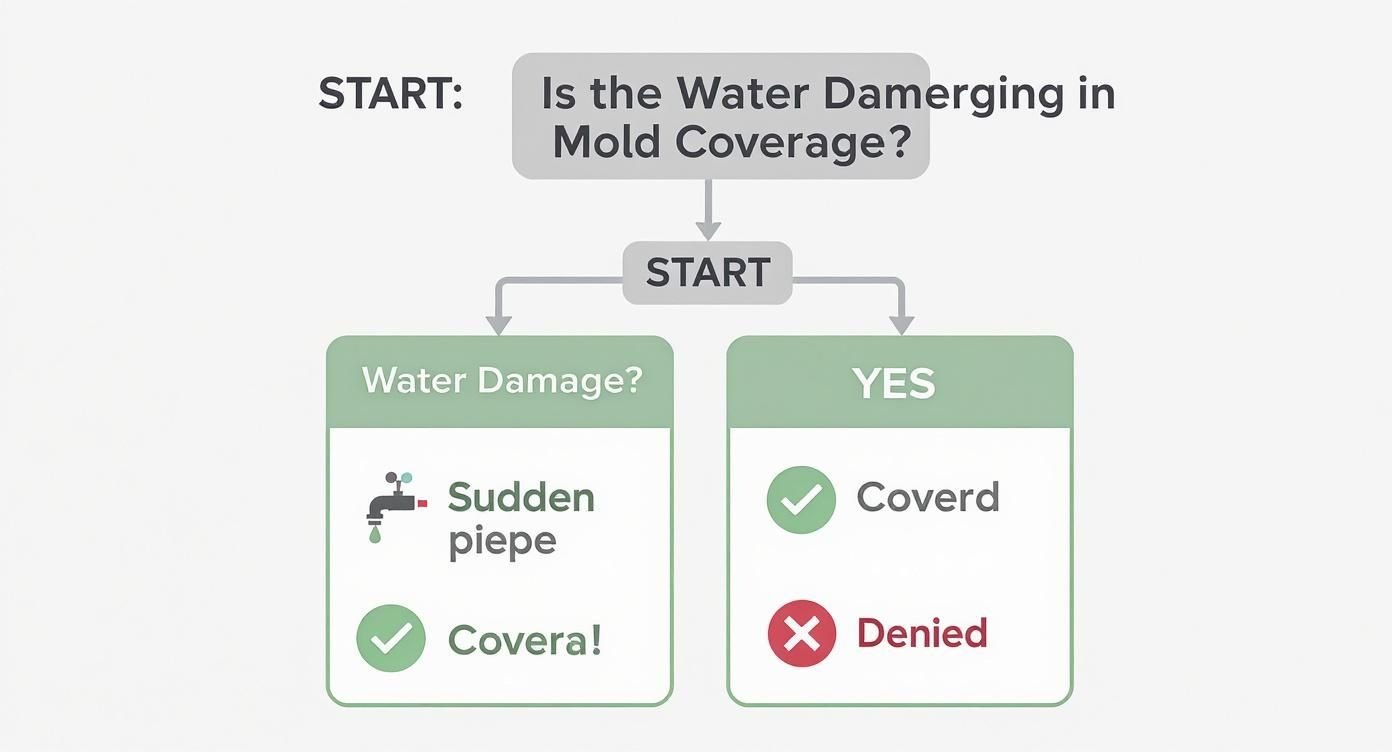
A flowchart explaining water damage insurance coverage; sudden and accidental damage is covered, non-sudden is not.
Restoration & Remediation Posts
Pete M.

Does Homeowners Insurance Cover Water Damage in Los Angeles?

Homeowners insurance covers water damage from sudden, accidental events — burst pipes, appliance failures, sudden roof damage during a storm — but excludes gradual leaks, flood from outside, and maintenance neglect. The distinction between covered and excluded water damage is what determines whether your claim gets paid. This LA guide covers exactly what triggers coverage, what adjusters look for, and how to document your claim from the first hour to protect your maximum payout. Call (818) 336-1800.

Read More »
A teddy bear sits on a fire-damaged sofa with smoke rising and soot on the wall.
Fire Damage Restoration Posts
Pete M.

How to Permanently Get Rid of Smoke Smell in the House

Permanently eliminating smoke smell from a house means removing the microscopic particles that have bonded to every surface — not masking them. Opening windows doesn’t work because the source is embedded in walls, ceilings, fabrics, and your HVAC system. This LA guide covers the complete elimination strategy: surface-by-surface deep cleaning, air filtration, HVAC duct treatment, and professional deodorization (ozone or thermal fogging) for smoke odor that won’t respond to DIY methods. Call (818) 336-1800.

Read More »
Two types of moisture meters, one with pins and a pinless model, on a wooden surface.
Restoration & Remediation Posts
Pete M.

How to Read Moisture Meter Readings: A Pro Guide for Homeowners

Learn how to read moisture meter readings like a pro — material-specific thresholds for wood, drywall, and concrete, pin vs. pinless technique, how to avoid false readings, and how to build a moisture map for insurance claims. Essential guide for Los Angeles homeowners dealing with water damage.

Read More »
A wooden ceiling beam with significant black mold and green organic growth inside a house.
Mold Remediation Posts
Pete M.

How to Kill Mold on Wood: A Complete Homeowner’s Guide

Killing mold on wood requires eliminating it at the root — surface scrubbing alone doesn’t work because mold hyphae penetrate wood grain and regrow within weeks. The correct approach depends on wood porosity: sealed or painted wood may respond to scrubbing and antimicrobial treatment, while structural framing or unfinished wood often requires sanding or replacement. This LA guide covers IICRC-compliant treatment methods for each wood type and when wood is too compromised to save. IICRC-certified: (818) 336-1800.

Read More »
A person turns off a water main valve in a wall as water leaks onto a wooden floor.
Restoration & Remediation Posts
Pete M.

A Homeowner’s Guide to Filing an Insurance Claim for Water Damage

Filing an insurance claim for water damage in Los Angeles requires two things done in the right order: stop damage from spreading immediately, then document everything before cleanup begins. Most underpaid claims fail because photos weren’t taken, or cleanup removed evidence the adjuster needed. This guide covers the exact documentation process, how to communicate with your insurer, what sudden vs. gradual damage means for coverage, and how a professional restoration contractor protects your claim. Call (818) 336-1800.

Read More »